


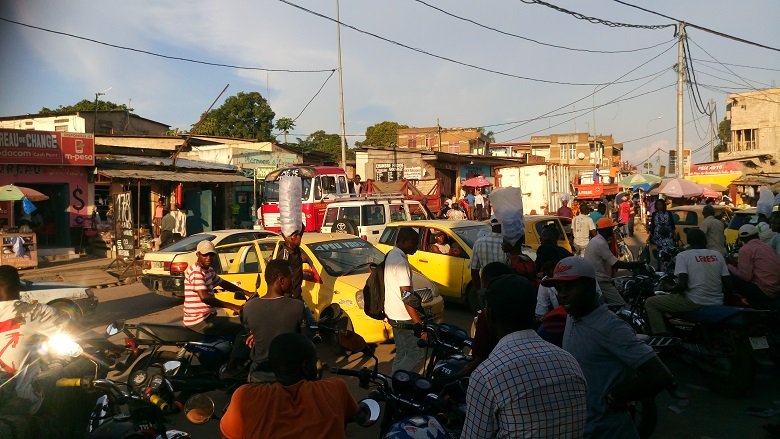
Like many large cities around the world, Kinshasa faces many challenges. The capital of the Democratic Republic of Congo, with a population of about 15 million people, is known for severe traffic congestion, widespread poverty, unreliable power, decades of violent conflict, and potential vulnerability to floods, droughts and other climate changes. Additionally, the COVID-19 pandemic is impacting the economic and health well-being of the people of Kinshasa.
Kinshasa is not unique in this respect. Many of the same issues are even more urgent in the 30-plus megacities around the world with populations of more than 10 million people. Additionally, rapid urbanization in sub-Saharan Africa is estimated to cause the urban population to triple from 441 million in 2020 to 1.3 billion by 2050. In 2020, the country’s urban population grew by 4.5%. This represents 1.5 million new residents arriving in the city every year.
In the near future, Kinshasa, like many other cities, is expected to experience rising temperatures, extreme precipitation and flooding, and increased frequency of droughts, all of which could reduce business and industrial productivity. These changing conditions have the potential to damage infrastructure, with potentially devastating effects, especially for small-scale farmers and poor urban dwellers, which are exacerbated by rapid and poorly planned urbanization.
As the population grows and climate change intensifies in DRC’s urban areas, particularly in Kinshasa, the need for practical solutions is clear. By addressing these challenges, Kinshasa can be at the forefront of the movement towards more sustainable cities.
“With population growth and climate change intensifying in the Democratic Republic of Congo’s urban areas, particularly in Kinshasa, it is clear that practical solutions are needed.”
A sustainable and resilient Kinshasa – improving urban management
The World Bank’s Kin Elenda project, which stands for Sustainable and Resilient Kinshasa, recognizes the urgent need to improve institutional capacity for urban management, as well as access to infrastructure, services and socio-economic opportunities in Africa’s largest city. This five-year, $500 million project, funded equally by International Development Association credits and grants, aims to make not only infrastructure but also communities more inclusive and resilient.
The project, scheduled to begin in 2022, has climate resilience as a top priority and was established with strong institutional buy-in from various levels of government, utility companies and other benefit groups.
The Kin Elenda Project’s sustainability investments target specific revenue sources in Kinshasa, building on existing projects. Low-maintenance solutions are preferred. A solar-powered street light. Durable road surfaces and materials for roads, sidewalks, walls, and other hardscapes. A native plant that doesn’t require much water. Technical solutions for water supply, solid waste management and sanitation are based on operational and maintenance needs. These approaches, combined with research on financial sustainability and related capacity building, support the long-term sustainability of these services. The project will also support improved urban planning and revenue generation, which in turn will contribute to improved services and governance.
“The five-year, $500 million project is funded equally by International Development Association credits and grants and aims to make not only infrastructure but also communities more inclusive and resilient.”
Resilient urban infrastructure is key
Kinshasa’s Kin Elenda project is one of several that will help Africa’s fast-growing cities build resilience to floods and other disasters, while improving land-use planning, urban infrastructure and services, and upgrading informal settlements.
The $315 million IDA-funded project will help build new artificial landfills and optimize waste transportation routes.
In Dar es Salaam, Tanzania, where 70 to 80 percent of residents live in the city’s most flood-prone areas, citizen scientists and drones were mobilized to improve the accuracy of soil maps and better guide the city’s decision-making. Using this approach, the Tanzania Urban Resilience Program conducted urban flood modeling with greater accuracy and at a fraction of the cost than traditional surveys.
