


pumula mkhize
Applications of artificial intelligence (AI) are expected to boost the economies of four African countries by $136 billion (R2.3 trillion) by 2030, but a Tshwane University of Technology (TUT) study has found that South Africa is one of the countries least technologically prepared to take advantage of the opportunity.
AI is expected to boost job opportunities in South Africa, Ghana, Kenya and Nigeria in just six years, but research has found that many sub-Saharan countries are not ready to take advantage of the economic activity brought about by AI adoption.
The study, conducted by TUT AI Hub in partnership with Intel, was titled “Survey on the AI Status of African Universities” and reviewed the state of AI readiness in African universities. The aim was to better understand the progress countries are making in training their workforces with the skills they need for the future. The study considered academic programs offered in AI, research and development activity, and current funders, among other metrics.
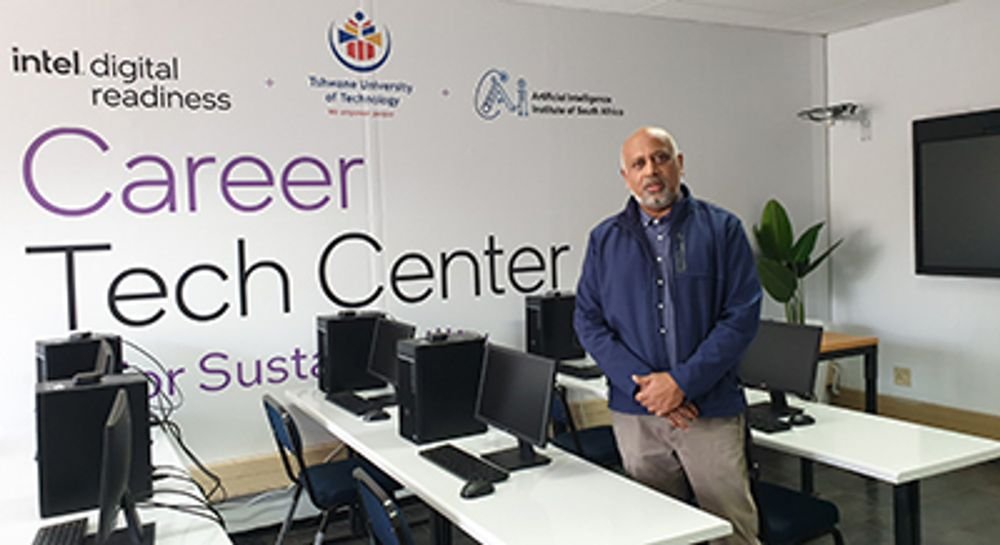
The study, authored by Professor Anish Kurien, Acting Director of the TUT Hub at the South African Institute of Artificial Intelligence, and Dr. Bienvenu Agbokpont Soglo, Director of Africa Government Affairs at Intel, also provides an indicator of whether the continent is ready to equip its workforce with AI skills.
TUT’s research builds on research published in 2023 by the Access Partnership and Google, which predicted that AI applications could bring economic benefits worth up to $136 billion to South Africa, Ghana, Kenya and Nigeria.
Although South Africa is working hard to develop an AI framework, it lags behind countries such as Morocco, Mauritius, Rwanda and Senegal in terms of policy and regulation.
Mr. Kurien emphasized that a proper human capital development strategy on AI is needed across the nation to drive the country’s economy.
“So if we say we have an AI workforce, how do we get that workforce? We need to train them and make them workplace-ready. What we did in our research was to gauge how ready Africa is in terms of training, research and development, and investment in AI,” Kurien said.
He said the study considered four regions of the continent (North, South, East and West) and major countries within each region were selected to examine their preparedness.
The study found that pure AI programs at the undergraduate level are generally limited across the continent. Most programs in AI are within a computer science environment. The study further found that AI-focused programs are primarily present within master’s level programs across Africa, including South Africa. Therefore, there is an urgent need to create new programs at the undergraduate level to foster AI skill development.
South Africa now has five public universities offering AI-focused master’s programs, marking a positive step towards AI readiness. In addition, TUT is part of a national effort to create AI capabilities, along with the University of Johannesburg, the Central University of Technology, the Military Academy of Saldanha Bay, and the University of Stellenbosch. These four universities are home to four of AIISA’s current AI hubs, which aim to transform South Africa’s workforce through AI technology.
AIISA is an initiative of the National Ministry of Communications and Digital Technologies and was established as one of the recommendations of the Presidential Commission Report on the 4IR.
Explaining the role of the hub, Professor Kurien said South Africa needs to provide training to its workforce if it is to deliver on its national agenda of creating AI capabilities that will drive the economy. He said the government is using AIISA as a national-level mechanism to promote economic development in the AI field.
He said TUT has a strong interest in exploring AI-based solutions for the agriculture, healthcare, education and motor manufacturing sectors.
Kurien rejected the myth that AI will increase unemployment.
“It’s a new era of a new revolution, but there is an opportunity to create more jobs in that regard. Machines need to be created, and for that we need human intervention. And for all that to happen, new categories of jobs will be created for this new era,” he said.
If you have any comments about this article, please contact us on WhatsApp 071 485 7995.
