


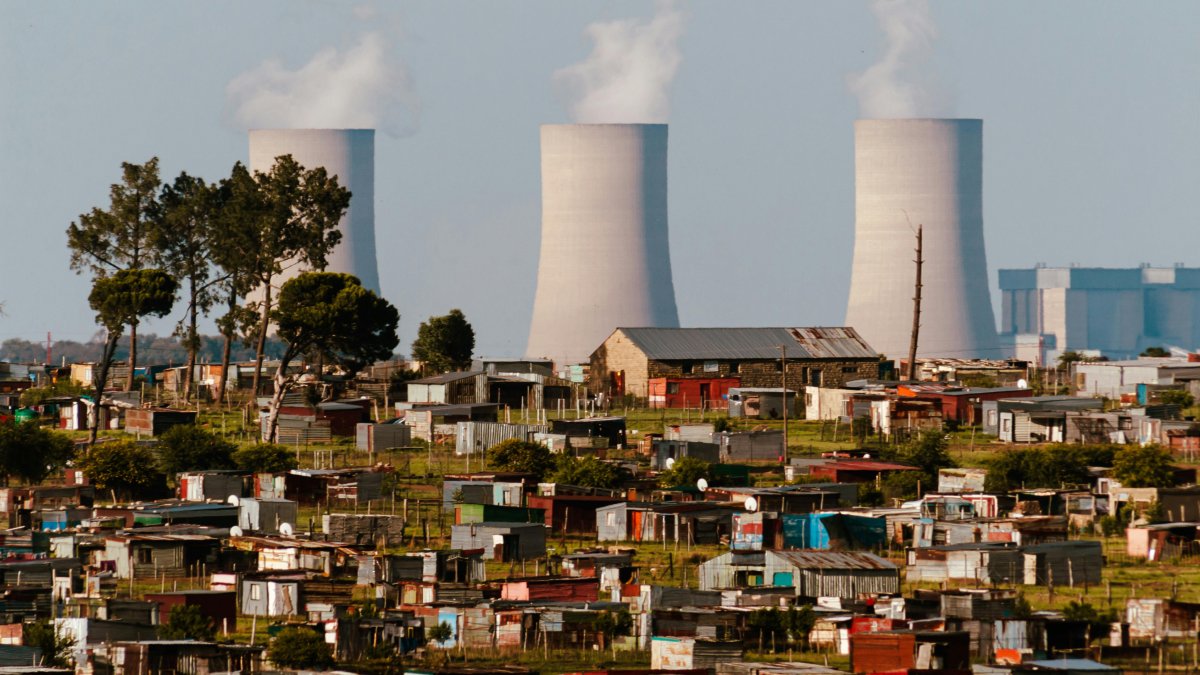
From coal to clean: South Africa’s 105,000 MW energy transition
Written by Adrian Ephraim
South Africa is embarking on its most ambitious energy transformation in the post-apartheid era, with cabinet approval of the Integrated Resource Plan (IRP) 2025 in October, marking a historic shift towards the dominance of renewable energy.
The R2.23 trillion plan promises to introduce 105,000 megawatts of new generation capacity by 2039, equivalent to a two-and-a-half times restructuring of state power utility Eskom. For the first time in South Africa’s energy plan, renewables will generate more than half of the country’s electricity, with 34,000MW of onshore wind, 25,000MW of utility-scale solar, 16,000MW of distributed generation and 8,500MW of battery storage planned.
“This is a shift away from greenhouse gas emissions,” said Kgosiensho Ramogopa, Minister of Power and Energy, at the IRP 2025 launch. “We’re getting cleaner and cleaner.”
The plan was announced as South Africa celebrates more than 150 consecutive days of no-load periods demonstrating stabilization of electricity supply. But this reprieve hides pressing challenges. Without aggressive grid expansion, the country risks sliding into a new energy crisis as coal-fired power plants retire and renewable energy projects find it difficult to connect.
Procurement momentum accelerates
The government’s Renewable Energy Independent Power Producer Procurement Program (REIPPPP) bidding window 7 was the most solar-intensive round since the program’s inception in 2011. Following three separate award announcements, the total allocated capacity is 3,940MW across 18 solar projects.
Cape Town-based independent power company Red Rocket emerged as the big winner, securing 1,240MW across six projects. The company’s latest awards in December 2025 include the 240MW Rondebosch Solar Park in Mpumalanga and two Free State facilities: Spring Haas Solar PV Facility 1 (240 MW) and Spring Haas Solar PV Facility 6 (170 MW).
Norwegian renewable energy company Skatec has claimed its 846MW Kroonstad solar power cluster of three solar power plants in the Free State as its largest single allocation. French energy giant Engie has secured a 240MW Corona solar power project in the North West province.
The surge in solar power orders came after the government strategically reallocated unused onshore wind power to solar projects, which proved more competitive in terms of pricing and deployment schedules. Successful bid prices ranged from R420.74/MWh to R506.89/MWh.
The R390 billion grid challenge
South Africa’s electricity transmission infrastructure poses a significant bottleneck that threatens the expansion of renewable energy. The national electricity grid is designed to transmit electricity from centralized coal-fired power plants in the Northeast and does not accommodate the decentralized renewable energy generation concentrated in the sunny Northern and Western Cape provinces.
According to Nedbank’s corporate and investment banking division, the construction of 14,218 kilometers of additional high-voltage transmission lines and the installation of 170 transformers will cost around R390 billion over the next 10 years. The National Transmission Company of South Africa (NTCSA) estimates that 134 GW of additional grid connection capacity is required to integrate its 172 GW renewable energy project pipeline.
At the launch of the Independent Transmission Project (ITP) program in July 2025, Ramokgopa stressed that “we are not short on megawatts; we are short on grid capacity.” The plan aims to build 10,000 kilometers of new lines and 59 substations over three years, with private developers offered 25-year availability-based contracts.
Transmission challenges are greatest in states with the greatest abundance of renewable resources. Eskom’s 2025 Generation Connectivity Capacity Assessment reveals zero available grid capacity in the Northern Cape, which has a 29.2GW project pipeline, and a similarly constrained situation in the Eastern Cape and Western Cape.
Progress at ground level
Deployment continues despite infrastructure constraints. The South African Photovoltaic Industry Association (SAPVIA) reported that 928 MW of solar capacity was added in the first quarter of 2025 alone. Of this, 280 MW will come from REIPPPP projects and 647 MW from private sector installations. By mid-2025, South Africa’s cumulative solar capacity will reach 9,457 MW, with a healthy pipeline of 10,078 MW under development.
The South African Renewable Energy Master Plan (SAREM), approved in March 2025, provides an industrial policy framework to support this transition, targeting investment of at least R15 billion and the creation of 25,000 direct jobs in manufacturing, logistics, engineering and construction by 2030.
The next 24 months will prove critical as South Africa races to build the grid infrastructure needed to unlock its renewable energy potential. Projects awarded under REIPPPP Bid Window 7 are expected to reach financial close and construction to begin, but the first ITP transmission line is not expected to be operational until 2028 at the earliest.
The energy revolution is taking shape, but its success will depend on whether private capital can successfully flow into electricity transmission infrastructure as well as electricity generation, transforming South Africa from coal dependence to clean power within a generation.
