


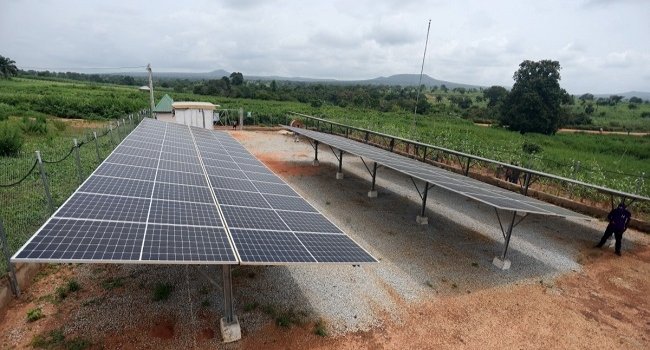
In this interview, the Managing Director of the Rural Electrification Authority (REA), Abba Aliyu, believes that Nigerian energy companies have mastered the art of deploying renewable energy infrastructure, developing talent and attracting capital in West Africa. He also believes Nigeria can become Africa’s renewable hub.
Please enjoy the excerpt!
You have previously outlined an ambitious goal to provide electricity to 25 million Nigerians within three years, especially in rural and peri-urban areas. How much progress has been made on that goal so far?
We had already started implementing our plan. We have already concluded subsidy agreements with eight companies, with approximately 100 companies currently scheduled to do so.
We have completed nearly 70 projects. We have also started the process of interconnected mini-grids (42 of them). This is critical for increasing reliability in peri-urban areas and connecting mini-grids to the national grid. So that started too. There are 42 companies and 7 distribution companies.
And are they all included in the 25 million Nigerians you are targeting?
Universities are not included in the 25 million figure. For the university, it is a special intervention to strengthen and create reliability of power at its level. For 25 million people, these are all mini-grids served to the community.
For example, Nasarawa State currently has 45 mini-grids that are about to be commissioned. I have 20-odd mini power grids in Plateau State that will be commissioned soon. As I said, the eight agreements we signed cover more than 200 sites. We will soon be signing contracts with more than 100 companies, which will result in more than 500 mini-grids.
This is how ambitious we are and how we are stirring up mini-grids every day. The goal is to distribute over 1,350 items.
Previously, after signing a grant agreement, the private sector had to spend six months to a year searching for project development funding. But to shorten that period, we are already working with a number of banks in Nigeria to facilitate private sector investment.
We have a ₦100 billion project development debt financing with FCMB and are in discussions with Fidelity Bank. The International Finance Corporation also provided $20 million to four developers. So you’ll see how we increase efficiency and shorten timelines to achieve your goals.
You mentioned that these power plans should reflect cost. What does that mean for rural people?
That is the essence of federal intervention. The capital grants we provide to the private sector are intended to de-risk the overall infrastructure development, but this in turn affects the cost of tolls, as tolls are a function of the total cost of the project.
By intervening and providing subsidies to the private sector, you are encouraging the private sector to go to rural areas that you might not have thought of otherwise. That’s one thing. Second, it also reduces the total cost of deploying that infrastructure, thereby reducing fees.
If you look at our numbers, we have a recovery rate of close to 95%, which is more than the amount of electricity we get from the grid. This means that the people we serve are paying for this electricity. It’s also about affordability. Even though their consumption is very low, the small amount we offer them is paid at a mutually agreed upon very low rate.
The idea that affordability is unrealistic in rural areas is just a cliché. Electricity costs are high in rural areas. What we introduce to them is very affordable.
What are sustainability strategies to ensure stable electricity supply?
We often make it very clear that the Rural Electrification Agency’s strategy is to build sustainability around the private sector. One of the key things the REA is working on is moving from being a contract issuing agency to functioning more like a financial institution that facilitates infrastructure investment through the private sector.
So what we are doing for the sustainability of the project is ensuring that the infrastructure is deployed by the private sector, and the private sector has to provide the funding and our capital grants. This means that the private sector must manage its infrastructure over the long term to recover its investments, whether debt or equity, and achieve internal rates of return to ensure sustainability.
That’s one thing. But for EPC (Engineering, Procurement and Construction) based infrastructure, like the one we have in universities, we only involve the private sector in implementing the infrastructure. For them, we set up a Renewable Asset Management Company, a government REA SPV (special purpose vehicle) that is responsible for managing this infrastructure.
The wisdom behind it is to create a model that can encourage even more private sector funding to continue deploying infrastructure. For example, the total cost of addressing access gaps is estimated at $25 billion. The federal government doesn’t have this money. Therefore, we are currently using all means possible to facilitate private sector financing, including access to capital markets and raising private capital for infrastructure development.
Do you think Nigeria can become a model for rural electrification in West Africa and even Africa?
Well, we are already models. I have been saying that Nigeria should go on record as a renewable hub for West Africa and Africa. We see the access gap not just as a challenge, but also as a market.
We have catalyzed 600 megawatts and are developing 2.5 gigawatts. We are developing massive amounts of technical skills and capabilities, attracting private capital, and deploying infrastructure. We have also helped foster the Renewable Energy Services Company Ecosystem (Rescos). Rescos is deploying infrastructure, attracting private sector funding, and even going abroad to deploy these. If you go to Liberia or Sierra Leone, you’ll see Nigerian renewable services companies deploying infrastructure in those areas.
We went from 1 megawatt to 12 megawatts, now 13 megawatts, and now we’re targeting 20 megawatts. We continue to scale up. We have mastered the art of installing renewable energy infrastructure, developing talent, and attracting capital. Without a doubt, Nigeria will become Africa’s renewable hub.
It is reported that the President has launched a ₦10 billion renewable energy program and Aso Villa is now powered by renewable energy. Was REA involved in that effort?
REA was not involved in it.
