


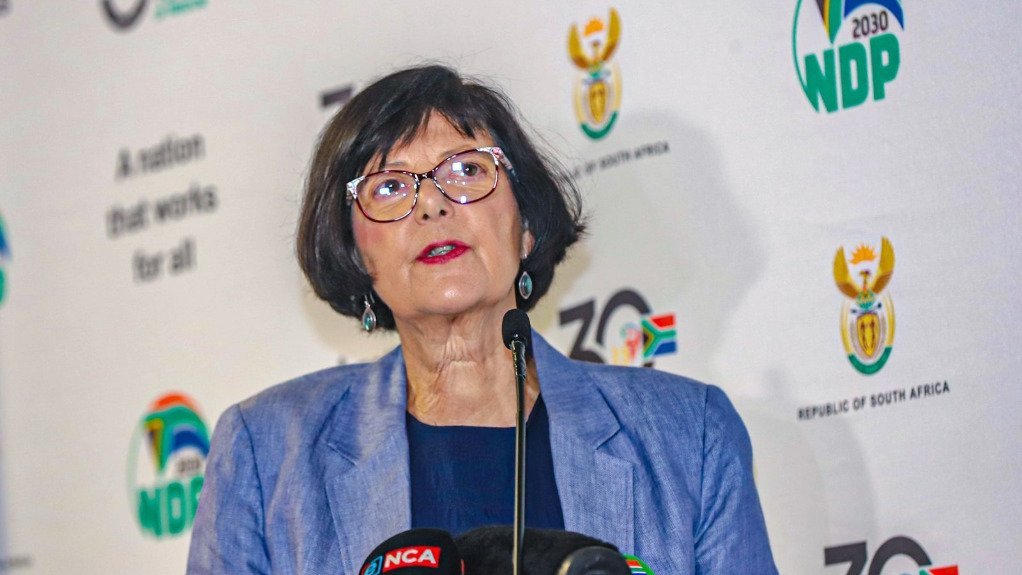
Transport Minister Barbara Creasy has announced that 11 of the 25 private train operating companies (TOCs) that have applied to operate routes on Transnet’s rail network have met the requirements and will now enter into contract negotiations to enable them to access the network and begin operating routes.
The announcement is an important step in opening up South Africa’s freight rail network, previously dominated by state-owned Transnet, to third-party operators.
The changes are in response to national rail policy and have been facilitated by the recent vertical separation of Transnet’s rail operations into Transnet Freight Rail Operator and Transnet Rail Infrastructure Management Company (TRIM), which has published a network statement setting out the operating and pricing framework for private TOC entry.
The initial application process for the slots began in December after the release of the network statement and ended in February. An evaluation process then took place, culminating in the Minister’s confirmation of the first 11 successful TOC applicants on 22 August.
Mr Creasy confirmed during the briefing that these applicants had applied for a total of 41 routes across six corridors, including:
In the Northern Corridor, six new entrants have applied for 15 routes for transporting coal and chrome. In the iron ore corridor, one new entrant had applied for one route for transporting iron ore. In the Cape Corridor, two new entrants have applied for two routes for transporting manganese. Northeast Corridor. Six of the TOC applicants had applied for 16 routes for the transport of coal, chromium, magnetite, fuel and containers. In the Central Corridor, one new entrant has applied for two routes: coal and container (manganese) transport. And in The Container Corridor, four new entrants have applied for five routes for transporting containers, coal and sugar.
The identity of the successful TOC applicant, shareholders and application route were not immediately disclosed.
However, Transnet CEO Michelle Phillips confirmed that letters had been sent to these TOCs indicating they could begin a commercial process with Transnet to finalize an access agreement.
Once these negotiations are complete, the name of the TOC will be made public, along with details of its route and the goods being transported.
The allocation period ranges from one to 10 years, and the operating company can begin operations once the contract conditions are met.
Mr Phillips revealed that while he had indicated that one of the TOCs was in a position to begin operations in late 2026, the other TOC said it was likely to begin operations only in 2027 or 2028.
Unsuccessful applicants were also sent a letter explaining the reasons for the decision, indicating that TRIM would carry out a special process based on the same network statement or version 3, and that they would have the right to submit an amended application alongside a new application during the 2025/26 schedule.
The publication date of Volume 4 of the Network Statement will be announced by the Department for Transport, along with the timeline for opening applications for available slots in the 2026/27 timetable.
Mr Phillips confirmed that some of TOC had applied to lease surplus vehicles from Transnet and that Transnet was also in the process of forming a new partnership with a leasing company called Leaseco. However, there was also the possibility that TOC could source vehicles from other locations.
He also stressed that the TOC is aware of the poor condition of some of the networks it has applied to operate and therefore accesses the networks at its own risk.
However, Transnet has existing plans and capital budgets for network upgrades and maintenance, and it is also seeking to supplement that funding through applications to the Treasury’s Budget for Infrastructure Scheme (BFI), which offers more regular tenders.
Transnet had applied to the BFI in July for R16.4 billion, of which R10 billion was to fund upgrades to the Northern Corridor and Mineral Corridor, with the remainder to develop ports in Durban and Ngurah. The company was preparing a second BFI application for R18.6 billion in October.
In the medium term, the network could be further upgraded through private sector participation in infrastructure development, possibly through concessions, and the first request for proposals in this regard is expected to be made by the end of 2026, following a strong response to a request for information earlier this year.
Mr Creasy said the opening of the rail network to private participation was motivated by the desire to increase freight rail capacity from 160 million tonnes to 250 million tonnes by 2030, with the majority of the 90 million tonnes gap expected to be filled by private TOCs.
“Today’s announcement is not just about rail slot allocation; it is a step towards a future where our rails drive economic growth, job creation and sustainability,” she added.
