


Africa is awakening to the power of its natural gas reserves, recognizing that natural gas, among many other resources, is a reliable and expedient path to economic growth and energy independence.
In our Africa Energy Landscape: 2026 Outlook Report, the African Energy Chamber (AEC) details how the energy matrix of several gas producing countries is shifting from restricting gas primarily as an export product to building gas-centric domestic markets.
We see this border crossing not as a wishful economic gamble, but as an essential step that all gas-producing countries on the continent must take if Africa is to reap the full benefits of its fossil fuel reserves and build true self-reliance without apology, just as the world’s developed countries did at the time.
As our report reveals, Africa’s domestic gas demand is set to surge in the coming years, primarily due to rising electricity demand. At this critical juncture, several African countries are leading case studies on how proactive investment in gas production can power entire industries, create new jobs and stabilize regional power grids where such improvements are sorely needed. Moreover, their story exemplifies how natural gas can serve as a bridge fuel to lead Africa to a sustainable future within the global energy transition.
Angola’s gas renaissance: From exports to domestic growth
In Angola, the economic influence of the oil and gas sector has shrunk over the past decade as production declines. In any case, Angolan policymakers are well aware of the vast untapped value of the country’s gas reserves, and recent industry moves reflect a commitment to realizing that potential.
Angola’s commitment to the global gas sector began in 2008 with the construction of the Angola LNG liquefied natural gas (LNG) facility. This converted associated gas (gas found in wells along with crude oil) that was previously combusted or reinjected into exportable LNG, reducing upstream emissions in the process.
The raw natural gas (or feedstock) that is processed and liquefied to produce LNG was initially sourced from major offshore fields operated by ExxonMobil, Total, and Eni/BP, and later augmented with gas from other fields operated by Eni/BP and Chevron. Half of the associated gas currently produced in Angola is still reinjected into wells to maintain pressure and facilitate oil recovery, but recent advances, such as achieving first gas from the Sanja Lean Gas Project in December 2024, aim to increase supply to the Angola LNG plant.
Angola has also begun to turn to unassociated gas fields in areas such as the lower Congo River basin. The New Gas Consortium, a joint venture led by Azul Energy, is targeting a number of developments in multiple fields expected to increase LNG production capacity by 2026.
Explorations offshore in the southern Kwanza Basin since 2010 have led to the discovery of large amounts of unassociated gas. We at the AEC are excited but frustrated that these discoveries remain stalled due to the region’s lack of gas export infrastructure and the high cost and difficulty of deepwater drilling at the site.
The Caminho project, which targets the discovery of condensate-rich presalts in the Camia and Golfinho fields, is the first operation under development in Block 20 of the Kwanza Basin. Condensate/light oil recovery is the current priority at the site, with the extent of development dependent on completion of the Caminho floating production, storage and offloading facility (FPSO), expected in 2028. As our report speculates, the potential for a network between Caminho and the evaluation program for the Lontola, Zalofas and Bicual fields in the region could facilitate the development of gas transport infrastructure linked to Soyo or Angolan LNG in central Angola.
The Angolan government aims to expand its pipeline network, which could include gas emissions from Camia Golfinho to the coast point of Caboredo to meet local demand, as well as overland pipelines to Luanda and Soyo, but project costs and required transport fees are hampering investment. Funding for such development could come from upstream companies or international banks with additional tax breaks to make the development viable.
In the longer term, gas blowdown operations in mature fields in the Congo Fan could leverage existing midstream infrastructure to supply Angolan LNG and extend production into the 2030s.
Domestically, Angola is allocating more gas to power generation, with supplies feeding the 750 megawatt (MW) Soyo combined-cycle gas turbine (CCGT) plant, which has been regulating fluctuations in hydropower generation since it began operations in 2018. But his ambitions extend further. The Angola Gas Master Plan calls for the construction of fertilizer (ammonia) and methanol facilities by 2030, which will significantly increase gas demand. The proposed ammonia plant is expected to be built in 2025 and operational by 2027, with demand expected to reach up to 80 million cubic feet per day (MMcf/d) by 2035. Power expansion and a shift away from oil will also drive demand, while opportunities such as petrochemicals, direct gas exports and mine electrification could diversify applications.
By integrating LNG exports with local needs, Angola is demonstrating how Africa can benefit from its resources while promoting economic diversification and reducing dependence on imports.
Emerging LNG exporters: Mauritania and Senegal share success
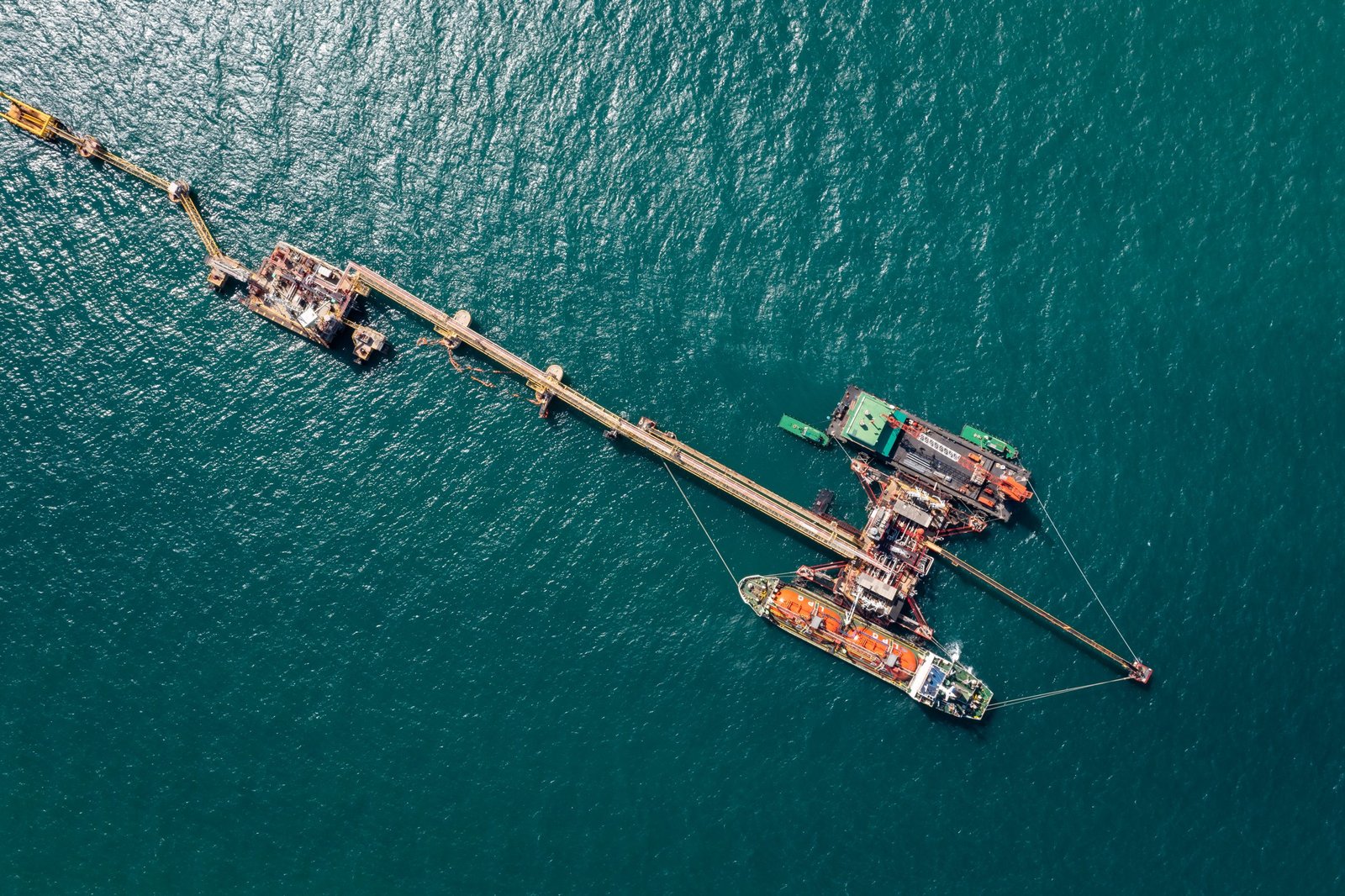
Moving north, Mauritania and Senegal have entered the LNG sector. They became exporters in 2025 with the deep-sea collaborative startup Greater Tortu Ahmeim (GTA) project. The cross-border venture features subsea infrastructure, an FPSO and a floating LNG (FLNG) unit, and has already created around 3,000 local jobs and partnered with around 300 domestic companies.
In 2015, developers overcame the unitization hurdle through discussions and reached a level playing field that included domestic gas obligations. The project reached final investment decision (FID), agreeing to an FLNG model inspired by proven tanker conversions that had remained cost competitive on previous projects despite deepwater challenges.
Future expansion could potentially double production through low-cost vessel upgrades. However, our report warns that the risk of market oversupply and the promise of contract audits by Senegal’s new nationalist government could pose further risks.
Domestically, each country claims about 35 million standard cubic feet per day (MMscf/d) from the project, with Senegal’s portion expected to be sent to the Saint-Louis CCGT for power generation in 2026. Infrastructure initiatives such as a gas network and a 366MW power plant proposed for Cap de Biches aim to electrify nearly 500,000 homes. Beyond electricity, other uses for petrochemicals and fertilizers could extend the economic impact, illustrating how LNG can boost other industries.
These country-level efforts are consistent with broader continental trends, also outlined in the 2026 Outlook Report.
Harnessing regional power pools for continental integration
As of 2025, Africa’s total natural gas production is expected to reach 331 billion cubic meters (bcm), led by major producers Algeria, Nigeria, and Egypt. Natural gas already provides 40% of the continent’s electricity, with North Africa’s 32% share doing most of the heavy lifting.
By 2050, gas-fired power generation capacity could increase by more than 77 GW, but the share of gas-fired power in the total energy mix should remain at around 40%. This shows how gas can fill in as a transition fuel during the expected growth in renewables, and also flexibly support solar and wind during downtime.
Many countries are introducing gas to power in their national strategies, phasing out coal and oil and turning to LNG imports and domestic resources. Nigeria, for example, has put gas to power at the center of its master plan. South Africa’s plan focuses on converting gas to electricity when coal is phased out. Senegal aims to install 3 GW of gas power generation by 2050, and Ghana and Tanzania have similar gas power ambitions.
Challenges will certainly arise, such as infrastructure gaps, import vulnerabilities and environmental concerns, but we at the AEC are confident that targeted investments can overcome them.
These efforts will be further strengthened by regional power pools, cooperation that allows neighboring countries to connect to each other’s power grids. 5 pools covering continents:
The Southern African Power Pool (SAPP) is the most mature and serves as a model for strong interconnectivity and competitive trading. The West African Power Pool (WAPP) has advanced cross-border links but is grappling with regulatory and financial issues. The East African Power Pool (EAPP) is also making progress in interconnection despite political hurdles. The Central African Power Pool (CAPP) is the furthest behind due to instability, limited infrastructure and lack of investment. The North African Power Pool (NAPP) has perhaps the most advanced infrastructure, but trade is limited due to its focus on integration with European markets.
The African Single Electricity Market, an initiative to unite these five pools into a single continental electricity market, aims for full integration by 2040. Barriers such as physical distance and technical and political compatibility issues are expected, but finding ways to circumvent these barriers could help unlock further gas potential by connecting exporters and importers, enhancing access and cooperation.
The State of Africa’s Energy details how natural gas is more than just a market commodity, it is a catalyst for Africa’s prosperity. By expanding LNG and domestic use, countries can boost growth, reduce emissions, and assert energy independence. As a transitional fuel, it can ultimately provide a comfortable path towards the transition to renewable energy and ensure that Africans are not left in the dark in the process.
Africa has the right to capitalize on its rich resources and prosper, and the developments outlined in the latest report prove that outcome is possible.
The “Africa’s Energy Situation: 2026 Outlook Report” is available for download. Visit https://energychamber.org/report/the-state-of-the-african-energy-2026-outlook-report to request a copy.
