


Even as COVID-19 continues to spread, the risk of another pandemic of similar magnitude is currently increasing by up to 2% each year. This increase is being driven in part by climate change, which also threatens to cause a range of dire public health impacts. Nowhere is this threat more acute and the need for stronger, more resilient health systems greater than in Africa.
A new public health order recently launched by the African Union Commission and the African Centers for Disease Control and Prevention (Africa CDC) to provide a roadmap to sustainable health outcomes and health security in Africa aims to change this.
This continental shift in public health is being driven from within the continent and represents the collective vision of African Union leaders. To achieve this vision, African Union Member States welcome meaningful partnerships to make it sustainable.
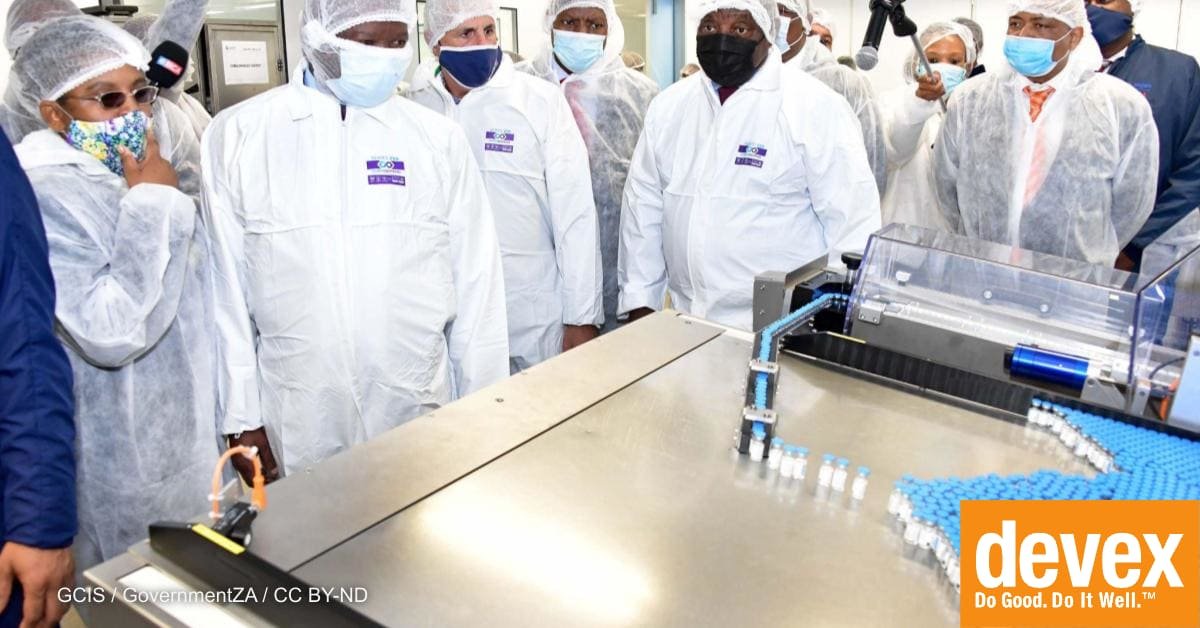
Part of this vision hinges on the African Union’s goal to develop, produce and supply at least 60% of vaccines by 2040. This will help save lives on the continent and beyond and improve global health security by strengthening Africa’s long-term supply resilience.
Currently, less than 0.1% of the world’s vaccine supply is produced in Africa, and only 1% of vaccines used in Africa are produced on the continent. But with more than 30 new vaccine production efforts already underway in Africa, momentum is building to enable this expansion.
Today, we call on donors and other partners in the public and private sectors to support our new Advanced Markets Commitment to accelerate the expansion of African manufacturing.
—
Therefore, significant capital investment is required, but building manufacturing capacity alone is not enough. Other factors that these ventures must consider to survive include existing competition, local regulatory standards, and specific financial commitments to ensure uptake of vaccines produced in Africa.
The potential for increased supply from this manufacturing expansion is huge. Success will depend on African governments and international partners choosing locally produced vaccines over imported products. That means producing vaccines that not only meet international quality standards for safety and efficacy, but also compete on price.
But access is not just about price. Even with the best intentions in the world, African governments have a critical role to play in making local manufacturing sustainable by adjusting demand to ensure cost-effective vaccine production. Without sufficient demand from African governments for these new African vaccines, African manufacturers may struggle to survive in the long term.
Achieving sustainability in vaccine production is extremely difficult and time-consuming. This is by no means a challenge unique to African producers. Producing vaccines of sufficient and consistent quality requires skill development, potentially thousands of individual manufacturing steps, and thorough quality assurance and control, all of which must be subject to rigorous regulatory approvals. All of this comes at a high cost and will require close coordination and cooperation, as well as sustained investment at the international level, as vaccine production is inherently expensive.
This is why the vaccine market is notoriously volatile, making it difficult for new manufacturers to break into established markets. Typically, the only way to bring prices down to globally competitive levels is through mass production, but this takes time and is risky because it requires sufficient demand to be deliberately organized and coordinated. For example, by communicating vaccine preferences through organizations such as Gavi, the Vaccine Alliance, which covers large initial investments.
There are many challenges, most of which are classic chicken-and-egg scenarios. That is why, to achieve this, we are calling for concrete commitments to purchase vaccines produced in Africa and related financial commitments.
Given how much is at stake here, African manufacturers cannot rely solely on market forces. Targeted and time-limited financing mechanisms are needed to achieve sustainable manufacturing that can have long-term impacts. That is why today we are calling on public and private sector donors and other partners to support a new Advanced Market Commitment to accelerate the expansion of African manufacturing and help achieve sustainability for Africa’s health security.
All stakeholders also have an important role to play in localized manufacturing. Through the African Vaccine Manufacturing Partnership and the African Medicines Agency, Africa CDC is creating a framework to help harmonize diverse efforts across the continent, including vaccine regulation, technology transfer, and human capital investment, and taking steps to improve market access for manufacturers.
Meanwhile, as the world’s largest purchaser of vaccines and a major source of supply to African countries with a long history of market creation, Gavi plays a key role in leading investment decisions and working with manufacturers to identify suitable vaccine markets. This will minimize the risk of overcrowding existing markets and ensure that innovative vaccines for unresolved diseases are also covered.
African governments, in conjunction with the Africa CDC, have also demonstrated a willingness to selectively source from African suppliers and have a collaborative role to play in informing vaccine demand. As part of its new regional manufacturing strategy for Africa, Gavi will work with supported countries in Africa and the Africa CDC to better align and secure demand on the continent. Building solidarity among African countries will be a key part of the picture in ensuring regional resilience in vaccine supplies and mitigating the demand risks faced by African manufacturers.
This will be a common effort to pave the way for the expansion of Africa’s vaccine manufacturing industry. Not only will this improve vaccine supply across the continent and beyond, it will be a critical part of Africa’s public health security and transformation, and ultimately save the lives of countless Africans and others around the world.

Printing the article and sharing it with others is a violation of our Terms of Use and Copyright Policy. Please use the sharing options on the left side of the article. Devex Pro members can share up to 10 articles each month using the Pro sharing tool ( ).
