


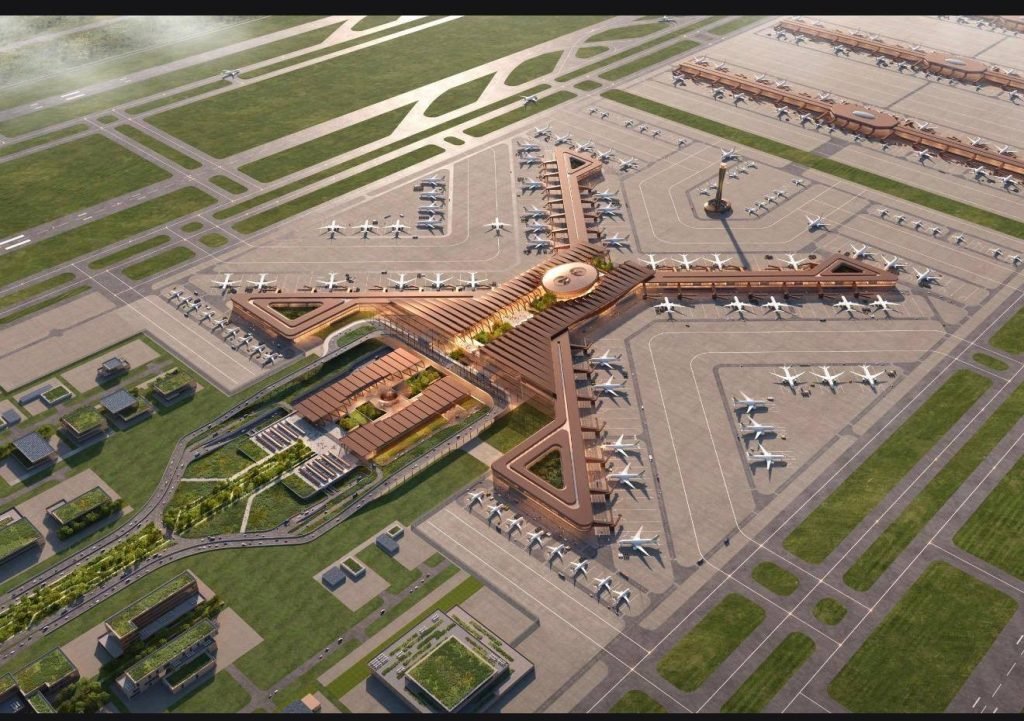
Addis Ababa, January 10, 2026 (FMC) – Ethiopia’s ambitious Bishoftu International Airport project continues to take shape as an innovative aviation and economic infrastructure initiative aimed at repositioning the country as the world’s leading air transport hub.
Today, Prime Minister Abiy Ahmad officially inaugurated construction of the airport, laying the foundation for the $10 billion mega-project and marking the start of physical construction.
Located in Abusela, approximately 40 kilometers southeast of Addis Ababa, the new airport is planned to ease capacity constraints at Bole International Airport while accommodating future passenger and cargo traffic growth. The project reflects a strategic shift towards large-scale aviation infrastructure that enhances connectivity, trade, tourism and regional integration.
Gradual development and competency
The airport will be developed in multiple stages to meet long-term demand growth and operational requirements. It is expected to accommodate approximately 60 million passengers per year in the first phase, with plans to expand to 110 million passengers per year upon full completion, making it one of Africa’s largest airports by passenger capacity.
Official project documents further specify that the facility will eventually include multiple runways, more than 1 million square meters of expansive terminal space, and infrastructure to support both passenger and cargo operations. In addition to handling passengers, the airport is designed to manage large volumes of cargo, with final throughput estimated at up to 3.73 million tonnes per year.
Funding and partnerships
The African Development Bank (AfDB) plays a central role in airport financing. In August 2025, Ethiopian Airlines Group and AfDB signed a mandate agreement appointing the bank as the mandated lead arranger to mobilize funds for the project. Under the agreement, AfDB will provide $500 million, subject to Board approval, and has pledged to lead efforts to raise the remaining funds needed from global lenders.
The total cost of the airport project is estimated at $10 billion, and a combination of development finance, commercial loans and institutional investment is expected to support its implementation.
Design, capacity and development timelines
The airport’s master plan includes multiple runways, a large passenger terminal, cargo handling facilities, and integrated support infrastructure. Plans also include an airport city with hotels, business parks, logistics operations and transportation links to Addis Ababa.
Ethiopian Airlines leadership said that in line with the airline’s long-term Vision 2040 strategic roadmap, international flight operations are expected to begin by 2030, with the first phase expected to begin operations by the end of 2029.
Regional and economic impact
Officials stress that the airport will not only expand aviation capacity but also foster economic growth through job creation, increased trade and tourism, and stronger integration with continental transport corridors, in line with frameworks such as the African Continental Free Trade Area (AfCFTA).
As construction begins following its formal launch by Heads of Government today, the Bishoftu International Airport project stands out as a major national infrastructure investment that will enhance Ethiopia’s strategic position in the global aviation sector and contribute to sustainable economic development in the coming decades.
