


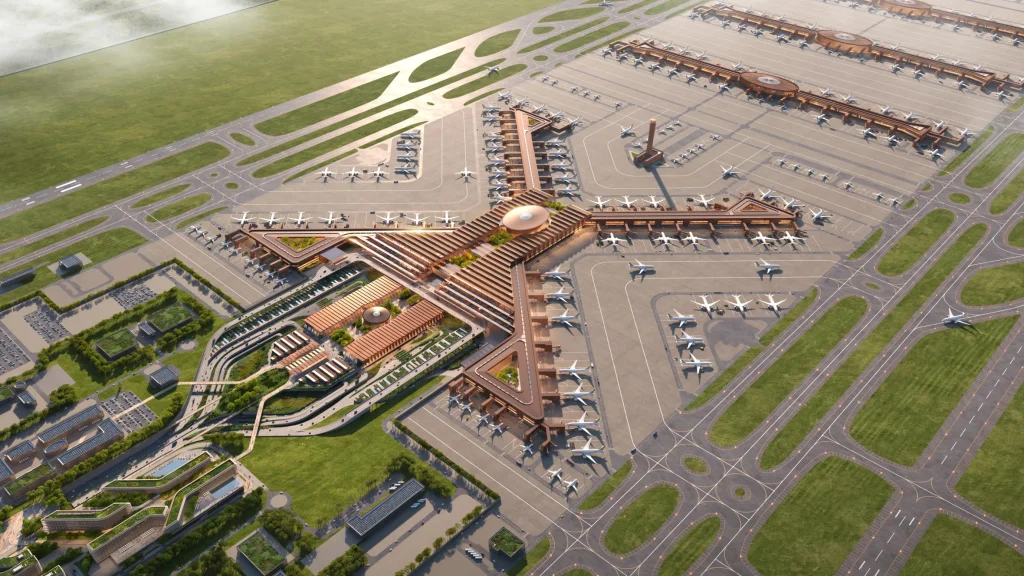
Ethiopia has officially begun construction on the $12.5 billion Bishoftu International Airport, which will be Africa’s largest airport, with architectural design led by Zaha Hadid Architects (ZHA). Located southeast of Addis Ababa, the new airport is planned as a next-generation global gateway to accommodate Ethiopia’s rapidly growing aviation sector and Ethiopian Airlines’ long-term expansion strategy.
Inside Ethiopia’s Bishoftu International Airport project
The airport is planned as a multi-phase development. Phase I will include four runways and infrastructure to serve up to 60 million passengers annually. Once fully developed, Bishoftu will handle approximately 110 million passengers a year and be able to park up to 270 aircraft, making it one of Africa’s largest airport infrastructure projects, significantly exceeding the capacity of Ethiopia’s existing major hub, Addis Ababa Bole International Airport.

Architecture and design leadership supporting Africa’s largest airport
The design and technical master planning of Bishoftu International Airport is being overseen by a consortium of international companies.
Dar Al-Handasah Consultants is leading the technical advisory and master planning. Sidara Group is responsible for the detailed architectural and technical design of key facilities such as passenger terminals, runways, cargo hubs and air support zones. Zaha Hadid Architects is providing design expertise on key architectural elements to ensure the airport meets global standards.

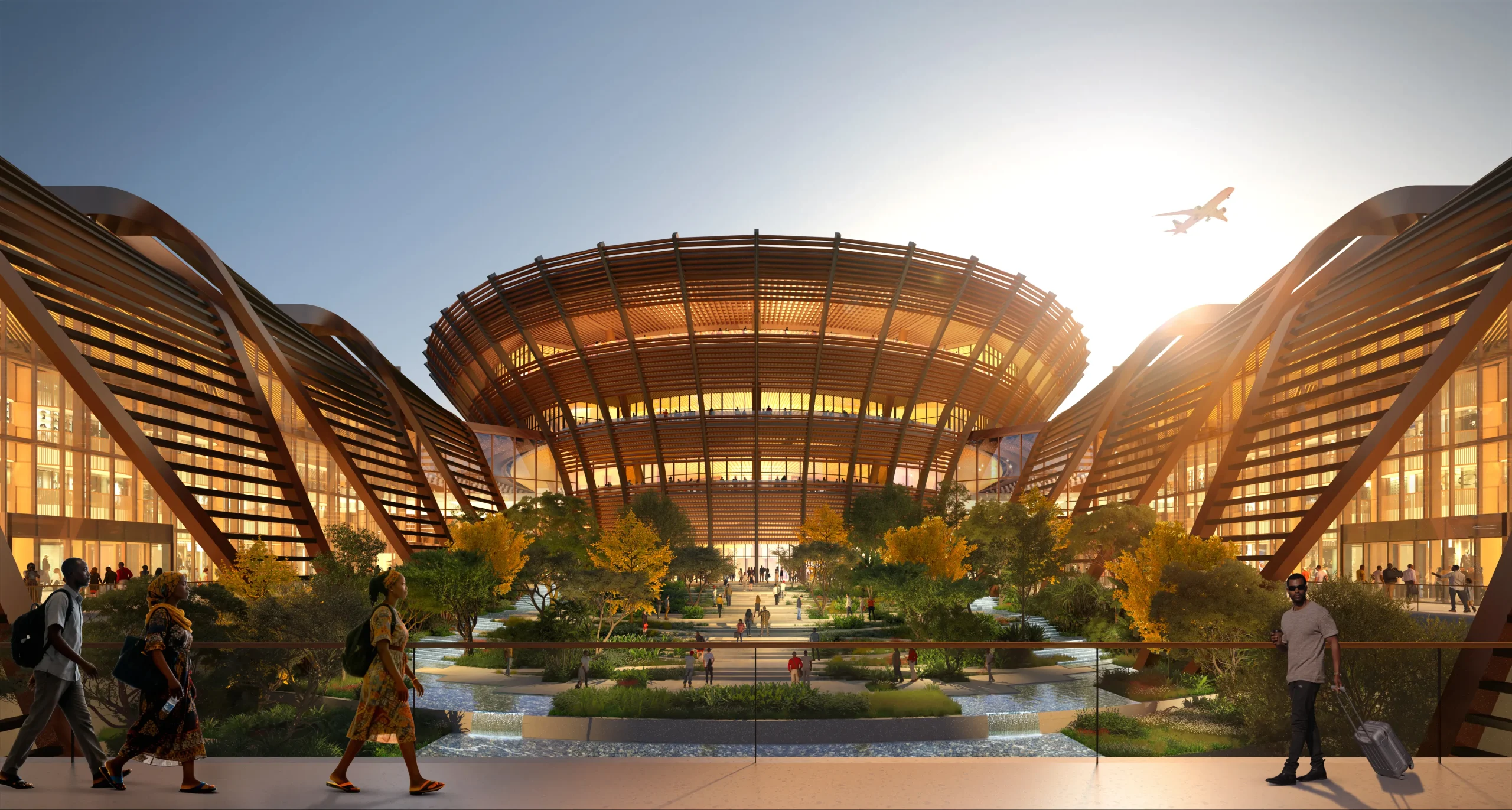
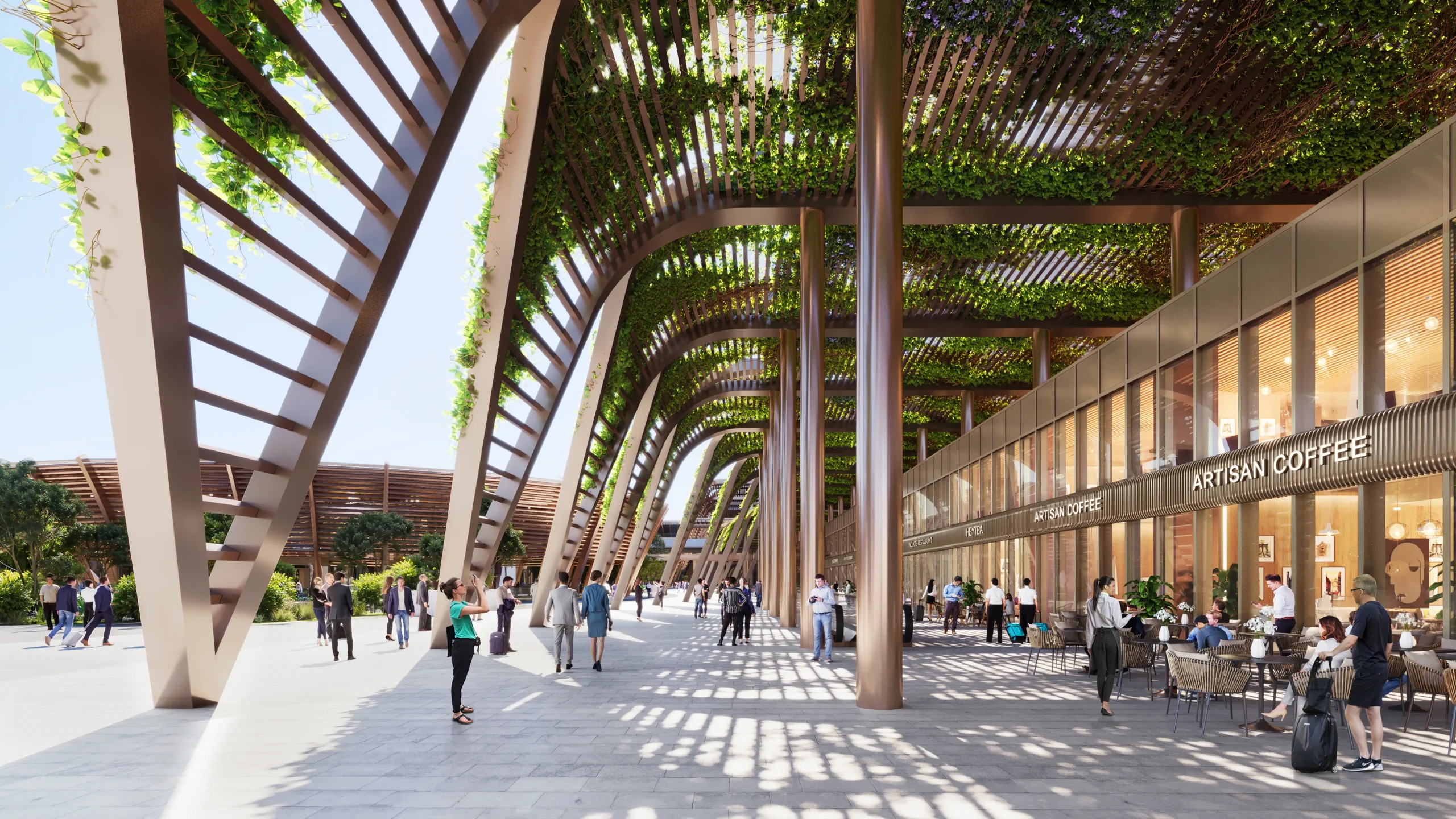
The design prioritizes efficient passenger flow and connectivity, with a central spine connecting the concourses to minimize transfer distances for the expected high volume of connecting passengers. The materials and interior color palette throughout the terminal’s piers are designed to reflect Ethiopia’s diverse regional identity, and the overall master plan integrates sustainable strategies such as natural ventilation, solar shading, and extensive landscape elements to enhance environmental performance and passenger comfort.
Terminal and infrastructure design
The terminal design has accommodated high passenger flows from the outset, with the first phase featuring approximately 1.1 million square meters of terminal space. The master plan also includes:
A cargo terminal of over 100,000 square meters to support the growth of air cargo. Dedicated airline support area and logistics facilities. Infrastructure to support expansion into an airport city with commercial zones, service zones, hotels and associated transportation infrastructure. Future provisions for additional runways and support facilities will be adjusted to meet increased demand.
Build and implement
Construction activities began with site preparation and earthworks, supported by a financing model in which Ethiopian Airlines financed approximately 30% of the project and international financial institutions, including the African Development Bank, covered the remainder.
The project schedule is structured so that preliminary earthworks are expected to be completed within a year, with major construction work expected to begin in mid-2026. This phased approach allows you to bring critical infrastructure online while later components are built.
strategic importance
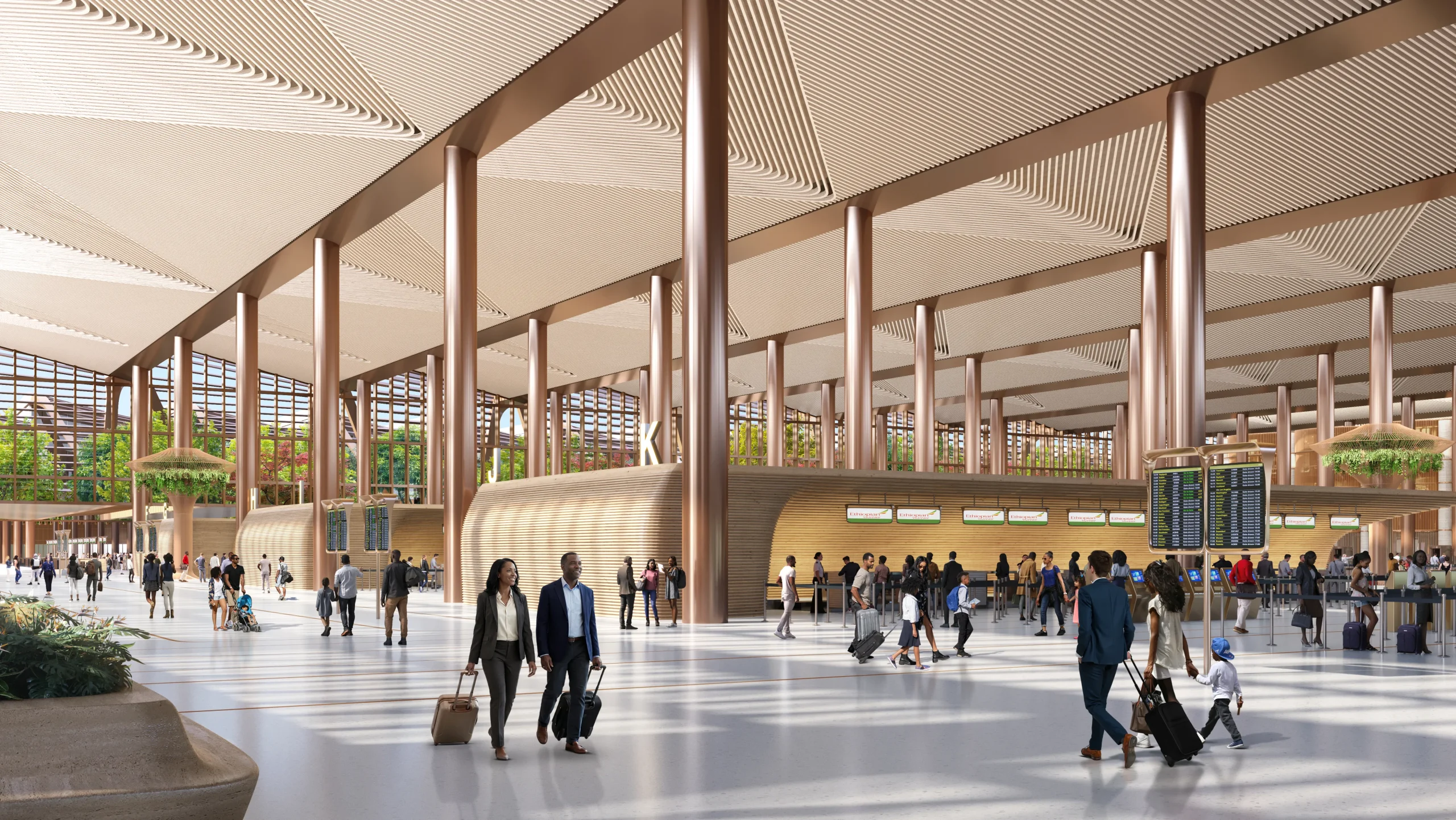
Bishoftu International Airport aims to relieve pressure on the existing Addis Ababa hub, which is nearing capacity, and position Ethiopia as a major gateway for African and intercontinental aviation. Beyond passenger services, the project is expected to support cargo growth across Africa, create jobs and boost trade and tourism.
Rendering with X-Universe
