


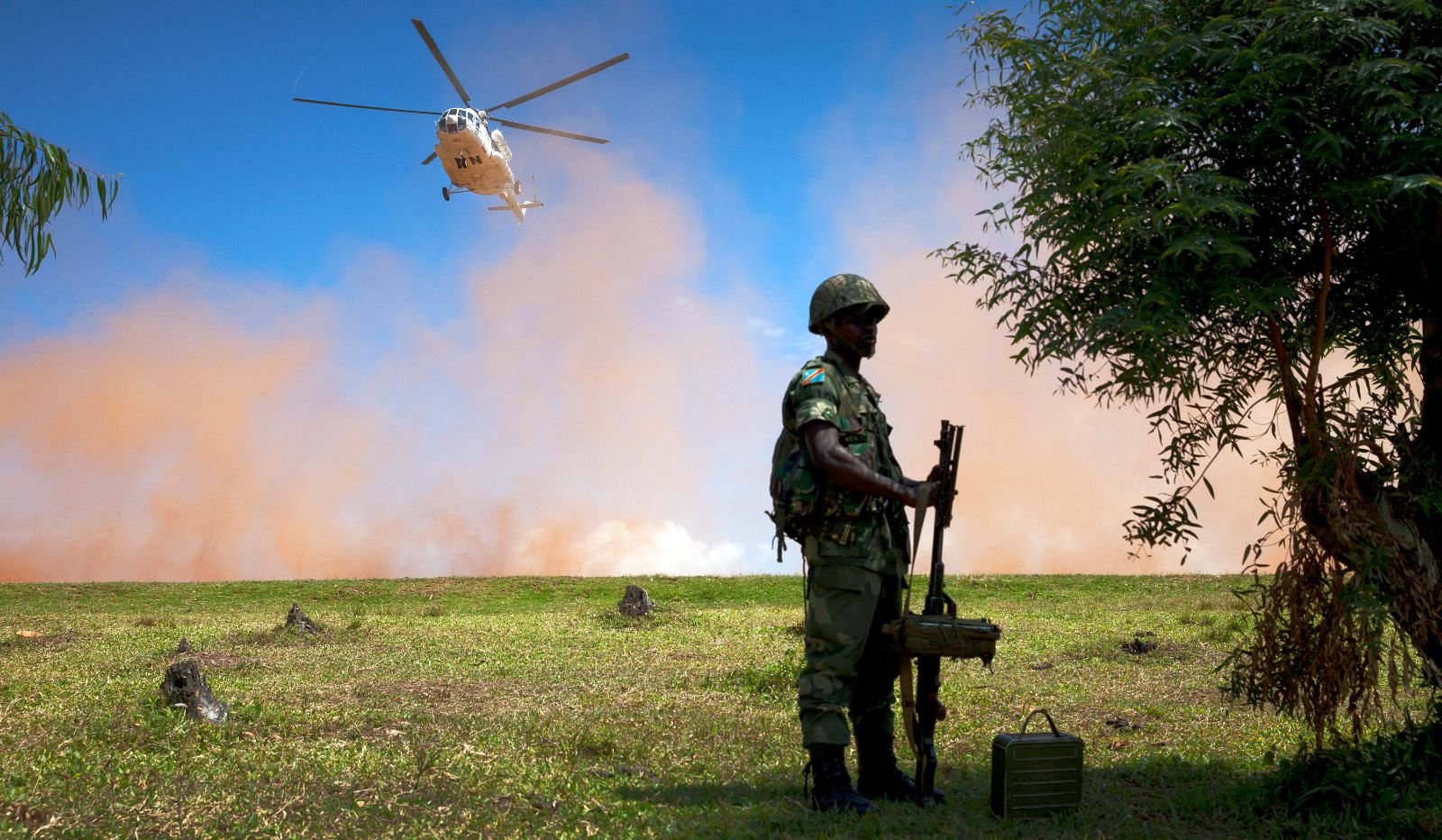
Climate change is increasingly recognized as a significant threat to peace and security across Africa. Although it does not directly cause conflict, its effects are acutely felt in fragile contexts, where governance is weak, resources are scarce, and people are already vulnerable. In these environments, floods, droughts, and extreme weather events increase instability, cause fuel spills, and strain peace operations’ ability to accomplish their missions.
The intersection of climate and conflict is particularly evident in regions such as southern and eastern Africa, where erratic rainfall, cyclones, and environmental degradation are becoming more frequent and severe. In Mozambique, repeated floods and cyclones have severely disrupted movement and humanitarian assistance, particularly in conflict-affected areas such as Cabo Delgado. Seasonal river flooding and inadequate infrastructure, including collapsed bridges and border confusion, impede the movement of peacekeepers and impede civilian protection and logistics. Severe flooding in South Sudan has repeatedly cut roads, disabled helipads and limited patrols and emergency response. These disruptions occur alongside seasonal patterns of conflict, with climate change often triggering spikes in violence, migration, and humanitarian needs. These phenomena complicate the already complex operating environment of peace missions, impeding movement, damaging infrastructure, and increasing humanitarian needs. As the effects of climate change continue to intensify, peace operations must evolve to remain responsive and relevant.
Today’s peace operations face a variety of operational challenges caused by climate change. Seasonal flooding can block access routes, isolate communities, and impede the movement of peacekeepers and humanitarian aid forces. Drought and resource scarcity can cause tensions between communities and increase the risk of localized conflict. In some areas, climate change is exacerbating displacement and disrupting livelihoods, forcing missions to scale up protection and logistical support for internally displaced persons. At the strategic level, the integration of climate considerations into mission planning remains inconsistent. Although some missions are beginning to incorporate climate risk assessments, the tools, training, and organizational capacity needed to fully integrate these insights remain underdeveloped. There is often a lack of integration between climate data and security analysis, limiting the ability of peace operations to anticipate and respond to environmental stressors in a proactive and coordinated manner. Furthermore, peace operations are increasingly required to address issues that go beyond their traditional mandates. In settings where governance systems are weak or overstretched, missions often become the de facto first responders to climate-related emergencies. However, resources and technical support for this expanded role are rarely matched, leaving missions ill-equipped to manage the combined risks of climate change and conflict.
Incorporating climate considerations into peace operations is no longer optional, but essential. Missions must adjust their planning and execution to account for environmental realities on the ground. This is about more than just logistical preparation. It involves rethinking how peace and security are conceptualized in a world affected by climate change. First, peace operations must systematically incorporate climate risk analysis into all stages of the planning cycle, including conflict assessments, scenario planning, and early warning systems. This approach allows missions to predict the effects of seasonal weather patterns, identify potential resource-related conflict hotspots, and better prepare for disruptions to mission operations. For example, in South Sudan, the United Nations Mission in South Sudan (UNMISS) has begun integrating seasonal climate projections into military assessments to map areas vulnerable to both flooding and conflict. Second, we need to increase operational flexibility. Engineering and logistics departments must be equipped to build climate-resilient infrastructure, such as elevated roads, flood protection, and climate-resistant shelters. Travel planning should take into account seasonal changes, such as prepositioning supplies and adapting patrol routes during rainy and hot seasons. In Mozambique, the lack of strategic airlift during the rainy season has limited the reach of the Southern African Development Community (SADC) Mission in Mozambique (SAMIM), highlighting the need to strengthen transport and engineering capabilities. Third, local knowledge must be at the heart of climate adaptation strategies. Communities living in areas affected by climate change have valuable insights into environmental risks and traditional coping mechanisms. Peace operations in partnership with local actors are well placed to support grassroots resilience and reduce tensions caused by climate-induced stressors. In some regions, especially where environmental degradation fosters competition, natural resource management is used as a platform for dialogue and community-based conflict resolution.
Incorporating climate considerations into peace operations is no longer optional, but essential. Missions must adjust their planning and execution to account for environmental realities on the ground.
Tweet
At the continental level, there is growing recognition of the link between climate change and security. The African Union (AU) has adopted the Common African Position on Climate, Peace and Security (CAP-CPS) to promote African-led solutions to climate security challenges. The framework encourages multisectoral cooperation, prioritizes vulnerable people, and aims to align regional strategies with international efforts. However, implementation is inconsistent. Many local bodies continue to face significant challenges due to lack of organizational capacity, technical expertise, and financial resources. Bridging this gap requires deeper collaboration between the AU, the United Nations (UN) and Regional Economic Communities (RECs)/Regional Mechanisms (RMs). Institutions like the Intergovernmental Authority on Development (IGAD) demonstrate how technical expertise can support peace operations. IGAD is one of UNMISS’ key partners, providing technical analysis support that improves situational awareness and enables proactive planning. Its migration framework helps regulate the seasonal migration of nomadic communities and reduces the risk of climate-related violence along migration corridors. Continued investment is also required in organizational learning, developing practical tools, and deploying specialized climate safety advisors within missions. Partnerships across sectors, especially with humanitarian, development and environmental actors, are key. Peace operations alone cannot address the full range of climate-related risks. Reconciling short-term security responses with long-term resilience-building and sustainable development requires a whole-systems approach.
To effectively address the climate-security nexus, peace operations must undergo a paradigm shift, moving away from reactive, state-centric models and adopting proactive, community-centered approaches that build resilience from the ground up. Climate change adaptation must be institutionalized within peace missions and incorporated as a core element of their planning and implementation, rather than being treated as a peripheral issue. Strengthening climate resilience in peace operations requires a combination of measures, including: Integrate climate risk assessments into mission planning and early warning systems. Strengthen collaboration between the AU, UN and REC/RM. Promote community engagement and local ownership of adaptation strategies. Invest in engineering and logistics to reduce environmental damage. Mobilize sustainable finance for a long-term, integrated response. Supporting African-led frameworks that reflect regional priorities and realities. The urgency is clear as climate change continues to transform Africa’s conflict landscape. Peace operations must evolve to transform climate risks into opportunities for innovation and resilience through data-driven approaches, grounded partnerships and locally informed solutions.
To effectively address the climate-security nexus, peace operations must undergo a paradigm shift, moving away from reactive, state-centric models and adopting proactive, community-centered approaches that build resilience from the ground up.
Tweet
Lumbizaishe Matambo is a Program Officer at ACCORD with over five years of experience in African peace and security, specializing in efforts to strengthen African peace operations.
This article is an excerpt from the report of a roundtable discussion on the impact of climate change on peace operations hosted by ACCORD and the Embassy of the Kingdom of Denmark in South Africa. Click here to learn more about the Roundtable.
