


Terrorism claims an average of around 44 lives every day in West Africa and the Sahel, and the scale and intensity of attacks by violent extremists are increasing, Foreign Affairs Minister Samuel Okudzeto Ablakwa said.
He warned that the frequency and escalation of attacks continued to threaten peace, stability and development across the region.
Mr Ablakwa said the region currently accounts for 47 to 59 per cent of all recorded terrorist incidents worldwide.
He said this trend was a stark reminder that the epicenter of global terrorism has shifted from the Middle East to West Africa and the Sahel region, and called for renewed regional cooperation and collective action to confront the rising security situation.
He said that over the past 15 years, terrorist attacks in the region have increased by more than 1,200 percent and the death toll has increased by nearly 3,000 percent, a situation that can no longer be ignored.
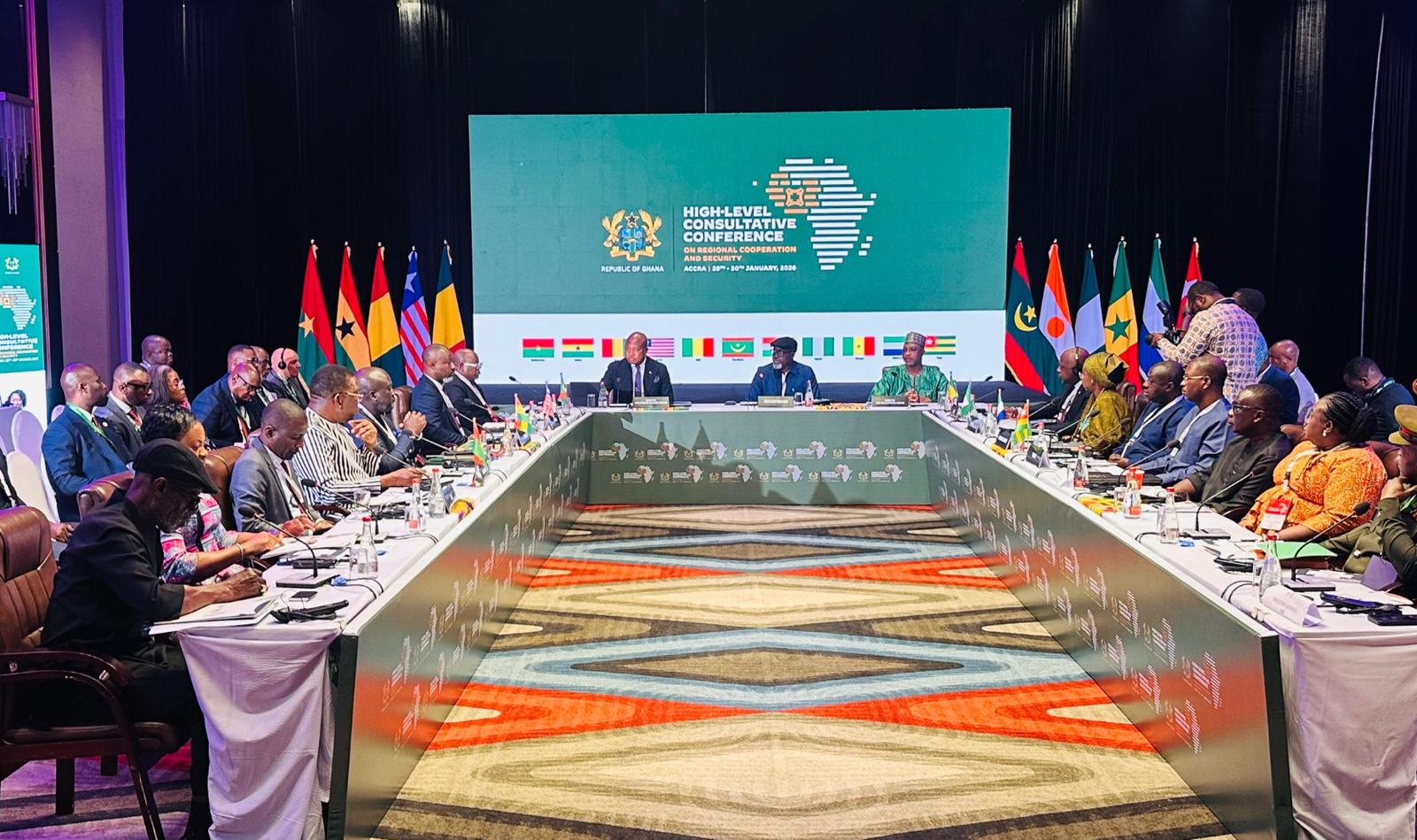
The Minister of Foreign Affairs addressed delegates at the opening ceremony of the High-Level Consultative Conference on Regional Cooperation and Security in Accra, which is scheduled to culminate in a summit of Heads of State and Government.
The conference brought together intelligence chiefs and senior security officials from across the subregion to discuss terrorism, violent extremism, transnational organized crime, and maritime insecurity in the Gulf of Guinea.
The conference includes delegations from Burkina Faso, Ghana, Liberia, Mauritania, Nigeria, Sierra Leone, Togo and Mali, as well as representatives from the African Union Commission and development partners.
Ablakwa said the human cost of terrorism is no longer an abstract statistic, but an everyday reality faced by families and communities across the region.
He cited recent attacks in Niger that prevented the country’s delegation from traveling to a meeting in Accra, describing it as a stark example of how insecurity continues to disrupt livelihoods, governance and regional cooperation.
“The challenges we face are not limited to a single country,” he said, noting that extremism in the Sahel, piracy in the Gulf of Guinea, human trafficking across porous borders, and organized crime are interconnected threats that transcend borders.
He stressed that no country can face such dangers alone and that the absence of clearly agreed regional instruments to counter these transnational threats is “totally unacceptable”.
Ablakwa said intelligence needs to expand beyond movement and military threats to include economic, social and governance pressures that extremists exploit, such as climate stress, food insecurity, youth unemployment and vulnerable communities at the border.
He urged intelligence chiefs to view intelligence not only as a security tool but also as a compass for socio-economic development.
He called for a new culture of trust and actionable information sharing, warning that fragmentation and suspicion had previously undermined collective efforts.
He proposed four basic principles for new cooperation. It is about trust, resource mobilization from within the continent, integration of security, development and governance, and foresight through reliable and indigenous early warning systems.
Interior Minister Muntaka Mohammed Mubarak said the scale of lives lost to terrorism reflects the urgency for concerted action in the region.
He said violent extremist groups in the Sahel have stepped up operations and launched coordinated attacks on military installations, civilian centers and critical infrastructure, leading to widespread displacement and a humanitarian crisis.
Mohammed Mubarak said the Sahel region now accounts for more than half of the world’s terrorism-related deaths, and said this development was a clear warning that the crisis was no longer local and posed serious spillover risks to West African coastal countries, including Ghana.
He said attacks have become increasingly lethal, including the use of drones, improvised explosive devices, and complex ambush attacks, increasing human casualties and deepening instability.
The interior minister said terrorism flourishes where poverty, unemployment, lack of resources due to climate change and weak governance combine to create fertile ground for recruitment and radicalization.
Security responses must therefore be embedded in a comprehensive, regionally-owned framework in which development and security are treated as mutually reinforcing, he said.
Muhammad Mubarak said Ghana continues to combat cross-border crimes such as illegal migration, smuggling, drug trafficking and cybercrime, and although intelligence-led cooperation has led to some arrests, the scale of the threat calls for stronger regional cooperation.
COP National Security Coordinator Osman Abdul Razak said the meeting was convened in recognition that the threats claiming thousands of lives across the region are transnational in nature and require an intelligence-led response that cuts across national and institutional boundaries.
The National Security Coordinator, who chaired the meeting, said the meeting would review the security situation in the sub-region, assess governance and socio-economic drivers of insecurity, consider existing cooperation frameworks and contribute to the communiqué to be issued at the end of the summit.
He said strict confidentiality and structured work schedules are being adopted to enable frank and productive interactions between participating intelligence agency chiefs.
Disclaimer: The views, comments, opinions, contributions and statements made by readers and contributors on this platform do not necessarily represent the views or policies of Multimedia Group Limited.
Disclaimer: The views, comments, opinions, contributions and statements made by readers and contributors on this platform do not necessarily represent the views or policies of Multimedia Group Limited.
