


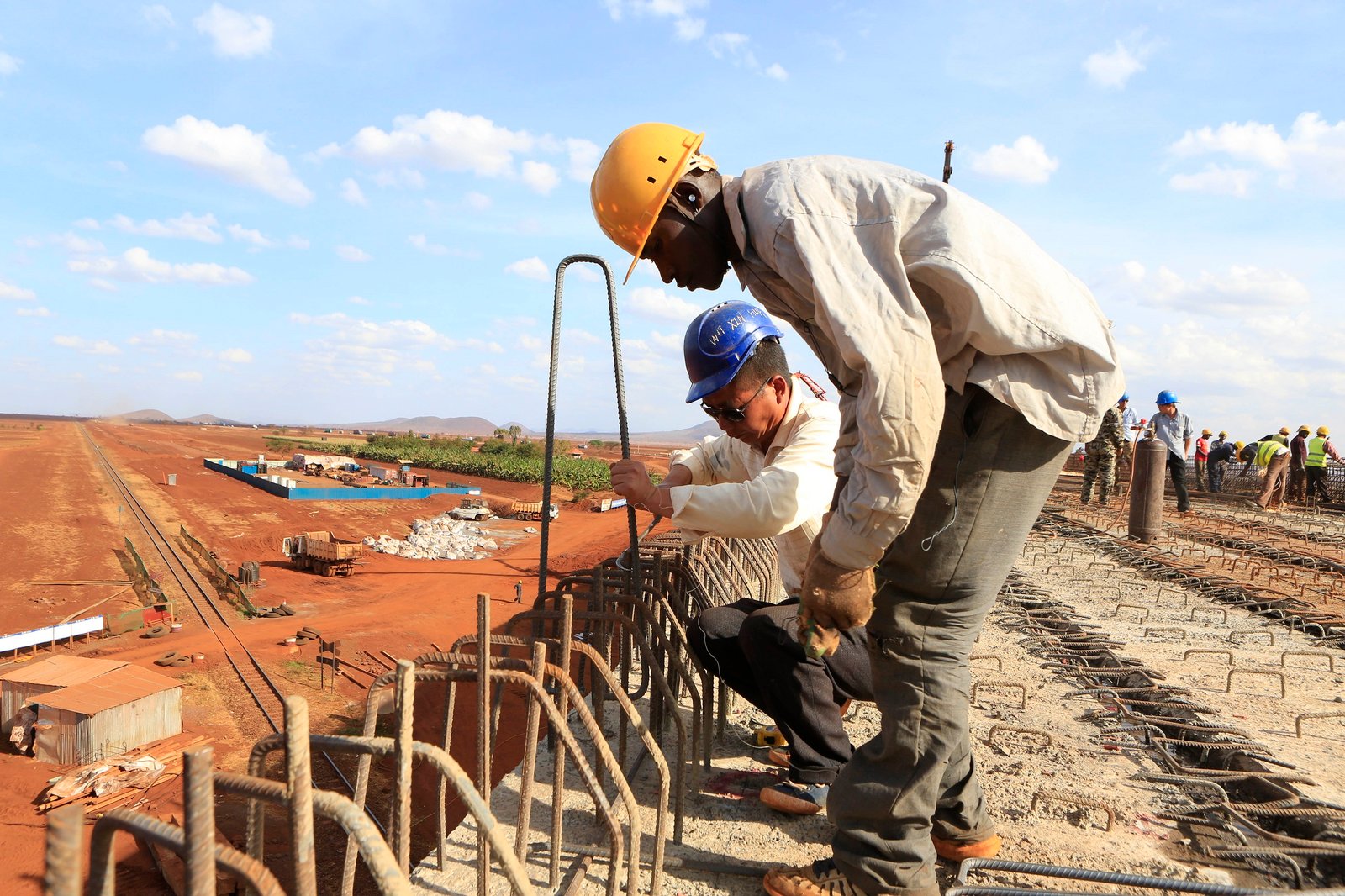
It is no secret that the United States and China have very different philosophies when it comes to Africa. China has adopted a more state-led approach, with state-owned enterprises and policy banks spearheading Africa’s infrastructure development. While the US is keen to let private companies and markets take the lead in commercial development, the US government itself is more focused on capacity building and governance issues on the continent.
The long-standing question has been whether these two powers can work together to promote Africa’s development. Such discussions took place between the governments of both countries. In 2014, it was reported that President Obama’s signature Power Africa Initiative was considering partnering with China to improve electricity in Africa. Around the same time, China reportedly approached the United States for cooperation on the ambitious Inga-3 hydropower project in the Democratic Republic of the Congo. However, many years have passed without any major developments regarding these speculations due to multiple considerations, especially political, economic, and reputational.
As China expands its Belt and Road Initiative (BRI) in Africa, government-level U.S.-China cooperation in Africa continues to be lacking. However, this trend stands in sharp contrast to the growing cooperation between Chinese and American companies on infrastructure projects on the continent. Indeed, while Chinese projects and financing have a tradition of favoring Chinese contractors and providers, some U.S. companies have become beneficiaries of China’s Belt and Road investment campaign due to their technological advantages.
Multinational industrial giants appear to be winning big by partnering with major Chinese state-owned companies in Africa. From early on, General Electric (GE) was “well prepared to partner with mainland financial giants, infrastructure builders and power producers to unlock business potential” along the Belt and Road. GE partnered with China Machinery Engineering Corporation (CMEC) on the Kipeto wind farm in early 2015. CMEC is the project contractor, while GE will provide machinery, equipment, technical support and training. Strictly speaking, the Kipeto wind farm is not a Chinese project, given that CMEC was only a contractor, but it paved the way for more diverse and in-depth cooperation between GE and other Chinese companies in Africa.
More recently, GE has been working with state-owned China Power Construction Corporation (PowerChina) to build power plants and power grids in African countries such as Nigeria. In November 2017, the companies launched a roadshow in Nigeria, Ethiopia and Kenya during which they presented a detailed market report on Nigeria’s power grid system that addresses the challenges identified by both companies in delivering electricity to Nigeria. This report represents a shift towards more proactive market development efforts that not only address the main goal of projects along the Belt and Road to generate power, but also provide a long-term perspective that benefits end users and ensure that power is distributed effectively according to the country’s energy needs. To this end, a memorandum of understanding was signed between GE and Power China.
The collaboration between GE and Power China is seen as an evolution and expansion of the previous EPC (engineering, procurement and construction) project model that the Chinese infrastructure company was famous for. Chinese and American companies are expanding beyond the traditional EPC role of Chinese contractors into areas of “joint market development, joint financing, and joint operations.” Based on GE’s strong reputation and credibility, the Chinese side has focused on GE’s ability to deploy advanced infrastructure industrial capabilities, technological knowledge, and international financing channels. In this sense, projects may still be owned by African countries and bid on and developed by Chinese companies, but with US companies supplying equipment and technology and co-financing from non-Chinese sources. Moreover, the common vision is to design, plan and systematize African markets, transforming single projects into an expanded web of related upstream and downstream opportunities.
Other American multinationals are also actively exploring business opportunities in Africa related to the Belt and Road Initiative. Caterpillar sees BRI as a key growth area for construction equipment sales. Caterpillar has built one of the world’s largest construction machinery factories in Xuzhou, China, to meet growing demand from the Belt and Road. Its equipment has been installed at several Chinese construction sites in Africa, including the port of Abidjan in Ivory Coast, road projects in Ethiopia and Senegal, and the Kafue Gorge sewage power plant in Zambia. Caterpillar’s long history of operations in Africa has created a strong base for Chinese business partners who are unfamiliar with the local environment. To expand its business portfolio, Caterpillar organized multiple delegations of major Chinese contractors to Africa to conduct market research through its network of local agents, distributors, and service providers. Caterpillar does not disclose BRI-related sales, but China accounted for half of Caterpillar’s 22% sales growth in the Asia-Pacific region in the final quarter of 2017, and that number is expected to grow further in 2018.
Honeywell has cited working with Chinese contractors for “third-party market development” as a top priority. According to Honeywell China’s CEO, the company’s Process Solutions Division and Honeywell Universal Oil Products (UOP) have participated in more than 20 overseas EPC projects in China, including in Africa, over the past 20 years. Honeywell China, in particular, is keen to partner with major Chinese companies to serve third-party markets under the Belt and Road strategy. Additionally, we aim to introduce products and solutions designed for the Chinese market to high-growth emerging markets, in order to promote exports of “Made in China” as well as “Made in China”. The plan is in response to the Chinese government’s desire to enhance its image as a “powerful scientific and technological power.”
While governments may still be debating, U.S. companies and individuals have engaged with China creatively, proactively, and extensively on Belt and Road projects in Africa. Defense contractor leader Eric Prince recently founded Frontier Services Group, a company that contributes to China’s Belt and Road Initiative and is now listed in Hong Kong. The company’s strategy includes integrated security, logistics and insurance services solutions in conjunction with BRI. Prince has established offices in Nairobi and Johannesburg to manage business operations in Africa. It is clear that the risk management, rapid response, static, and mobile security aspects of the company’s protection services are designed to address security risks associated with Chinese assets and nationals in Africa, a major headache of China’s economic engagement in Africa.
It should be pointed out that foreign companies are at a disadvantage in the competition of BRI projects, as BRI is designed to absorb China’s excess production capacity. However, companies with established relationships in China and unique or unparalleled strengths that are not matched by their Chinese peers stand to benefit. Regardless of the US government’s preferences, companies don’t seem to care much about the morality or style of China’s Belt and Road as a political strategy.
