


CESA warns of crisis in maintaining national infrastructure
The Consulting Engineers of South Africa (CESA) has warned that South Africa faces a worsening national infrastructure maintenance crisis due to years of underinvestment, reactive asset management and a lack of engineering skills. CESA hopes that President Cyril Ramaphosa’s State of the Union address will give this issue clear and decisive attention.
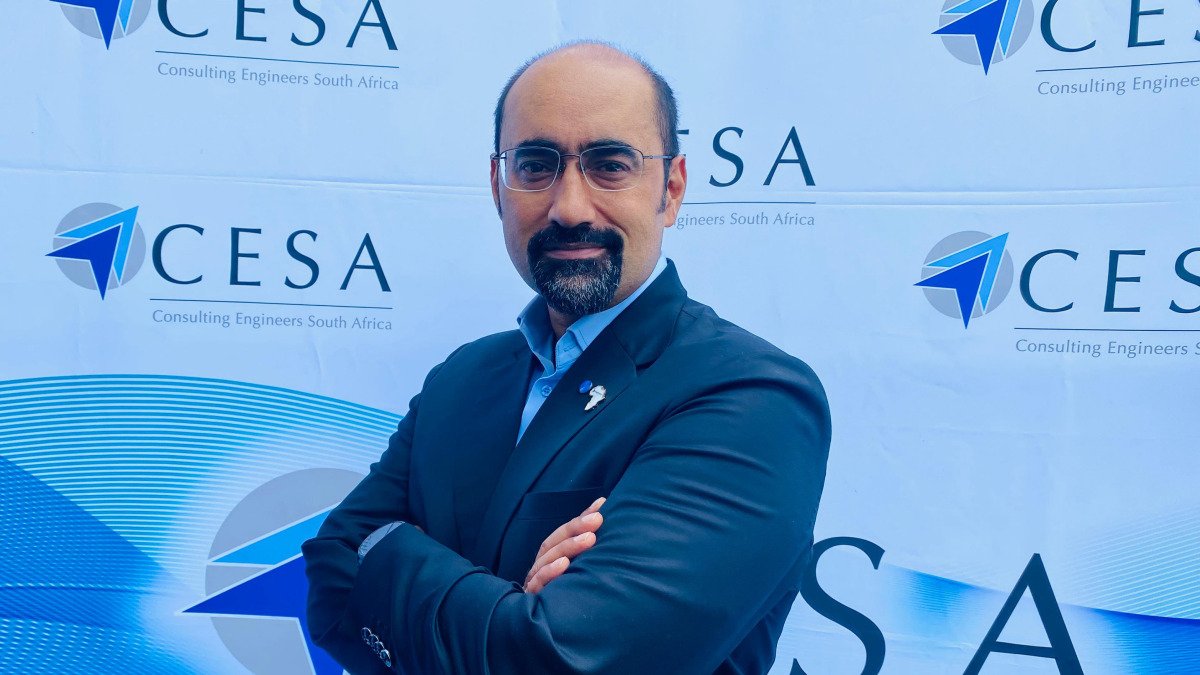
The CESA president was speaking at the organization’s annual media address in Sandton, ahead of his first year as president of the organization. Dr. Vishal Haripersad He said the country’s infrastructure issues are no longer an abstract policy concern, but are felt every day by citizens, businesses and governments alike. “We must recognize the fact that what we are facing is a national infrastructure maintenance crisis,” Dr. Haripersad said.
While the government’s pledge to invest more than R1 trillion in public infrastructure over the next three years is welcome, Haripersad warned that money alone will not be enough to reverse the decline unless long-standing structural problems are resolved.
CESA pointed to the findings of the National Planning Commission, which showed a decline in per capita GDP growth, an unemployment rate of 33.9% (more than 45% for young people), and persistently low levels of public and private investment. The European Commission report said these trends reflect constraints on job creation, weak business confidence and infrastructure deficiencies.
The impact of lack of investment is evident in the growing maintenance backlog across public infrastructure. Haripersad noted that many local and state authorities continue to use reactive asset management, responding only when system failures occur. For example, the Minister of Public Works and Infrastructure dean macpherson estimates the maintenance backlog at R30 billion, affecting more than 56,000 state-owned properties.
Dr. Haripersad explained that nowhere is the crisis more evident than in the water sector. Earlier this year, Parliament was told that R400 billion was needed to fix South Africa’s water and sanitation system. “For many communities, the impact is already clear, not because there is no water, but because aging infrastructure makes it impossible to reliably provide water,” he added.
Recent floods in Limpopo and Mpumalanga and bushfires across several provinces have further highlighted the consequences of a largely reactive approach to infrastructure risk. Dr Haripersad said these events highlight the urgent need for proactive assessment, maintenance and resilience, especially in the context of climate change.
Against this background, Dr. Haripersad introduced a guiding theme for his Presidency. “If not the engineers, then who? To restore our purpose and secure our future.” Based on the principle of UbuntuHe emphasized that engineering is not just a technical profession, but a shared responsibility based on accountability to society.
CESA highlighted South Africa’s severe engineering skills shortage, with approximately one engineer for every 3,100 people, compared to significantly higher proportions of engineers in developed countries, according to the South African Engineering Technology Council. This equates to a shortage of more than 60,000 engineering professionals. Dr Haripersad described this as a “failure not just of policy but of collective will” and called for greater investment in STEM education, mentorship and structured professional development.
The organization also raised concerns about a procurement system that prioritizes minimizing initial costs over quality, longevity and social benefits. He warned that this “price only” mentality puts both infrastructure and communities at risk, forcing professionals into unsustainable procurement cycles just to stay in business.
CESA further emphasized the importance of integrity and governance in infrastructure provision. Procurement-related corruption, weak oversight and slow implementation continue to undermine public trust and undermine results. Dr Haripersad said that restoring trust requires improved ethical behavior, transparency, enforcement and safety on the ground.
Finally, CESA called for meaningful representation of engineers in decision-making forums in government and public institutions. “If you’re serious about infrastructure delivery, governance, and value for money, you can’t have engineers sitting in the corner,” Haripersad said.
“As a nation, we must decide whether we are ready to be accountable, build capacity, deliver real value, and protect our integrity,” he said. “Our collective future depends on it.”
