


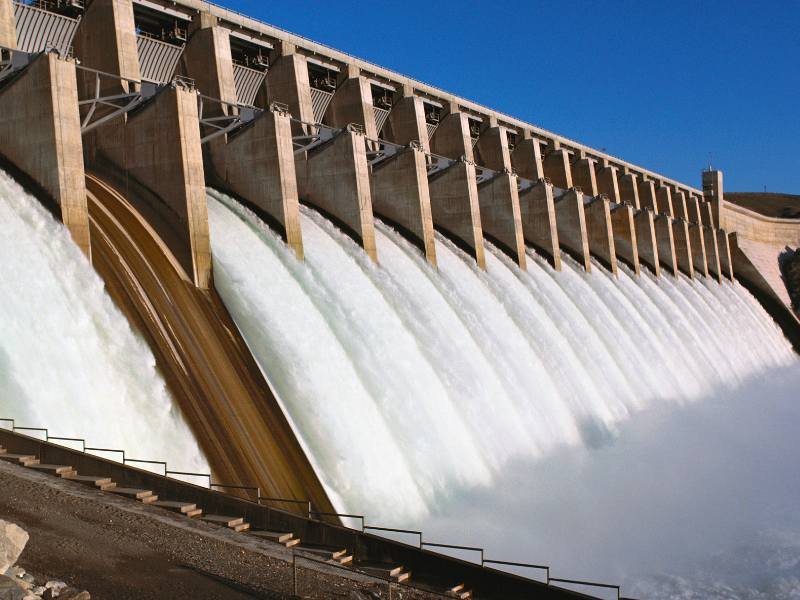
Africa has developed only 11% of its estimated 600GW of hydropower potential, but a wave of new projects promises to change this trend. While hydrocarbons have long been the backbone of electricity supply, recent investments in hydropower are positioned as a strategic tool to strengthen the grid and harness renewable energy resources.
Jonathan Ambrogi, Head of Business Development at EnGreen, told Energy Capital & Power at MSGBC Oil, Gas & Power 2025 that “a well-defined electricity mix that incorporates both renewables and hydrocarbons provides the clearest path to powering the region,” highlighting the need for a balanced approach to meeting growing electricity demand.
Could hydropower be a solution for landlocked countries?
For landlocked and semi-landlocked countries such as Ethiopia and the Democratic Republic of the Congo, hydropower development is not just a clean energy option, but also an economic one. Due to limited access to marine fuel imports and weak pipeline infrastructure, these markets have traditionally relied on hydrocarbons, which have high transportation costs and volatile prices. Hydropower provides a structural alternative, providing large-scale domestically sourced baseload electricity that reduces exposure to imported fuels while enhancing energy security.
Ethiopia has been at the forefront of this change. The 5.1 GW Grand Ethiopian Renaissance Dam (GERD) – a $5 billion project launched in September 2025 – has expanded domestic power generation capacity and positioned the country as a regional electricity exporter. The GERD has also triggered broader investment trends, with Ethiopia currently pursuing a hydropower pipeline valued at approximately $3.2 million and $7.15 billion through public-private partnerships (PPPs).
Similar developments are unfolding in the Democratic Republic of the Congo, where hydropower ambitions are underpinned by the $80 billion Grand Inga complex, a long-term project with a potential of up to 44 GW. The $12 billion Inga 3 alone could provide between 2GW and 11GW of electricity generation through phased PPP development, while smaller projects such as the 206MW Ruzizi III involving the Democratic Republic of Congo, Rwanda and Burundi are targeted for regional generation by 2030. For the Democratic Republic of the Congo, this transition to hydropower is expected to support the country’s growing mining operations.
Promoting Africa’s energy-intensive mining boom
In Zambia, privately owned copper mines consume more than half of the electricity produced. Rising demand for copper and cobalt is attracting new industry participants and putting pressure on the national power grid. Hydropower has emerged as the country’s clearest path to meeting this growing energy demand. Governments and the private sector are pursuing a series of projects to expand production capacity and stabilize supply. These include the $500 million, 180 MW Gonye Falls Station, scheduled to come online in 2026. The 255 MW Runsempha Lower Station is planned for $300 million in 2027. The 163 MW Lubuwu Cascade is $800 million and scheduled for 2028. and the 2.4GW Batoka Valley project, a $4.2 billion cross-border scheme with Zimbabwe targeted for commencement in 2030.
Similar challenges are occurring in Guinea-Conakry, where the iron ore and bauxite sector faces a surge in power demand from projects such as the $30 billion Simandou iron ore mine. In 2022, the government will require mining companies to process minerals locally, increasing pressure for reliable and affordable electricity. Hydropower offers a clear solution with 10 GW targeted under the Simandou 2040 economic development program. Operating projects include the $527 million 240MW Kaleta power plant and the $2 billion 550MW Souapiti power plant, while supply will be further strengthened by expansion plans including the 300MW Amalia, 294MW Koukoutamba and three small hydropower stations totaling 30MW by 2027.
Diversification and pursuit of further production capacity
Across Africa, energy transition strategies increasingly combine hydropower expansion and gas monetization, rather than substituting one for the other. This is increasingly evident in gas-rich countries such as Tanzania and Mozambique. Tanzania has gas reserves of 57 trillion cubic feet (tcf) and is investing heavily in hydropower to bridge the country’s power gap and provide electricity to rural areas. The project includes the 2 GW Julius Nyerere Hydropower Plant on the Rufiji River. The project is a $2.9 billion project that will be completed in 2025 and will nearly double the country’s power generation capacity. The $1.5 billion, 358MW Rufuji project is expected to be online by 2028. and the $635 million, 222 MW Lumakari Station, which is targeted to open in 2029.
Mozambique, with 100 TCFs based across the Rovuma Basin, is taking a similar approach. The country is targeting several projects, including the $6.4 billion, 1.5GW Mfanda-Nkwa project (2031) on the Zambezi River. The $6 billion Cahola Bassa North Bank expansion will add 1.2GW to the existing 2,075MW complex. It also includes the development of 1 GW Chamber, 650 MW Rupata and 200 MW Boroma, aimed at further unlocking the potential of the Zambezi Basin. These hydropower initiatives are expected to increase the country’s electricity generation by more than 50%, powering more than 3 million homes and increasing exports to neighboring countries, particularly South Africa.
As hydropower expands across Africa, it is becoming central to the continent’s quest for affordable power, grid stability, and industrial competitiveness. However, the most sensible approach is to combine hydropower with complementary fossil fuel generation to support continent-wide energy security while ensuring grid stability and resilience to drought and climate impacts.
