


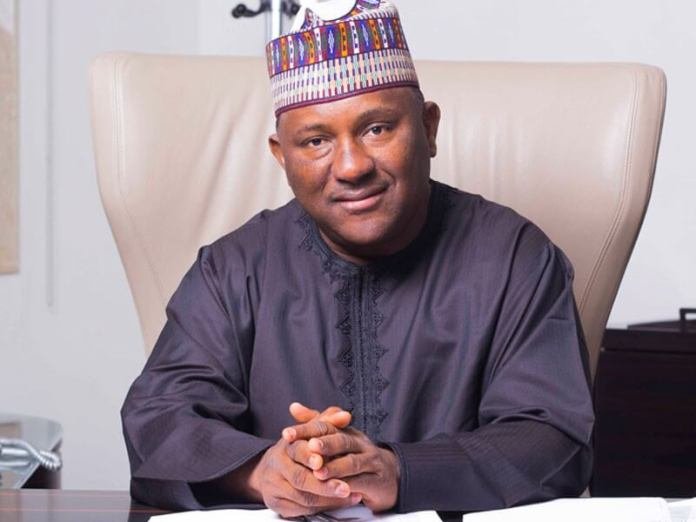
chairman BUA Group’s Abdul Samad Rabiu appealed to governments, financiers and private sector leaders in Nigeria and Africa to urgently transform the continent’s economic model from raw material extraction to large-scale processing and industrial transformation.
Speaking at the African Finance Corporation (AFC) Mining Forum in Cape Town, South Africa, Mr. Rabiu commended the institution for its leadership in mobilizing long-term finance for Africa’s industrial, mining and real sector development, noting that the recent positive S&P Global Ratings outlook reaffirms the importance of strong development finance institutions in shaping Africa’s growth trajectory.
Drawing on BUA’s 16-year journey in mining and cement production, he recounted how Nigeria was once heavily dependent on cement imports despite having vast limestone deposits. He described the challenges of constantly chasing currency to import cement, exposing the company to currency fluctuations and supply uncertainty.
“We were spending more time chasing currency than selling cement,” he said, explaining that BUA ultimately took a strategic decision to invest in local cement production based on Nigeria’s limestone resources.
“Currently, BUA mines and processes about 40,000 tonnes of limestone every day and produces about 1 million tonnes of cement every month. As a result, Nigeria has moved from being a net importer of cement to a net exporter, saving billions of dollars in foreign exchange annually,” he said.
He stressed that this transformation would not have been possible without funding from development financial institutions, particularly the AFC, which has supported BUA Cement and other industrial operations with over $400 million in long-term financing. He pointed out that a significant portion of the facility has already been repaid, proving that well-structured African industrial projects are developmental and financeable.
Extending the discussion to the wider continent, he highlighted what he described as Africa’s “structural paradox”. Although Africa is rich in resources, most of its mineral resources are exported raw or with minimal processing. Much of the gold, platinum, cobalt, copper, iron ore and diamonds is shipped overseas for processing, but African countries import the finished products at significantly higher prices.
He pointed out that although Nigeria has over 4 billion tonnes of iron ore, it spends between $3 billion and $4 billion annually on importing steel products.
The same pattern exists in agriculture, he noted. Four African countries produce about 75% of the world’s cocoa, but Africa accounts for only a small portion of the more than $200 billion global chocolate industry. Meanwhile, Africa, which accounts for about 60% of the world’s arable land, continues to import billions of dollars worth of food each year.
“Africa is not lacking in resources,” Rabiu asserted. “Africa lacks processing capacity, industrial scale and strategic execution.”
He called on development finance institutions to increase long-term financing for philanthropy, industrial value chains and infrastructure, while calling on governments to adopt deliberate policies to encourage local processing and curb raw exports where production capacity exists.
“Africa must move from extraction to transformation, from potential to productivity, and from resource wealth to shared prosperity,” he concluded.
