


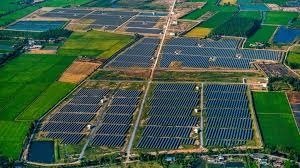
As the pace of solar-powered aquaculture increases across Asia and Africa, SMEFUNDS Chief Executive Dr. Femi Oye has expressed strong support for the integration of floating solar power with fisheries and aquaculture projects, saying this model is one of the most promising investment frontiers for small and medium-sized enterprises in Africa.
Oye’s endorsement follows growing global evidence that solar-powered aquaculture is not just an environmental innovation, but a commercially viable and scalable business model that can increase rural incomes while addressing Africa’s persistent energy shortages.
“What we see in China and elsewhere in Asia is not a distant dream, but a blueprint. A 55-year-old farmer in Nanjing is now producing 175 tonnes of crab per year, creating millionaires within the farming community and reducing carbon emissions at the same time. That story is bound to unfold in Kogi, Anambra, Ogun and all riverine communities across this continent,” he said.
Mr. Oye cited the World Bank’s recent approval of a $50 million grant to expand solar-powered agricultural solutions in Nigeria and five other African countries as validation of the direction SMEFUNDS has long championed. The financing will be provided through the World Bank and African Development Bank’s Productive Use Loan Facility under its Mission 300 program. The initiative targets solar-powered cold rooms, refrigerators, water pumps and grain mills in Kenya, Nigeria, Ethiopia, Sierra Leone, Uganda and the Democratic Republic of Congo.
“The World Bank will never commit $50 million to an idea that doesn’t work, and the Rockefeller Foundation has already added $12 million to that pot, signaling more to come. When an institution at that level speaks with the checkbook, the small business community needs to pay close attention and position itself to benefit,” Oye said.
The model, which has attracted international attention, reflects developments in China, where aquaculture entrepreneur Chen Youhe transformed a 146.7-hectare site in the city of Nanjing into a solar-powered fishing demonstration zone. The project will operate a peak of 50 megawatts of installed solar power capacity, generating approximately 60 million kilowatt-hours of electricity annually. In addition to energy production, floating solar panels have been shown to reduce pond temperatures by 3 to 5 degrees Celsius during peak summer months, prevent aquatic plant loss, and improve overall farm yields.
For Oe, environmental benefits are inseparable from commercial potential. “We talk about air quality, blue skies and tackling climate change. But what motivates ordinary Nigerians is the prospect of a reliable income. Solar farming helps on both counts. We don’t have to choose between prosperity and responsibility,” he said.
SMEFUNDS is focused on expanding access to financing and capacity building for small and medium-sized enterprises across Africa, and is seeking a structured framework to support aspiring entrepreneurs to experiment with solar-integrated aquaculture ventures. Oe revealed that discussions are underway with development finance institutions and private investors to establish a dedicated financing window for such projects.
“In sub-Saharan Africa, more than 80% of the world’s population lives without reliable electricity access,” he said. “This is not just a humanitarian crisis, but an economic opportunity of extraordinary scale. Solar-powered aquaculture addresses energy poverty and food insecurity in a single intervention. For small business financiers, this dual impact is very attractive.”
He also cited lessons from India, where a solar-powered food processing initiative has equipped more than 800 women farmers with solar dryers. The intervention prevented an estimated 40,000 tons of food waste per year and generated additional income of $1,000 to $1,500 per beneficiary. Oye said a similar model could provide a source of income for fishing communities in the Niger Delta, around Lake Chad and along the Benue River.
He called on entrepreneurs and state governments to act quickly as the influx of multilateral funding into the sector accelerates. “The PUFF facility is currently moving from pilot to full-scale rollout. Nigeria is one of the six eligible countries, which means grants, grants and technical assistance will be provided. What we need are entrepreneurs with the vision and courage to apply,” he said.
In conclusion, Mr. Oye described this opportunity as a transformative opportunity for rural enterprise development. “Within three years of launching his solar farm, Chen Youhe created his first millionaire. He now creates dozens of wealthy farmers every year. I want that sentence to be written about Nigerian fish farmers. That is the future that SMEFUNDS is aiming for, and we will support any credible project that brings us closer to it.”
