


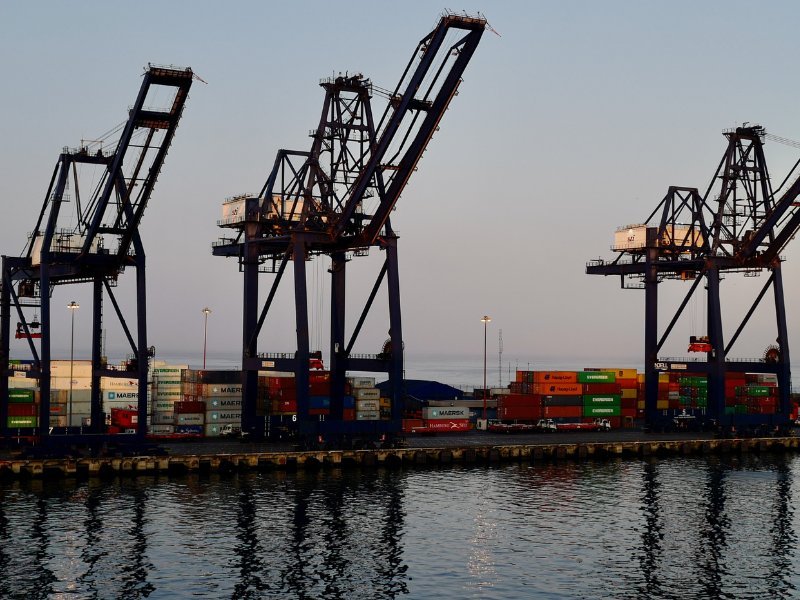
Eco Wave Power and AGFDL have identified 8.3 MW of wave energy potential at Ngurah Port, adjacent to the Coega SEZ in South Africa’s Eastern Cape.
The world’s installed wave energy capacity totals only 13.5 MW, a fraction of the 4,448 GW of annual renewable capacity worldwide.
Africa attracted $13.84 billion in energy transition investments in 2025, of which only $456.9 million was in blended finance.
Eco Wave Power and Africa Great Future Development Ltd (AGFDL) have completed a feasibility study for a potential wave energy power plant at Ngurah Port, confirming the technical feasibility of deploying up to 8.3 MW of installed capacity along the port’s existing breakwater infrastructure. The study assessed site conditions, radio resource availability, and preliminary system configurations, and the parties are currently evaluating regulatory pathways and development schedules. AGFDL has also started consultations in East London to assess a second potential site in South Africa.
The port is a deepwater facility in South Africa’s Eastern Cape, operated by Transnet National Ports Authority and adjacent to the Coega Special Economic Zone (SEZ), one of the country’s most strategically important industrial gateways. Directly integrating wave power into the operations of ports and special economic zones has the potential to reduce grid exposure, enhance energy security, and reduce operating costs within export-driven industrial zones, but can wave power be moved from pilot potential to bankable infrastructure at scale?
A new wave of renewable energy in South Africa
Global renewable energy capacity will reach 4,448 GW in 2024, with new solar and wind additions accounting for 585 GW in that year alone. In contrast, the world’s total installed wave energy capacity is only 13.5 MW. The global wave energy converter market was valued at $19.5 million in 2024 and is projected to grow at only 6.5% until 2034. Research shows that wave energy could become cost-competitive with offshore wind in high-resource regions by the mid-2030s, but that timeline depends on significant technology developments and cost reductions.
South Africa’s west coastline provides strong conditions for this technology, with peak wave power densities exceeding 40 kW per meter of wavefront. Unlike solar and wind energy, wave energy produces a more stable and predictable power generation profile, resulting in grid balancing values. However, with the latest tenders under South Africa’s Renewable Energy Independent Power Producers Program targeting 5GW of new wind and solar capacity, the short-term role of wave energy is best understood as a niche supplement rather than a primary generation source.
Blended finance and port modernization opportunities
Africa attracted $13.84 billion in energy transition investments in 306 deals in 2025, of which power generation attracted $8.14 billion. Blended finance was just $456.9 million. For nascent technologies like wave energy, that gap represents a structural barrier that port modernization programs can bridge.
In recent years, there has been a noticeable momentum for financing against the backdrop of the decarbonization of African ports. The African Development Bank (AfDB) approved a $1 billion corporate loan to Transnet in July 2024 to support a R152.8 billion five-year capital investment plan, and the bank’s African Sustainable Energy Fund also provided targeted technical support towards Transnet’s net-zero strategy.
At the G20 Summit in Johannesburg, the French Development Agency signed a Memorandum of Understanding with Transnet on a €300 million sustainability financing proposal, which includes targets to procure 300 GWh of renewable electricity annually, equivalent to 20% of Transnet’s electricity needs.
The European Investment Bank announced a separate loan of €350 million to Transnet in November 2025 for port modernization and green hydrogen development. In West Africa, the World Economic Forum estimates that the full electrification of Nigeria’s container ports alone could generate $830 million in private investment.
A model that can be replicated across continents
A new wave of port privatization is underway across the continent, characterized by new investment partners and increased hinterland trade facilitation. Port expansion and modernization plans are underway in Tema in Ghana, Ndayane in Senegal, Cotonou in Benin, and Morebaya in Guinea. As these facilities are repositioned as logistics and industrial hubs, a reliable supply of clean energy has become a key operational requirement.
Ngqura’s feasibility study is an early data point, with significant permitting, structuring and financing work remaining before South Africa’s wave energy project approaches financial close. In the short term, combining existing breakwater infrastructure with clean energy technology provides a template for ports that are already attracting attention for DFI financing. If the technology is successful, it could be replicated across Africa’s vast coastline.
