


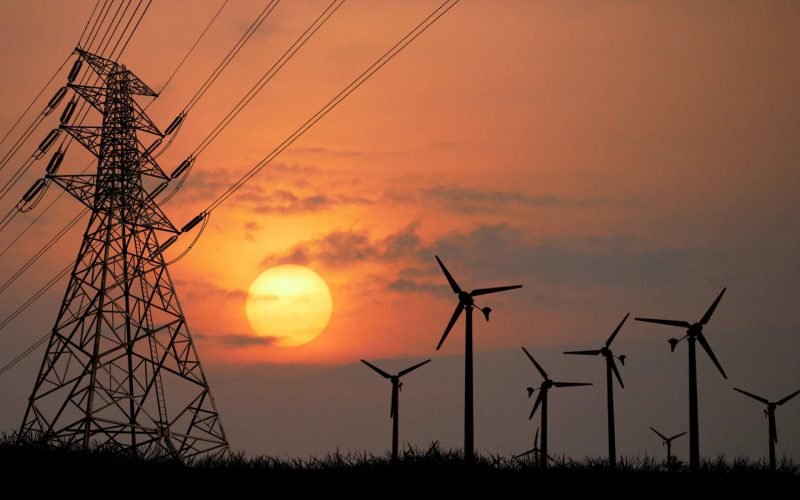
EDF will operate 78 wind turbines with a total capacity of 420MW
The Koruson project is part of a 2.6 GW renewable energy project awarded under REIPPP bid slot 5 in 2021.
South Africa expects to mobilize R50 billion in private investment from 25 renewable energy projects awarded under REIPPP bid slot 5
Independent power company EDF Power Solutions has commissioned three wind farms under the broader Colson 1 cluster, adding 420 MW to South Africa’s national grid. The wind farms (Saint Claar, Fes Komoya and Coal Scope) were originally awarded in bid slot 5 of South Africa’s Renewable Energy Independent Power Producer Procurement Program (REIPPP) in 2021, with the aim of procuring 2.6 GW of new generation capacity.
Corson 1 is part of 12 wind farms awarded in this round, representing a total of 1.6 GW of wind capacity, alongside 13 solar projects totaling 1 GW. While recent commissioning milestones show the REIPPP Bid Window 5 project moving from approval to operation, concerns about development speed remain.
Supporting energy security and industrial growth
Originally procured to address load shedding, the project is now commencing operations during a period in which South Africa has recorded approximately 300 consecutive days without power outages. However, as industrial activity expands and power demand increases, the generation capacity from Colson and the other five bid window projects is expected to support grid resilience while advancing the country’s decarbonization plans. South Africa aims to increase the share of renewable energy in its energy mix to 40% by 2030 to ensure energy affordability for its growing industrial base.
“This project will make a significant contribution to meeting South Africa’s electricity needs, supplying the equivalent of 579,000 South African households per year and saving 1.8 million tonnes of CO2 per year,” said Tristan de Druas, Vice President, EDF Power Solutions Southern Africa.
The cluster will form part of EDF’s wider 1.5GW renewable pipeline currently under construction in South Africa.
Power generation expands, but transmission is insufficient
The electricity generated at Corson 1 will be delivered under a 20-year power purchase agreement with Eskom and will be integrated into the national grid via a substation capable of providing 1.5 gigawatts of renewable capacity. This is in line with South Africa’s wider transmission expansion strategy, which includes the deployment of 14,000km of new transmission lines to accommodate increased generation capacity.
In a previous report, Energy Capital & Power cited South African Minister of Power and Energy, Kgosienzo Ramogopa, highlighting the urgent need to accelerate the development of electricity transmission infrastructure across Africa to address energy access constraints. He emphasized the importance of regional cooperation to reduce financial burdens and maximize the value of cross-border electricity trading.
“Brazil alone has more power lines than all 38 African countries combined, a clear symbol of inequality. Without transmission, there is no access. If we cannot move electrons across borders, we cannot power development,” Minister Ramogopa said.
Beyond power: economic growth and job creation
With 40% of the project’s value comprised of local content and employing more than 4,600 workers during peak construction, Colson 1 advances REIPPP’s job creation goals. Specifically, the Bid Window 5 project targets a total of 13,900 jobs across its wind and solar portfolio, along with commitments to ensure 25% Black participation in the project company, 5% Black women ownership, and 44% local content during construction.
Once completed, the Bid Window 5 project is also expected to contribute approximately R2.7 billion to socio-economic development, enterprise support and skills initiatives over its 20-year lifespan, supporting local content development in South Africa.
Bid Window 5 As projects continue to come online, the focus is shifting from procurement to execution. Scaling up transmission, maintaining investor confidence and accelerating future bidding rounds will determine whether South Africa can translate increased renewable energy capacity into sustainable energy security, industrial competitiveness and long-term grid stability.
