


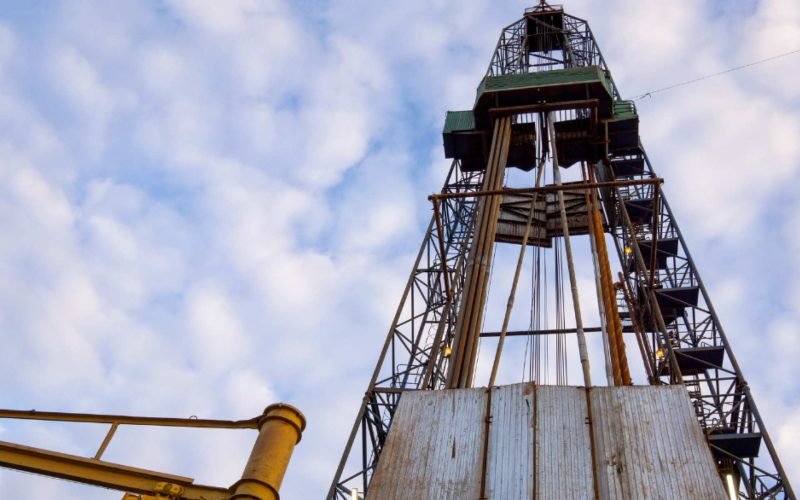
PASA will award three new exploration rights to D3 Energy, expanding South Africa’s onshore gas footprint.
The government aims to quadruple the contribution of oil and gas to GDP from 1% to 4%.
The Karoo Basin’s estimated 200 tcf shale gas resources support long-term domestic supply ambitions.
South Africa is accelerating efforts to unlock the country’s natural gas potential, with the Petroleum Agency of South Africa (PASA) awarding three oil exploration rights to D3 Energy in February 2026. The approval is part of the national strategy to monetize the country’s gas resources and increase the contribution of the hydrocarbon sector to GDP from around 1% to 4% in the medium term. With multiple operators securing acreage and regulatory reform gaining momentum, the key question now is whether South Africa is finally moving from the licensing cycle to a credible development stage.
Exploration rights expand Free State gas and helium prospects
PASA has approved exploration rights ER391, ER392 and ER393, allowing D3 Energy to explore for oil, natural gas and helium resources in the Free State. This approval triggers the next development step, environmental clearance and public consultation, which is an important milestone towards project implementation and resource development. This builds on the company’s previous approval of Technical Cooperation Permit TCP273, which covers approximately 82,777 acres.
“The acceptance of these exploration rights applications is another significant step in advancing our onshore gas and helium strategy in the Free State,” said David Casey, Managing Director of D3 Energy.
Regulatory approval signals national strategy to free up domestic gas supplies
The expansion of D3 Energy’s exploration footprint is consistent with South Africa’s broader objectives to fast-track domestic gas development to reduce import dependence and improve long-term energy resilience. The country currently imports 90% of its natural gas needs (mainly from Mozambique) and is pursuing a broad strategy to accelerate domestic upstream development.
“We will continue to develop infrastructure to integrate new deposits and access gas to South Africa. The biggest solution is for us to have access to our own gas deposits,” South Africa’s Minister of Minerals and Petroleum Resources Gwede Mantashe said at the 2025 G20 Africa Energy Investment Forum.
Licensing momentum suggests widespread investment appetite
D3 Energy’s license is also part of a broader licensing drive aimed at revitalizing South Africa’s onshore gas sector. In January 2026, H2Au Ltd received PASA approval for two exclusive exploration rights covering over 3 million acres in the Bushveld complex for natural hydrogen resources for industrial energy applications.
Additional exploration rights have recently been granted to companies such as Kinetico Energy, Plateau Helium and Motuoane Energy, reflecting renewed investor interest and government efforts to support onshore gas exploration.
Legal reform to reduce investment risks
South Africa is also strengthening its regulatory framework to attract investment and accelerate upstream development. The country has finalized the Upstream Petroleum Resources Development Act 2024, with the Ministry of Mineral Resources and Petroleum expected to re-release the draft for public consultation in January 2026. The law is expected to introduce clearer licensing rules, improve investor certainty and strengthen participation in local content.
In parallel, the country lifted a long-standing moratorium on shale gas exploration in October 2025. The move is expected to unlock the development potential of the entire Karoo Basin, which is estimated to hold more than 200 trillion cubic feet of shale gas resources. Successful development of these resources could significantly shift South Africa’s dependence on gas imports, strengthen baseload supply for industry and reposition domestic gas as a strategic pillar of long-term energy security.
Taken together, acreage expansion, regulatory reform and shale liberalization suggest that South Africa is laying the foundations to move beyond exploration, but only sustained capital deployment and timely FID can confirm whether the country has truly entered the development stage.
