


In recent years, reports have surfaced that African countries are planning nuclear power plants.
Currently, the only nuclear power plant operating in Africa is Koeberg in South Africa, which generates 1.86 gigawatts of electricity. This is about to change, according to some African leaders. Ugandan President Yoweri Museveni recently made the surprising statement that Uganda plans to generate 30GW of nuclear power by 2026. This is equivalent to 16 times the current total amount of nuclear energy for the entire African continent.
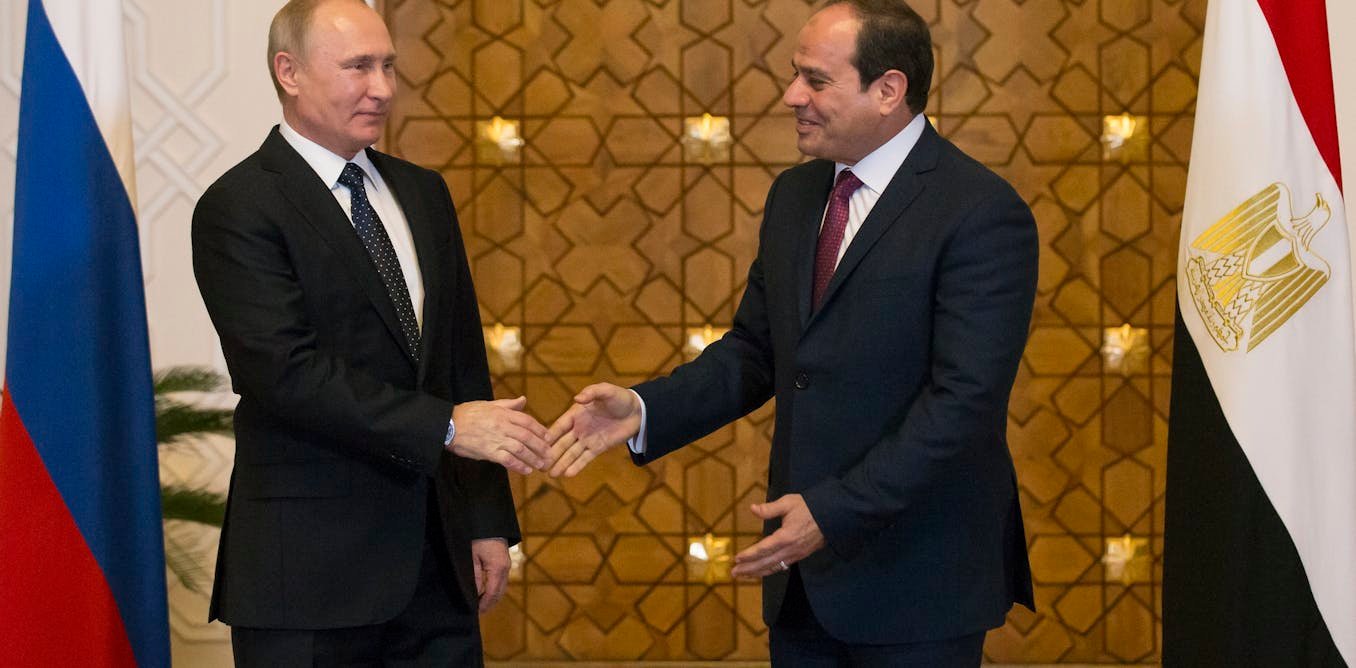
Uganda is just one of many countries interested in nuclear power. Russia’s nuclear agency Rosatom boasted that it had signed memorandums of understanding on nuclear power with Egypt, Kenya, Nigeria, Sudan and Zambia. Uganda is also on the list.
Most countries in Africa are suffering from severe electricity shortages. To meet current needs, most power generation capacity will need to be doubled.
According to statistics from the International Energy Agency, Kenya, Sudan and Zambia rely primarily on hydropower. A 2.4GW nuclear power plant would double the amount of electricity generated. Nigeria’s main energy source is gas, and doubling its capacity here would require a 4.8GW nuclear power plant.
Egypt is the only country in the Rosatom agreement that has a concrete plan. A site for the construction of a 4.8GW nuclear power plant has been identified in El Dabaa on the Mediterranean Sea, and construction is believed to be imminent. In other countries, the location and scale of projects have not yet been determined.
Elsewhere in the world, countries such as Germany, Belgium and the United States are scaling back their nuclear programs or withdrawing them altogether. The reasons include not only economic factors, but also the perception of increased risk following the Fukushima disaster in Japan.
The cost of electricity generation from solar and wind technologies has fallen dramatically. Already cheaper than electricity produced by nuclear power plants, renewable energy is set to become even cheaper.
Given that South Africa has shelved its nuclear power plans due to affordability, will resource-poor African countries find it even more difficult to make such investments?
loan agreement
Nuclear agreements are notoriously shrouded in secrecy. But it is possible to get a sense of Rosatom’s plans for the African nuclear deal by looking at recent examples where details of mutual commitments have been made public.
The agreement concluded with Bangladesh provides a useful reference point for understanding other agreements concluded with Russia. For the 2.4GW Rooppur nuclear power plant, Rosatom is providing most of the USD 12.65 billion loan. This only covers estimated construction costs. Accrued interest, potential cost overruns, operations and decommissioning can more than double this initial outlay. This would likely bring the total cost to around US$30 billion.
A similar funding arrangement exists for Egypt’s El Dabaa project, mentioned earlier. Here, Rosatom has provided a US$25 billion loan, which is also expected to cover construction only.
The annual interest rate for both Rooppur and El Dabaa loans is around 3%. Additionally, the loan is structured so that repayments begin only 10 to 13 years after the loan is disbursed, with annual payments continuing for 22 to 28 years thereafter.
Countries that host nuclear power plants initially pay very little, but once repayments begin, national finances and electricity consumers suddenly face huge burdens that most African economies would never be able to bear. By that point, a 3% annual interest rate could increase your debt amount by up to 40%.
The nuclear industry also has a history of cost overruns and construction delays. Therefore, a country may be faced with having to repay more debt than expected while being unable to recover funds from electricity sales.
Equally worrying is that debt puts Russia in a position to wield disproportionate influence over national politics.
Zambia is eyeing the construction of a nuclear power plant on the scale of Rooppur in Bangladesh. The plant is expected to cost US$30 billion. Given that Zambia’s total annual budget is US$7.2 billion, this is clearly unaffordable. If we expand the cost of the loop pool from 2.4GW to Museveni’s proposed 30GW nuclear power plant, the figure would be 15 times Uganda’s annual GDP of US$24 billion.
cheaper option
Are there cheaper alternatives to nuclear power to alleviate Africa’s energy shortage?
There were high expectations for the 40GW Grand Inga hydropower project on the Congo River. However, due to funding issues, this project will not materialize anytime soon.
The most promising solutions appear to be through multiple small-scale power generation initiatives, usually bioenergy, solar heaters, and photovoltaic modules. They provide cheaper electricity than nuclear power and create even better jobs. With its vast agricultural sector, all of Africa has significant biowaste-to-energy potential.
Kenya has shown that there is excellent geothermal energy extraction potential along the Rift Valley.
Many countries, including Egypt and Kenya, have abundant sunshine, making them ideal for solar power generation. With the right incentives, these could drive Africa’s energy generation boom.
