


CAMBRIDGE – With Africa facing a $2.8 trillion financing gap by 2030 to combat climate change alone, one might think that Africa’s funding problem boils down to a lack of capital. But without Africa’s fragmented investment landscape, this and other funding gaps could have been covered by hundreds of billions of dollars managed by institutional investors in Africa and trillions of dollars seeking yield around the world. Freeing up this capital requires a shift from simple financing models to highly leveraged models.
Most development financial institutions are designed primarily as lenders, processing projects, disbursing loans, and measuring success in terms of capital invested. This model remains essential. However, this alone is not enough to meet Africa’s development needs. For Africa to attract the capital it needs, it must be able to offer structured, repeatable and risk-adjusted opportunities to investors.
But with investment projects often bespoke, funding pipelines opaque, documentation inconsistent and exit routes unclear, global investors are evaluating opportunities as one-off bets. Furthermore, domestic institutional investors, constrained by excessive regulation and shallow markets, often direct their savings into short-term sovereign debt rather than long-term productive assets. And after a decade of rising borrowing costs, the government can’t recover by borrowing more.
Development banks must start thinking less like balance sheet lenders and more like “capital architects” operating across three interrelated areas, including global capital. Standardized co-investment platforms, transparent macroeconomic and sectoral dashboards, first-loss products introduced with fiscal discipline, and predictable engagement mechanisms can transform perceived risks into measurable and priceable risks.
Only such changes will provide the structural continuity that investor confidence demands. This will attract global sovereign wealth funds, pension funds, asset managers and climate change agencies looking for long-term exposure.
The second area is domestic institutional capital. African pension funds and insurance companies collectively hold large amounts of long-term savings, but poor regulatory design, shallow markets, and a lack of appropriate instruments make it difficult to invest these funds productively domestically. Development banks should help African countries design infrastructure funds subject to local prudential rules, green bond pipelines denominated in local currencies, securitized SME portfolios, and blended finance vehicles that bring together domestic investors with international partners.
Nigeria Infrastructure Credit offers a glimpse of what is possible, offering local currency credit guarantees to increase the attractiveness of bonds issued to finance local infrastructure projects. Such initiatives do more than simply mobilize private capital. Financial sovereignty will also be strengthened, with lasting, long-term benefits such as reduced dependence on external financing cycles, deepened domestic capital markets, and increased ability to price and absorb Africa’s risks without relying on foreign intermediaries.
Success in these areas will largely depend on advances in the third area: investment platforms. Investors don’t want to create a new framework for each project. Instead, they want to replicate existing structures such as energy transition programs, standardized public-private partnership models, regional infrastructure vehicles, industrial clusters, and sector-specific financing platforms that can absorb large-scale capital.
Once you receive financing for a solar power generation facility, it is a contract. The architecture is a standardized energy platform that combines domestic pension obligations, development bank guarantees, and global equity participation across multiple projects. The difference between trading and markets is reproducibility.
However, the strength of a structure is determined by its fundamentals, and all three areas of global, domestic, and platform-based capital are ultimately anchored in sovereign risk. Sovereign spreads determine the cost of corporate and infrastructure finance, and fiscal credibility determines sovereign spreads. Pretending otherwise risks relocating rather than reducing vulnerability.
Development banks must therefore move beyond their role as capital architects and become macrostrategists, building a single framework to support macroeconomic monitoring, debt sustainability analysis, and coordination of capital structure design. Guarantees and mixed instruments must be evaluated in parallel with sovereign contingent liabilities. Project-level solutions must be designed to avoid compromising financial resilience. Macroeconomic policy and capital mobilization must operate in parallel, rather than in silos.
Operationally, this means translating country and regional economic analysis into intelligence for investors: forward-looking risk assessments, scenario analysis, and policy tracking tools that illuminate Africa’s risk and return dynamics over time. It also means institutionalizing an investor engagement platform that brings together policymakers, regulators, domestic asset owners and global capital. And that means measuring performance not only by spending, but also by catalytic leverage: how many dollars of external capital are mobilized for every development bank capital injection.
It is now clear that Africa cannot rely on externally funded public investments to meet its development needs. Official development assistance is expected to decline by more than 7% in 2024 and continue to decline. Bilateral aid is also shrinking, and China’s infrastructure financing is slowing. Meanwhile, demographic and climate pressures in Africa are increasing.
Fortunately, alternative funding sources abound. Africa’s savings pool is expanding. Pension funds around the world are reallocating their portfolios. Gulf sovereign wealth funds are expanding. Climate financial institutions are looking for reliable pipelines. With the right architecture, Africa can effectively attract and deploy this capital. Development banks should lead the way in its construction.
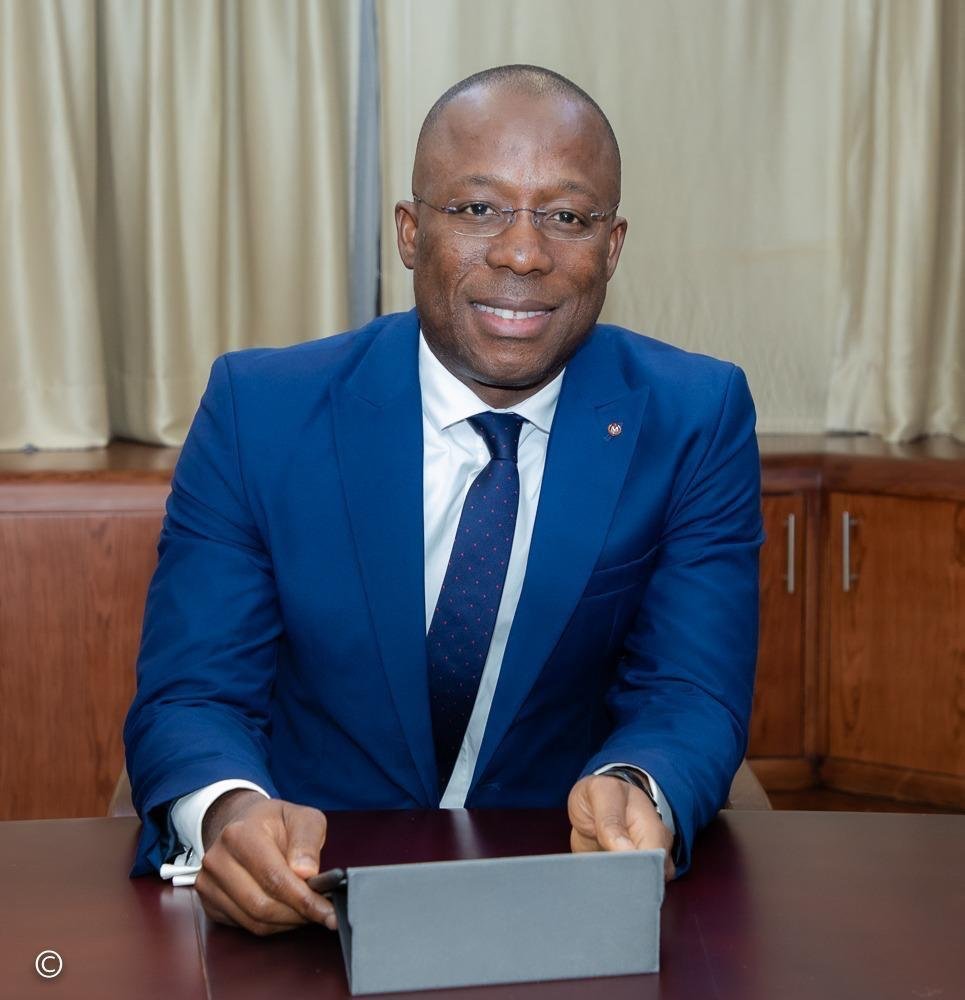
Gómez Agou, former permanent representative of the International Monetary Fund in Gabon from 2021 to 2025, is a fellow at the Harvard Kennedy School. This article was distributed by Project Syndicate.
