


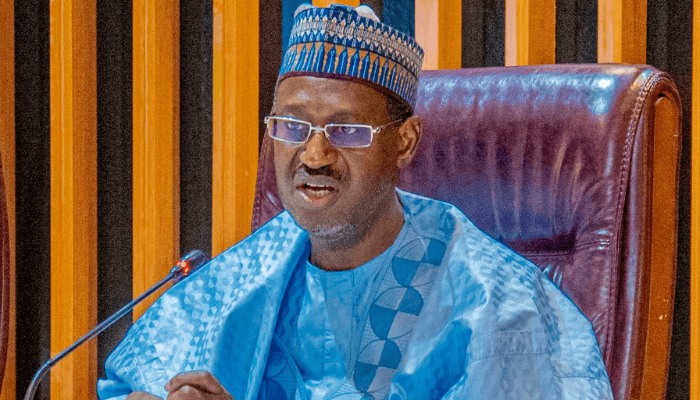
The Minister of Housing and Urban Development, Mr. Ahmed Dangiwa, on Thursday said the National Urban Development Policy (NUDP) currently under development will make Nigeria’s cities sustainable and resilient.
Delivering the keynote address at the 13th session of the National Council on Land, Housing and Urban Development in Gombe, Mr Dangiwa said rapid urbanization would see the country’s urban population increase to 70 per cent by 2050.
According to a statement by his Special Assistant on Media, Mark Chieshe, Dangiwa said his plan to make Nigeria’s cities “15-minute cities” will be effective by prioritizing planning, innovation and sustainable policies.
He added that the policy is currently awaiting approval from the Federal Executive Council (FEC), stressing that the policy is necessary for Nigeria’s sustainable future as it will enable the promotion of public health, mitigation of climate change and the creation of a safe ecosystem for all.
The Minister said: “NUDP’s vision is clear: to transform Nigeria’s cities into well-functioning, prosperous, resilient, safe and livable spaces for all. Achieving this vision requires a ‘business-unconventional’ approach that replaces ‘urban pessimism’ with ‘urban optimism’.”
He says that means embracing high-density urban development that overcomes sprawl, protecting farmland and resources, and adopting integrated, evidence-based urban policies.
He said: “NUDP is also promoting the ‘Healthy Cities’ concept, which integrates environmental health and safe and resilient urban spaces. This includes essential services such as waste management, water, sanitation and local sanitation systems.”
He described the “15-minute city” model as one that provides accessible, self-sufficient neighborhoods with essential services within walking distance and promoting health and connectivity.
Dangiwa stressed that the need for an urban policy was long overdue given the rapid growth of the country’s urban population.
He called for an annual national urban forum, saying this was part of the resolutions agreed at the recent World Urban Forum in Egypt.
“We must grasp the scale of urban growth and the serious challenges it poses. Nigeria’s urban population is rapidly expanding at an annual growth rate of 4.1 percent,” Dangiwa said.
“Our urban population, which was just 9.4 percent in 1950, now exceeds 52 percent and is predicted to rise to 70 percent by 2050. By then, Nigeria will likely be the third most populous country in the world, with a population of over 400 million people.”
He said Nigeria has eight cities with a population of more than 1 million people and 81 cities with a population between 100,000 and 1 million people, but 58.8 percent of urban residents live in slums.
He added that the policy’s goal is to provide a framework to guide long-term, sustainable urban growth, addressing housing and infrastructure needs as well as laying the foundations for economically vibrant, climate-resilient and inclusive cities.
Explaining the relationship between effective urban planning and public health and climate change, Mr. Dangiwa said proper planning improves sanitation, disease control and containment, and ensures prompt access to health facilities.
He stressed that “NUDP is also prioritizing climate action. Climate change poses serious threats with worsening impacts such as droughts, floods and extreme weather events. Without adaptation, climate change could result in losses of 6 percent to 30 percent of Nigeria’s gross domestic product (GDP) by 2050.”
“Urban planning is therefore our first line of defense in building climate resilience and economic security.”
He called on federal, state and local governments to take urgent collective action to implement the policy once it is launched.
He said large-scale housing construction and new urban development were urgent priorities at the moment, but they must be carried out in parallel with effective urban planning.
He commended President Bola Tinubu for his efforts in the past year in the area of housing development, saying the number of houses the ministry was building in one year was more than the total number of houses built in the past eight years.
Emmanuel Ade
follow me:
