


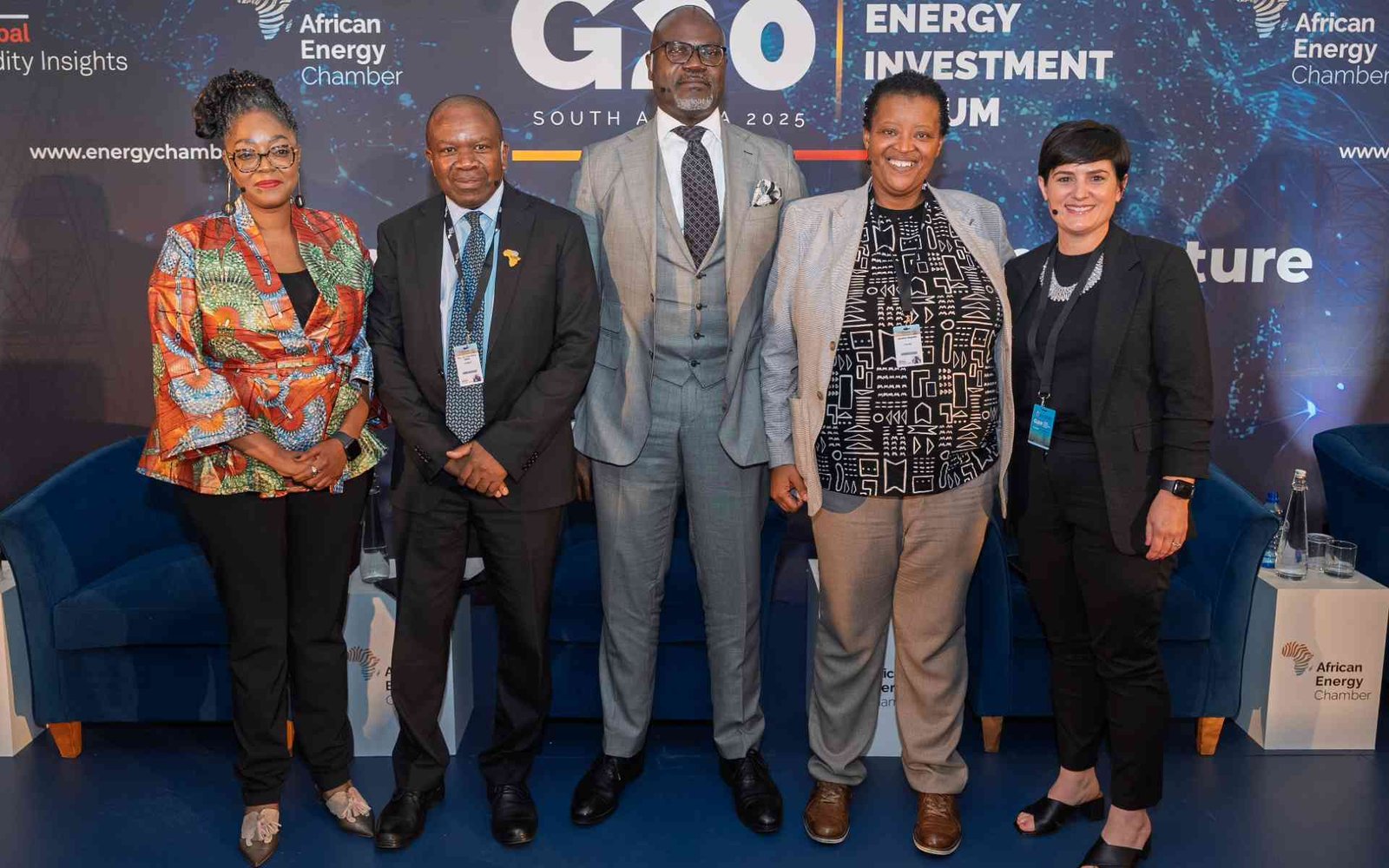
Africa’s long-delayed clean cooking transition will fail without a serious overhaul of how LPG is financed, transported and regulated on the continent, senior executives said at a high-level panel discussion on clean cooking and LPG at the G20 Africa Energy Investment Forum in Johannesburg last Friday.
Speakers pointed to a rare coalition of political support after the G20 endorsed clean cooking as a priority area, but warned that a lack of critical infrastructure and a broken financing ecosystem were slowing progress.
South Africa’s LPG demand remains at “just under 500,000 tonnes”, but supply remains constrained by offline refineries and disrupted transport networks, PetroSA’s acting chief executive Sesako Magadla said. Restarting refineries, including PetroSA’s gas-to-liquids refinery in Mossel Bay, is a “priority”, he said, adding that the company aims to mobilize by 2026 to relieve pressure on the domestic market.
But infrastructure extends beyond production. PetroSA is currently looking at improving the railway, particularly between Saldanha Bay and Mozambique, to reduce congestion and transport LPG on a large scale. Magadola said that “cooperation across energy sectors” is needed and that “once the rail line is operational, we can connect existing fragmented transport networks to transport products.”
Private operators also echoed the call for major transportation reform. Tamsin Rankin-Donaldson, head of marketing and communications at Petredec, said poor logistics and limited terminal capacity meant LPG costs were “10 to 20 per cent more expensive” as companies were forced to “carry smaller loads in smaller terminals”. He said Africa urgently needed “infrastructure to enable higher volumes,” including terminals that can accommodate very large gas carriers (VLGCs).
Petredec is currently building the Tanga LPG terminal in Tanzania and is considering a rail connection from Richards Bay to South Africa’s inland markets. Her biggest policy request was clear. Governments should prioritize “streamlining the permitting process” to accelerate project timelines.
While infrastructure determines affordability, financing determines whether a project moves from concept to construction. Titus Mate, CEO of South Africa’s National Institute for Energy Development, said “green finance mechanisms are underutilized” and investors lack the data needed to quantify emissions reductions and energy savings from clean cooking interventions. “When you think about clean cooking and LPG, the biggest challenge is data.”
He called for a unified pan-African clean cooking data platform and proposed the creation of an LPG Clean Cooking Financing Scheme supported by the AU, G20 and global organizations to “accelerate LPG projects across Africa to reach last-mile users”.
The lack of an emissions credit pathway was also a central topic of discussion. According to the International Energy Agency, Africa needs $37 billion to achieve universal access to clean cooking by 2030, but the current carbon credit framework provides little support for LPG-based solutions.
“Carbon credits need to be introduced as part of the LPG discussion,” said African Refining and Distribution Association Executive Director Anibol Kulaga. While clean cookstoves qualify for the credit, LPG does not, penalizing the very solutions that are most likely to scale up quickly.
“In some parts of Africa, like Kenya, where LPG penetration is accelerating, subsidies are being used, but that is not sustainable,” Kulaga said. Unlocking climate finance for LPG could help replace subsidies with market-driven growth.
For financial institutions, regulatory clarity is of paramount importance. “If I were a financier, I would want clarity on regulations and project readiness,” Kulaga said, adding that Africa also needs to attract a competitive workforce to deliver projects at the required pace.
Rankin-Donaldson emphasized the scale of the challenge. Making clean cooking accessible to everyone by 2040 will require 80 million new connections every year, “seven times the current pace”.
Speakers warned that without rapid investment in transport networks, enabling reforms that recognize the climate benefits of LPG, and a carbon credit framework, Africa risks missing out on a once-in-a-generation opportunity to provide clean and affordable cooking energy.
