


Africa loses an average of $1.84 billion each year to natural disasters, with flooding being the main cause, according to a new report from the Coalition for Disaster Resilient Infrastructure (CDRI).
The power sector accounts for 46% of these risks, followed by telecommunications and transport, highlighting the urgent need to rethink how infrastructure is designed and financed across the continent.
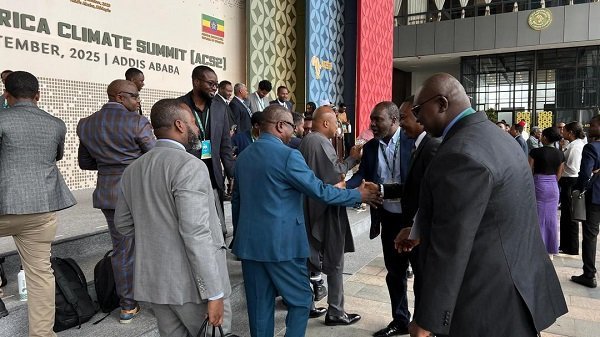
Seydou Issif, Minister of State for Climate Change and Sustainability, made this known in a speech read on his behalf by Cédric Dezel, Technical Director of the Minister’s Office, at the opening of the 2nd African Climate Summit ACS2 2025 in Addis Ababa on Monday.
He said the continent’s infrastructure financing needs are estimated at $130 billion to $170 billion annually, and existing deficits are already slowing gross domestic product (GDP) growth by about 2% annually.
Mr Isif said the Government of Ghana had established a new office dedicated to promoting Ghana’s climate resilience.
He said plans were afoot to create a climate change and sustainability hub and a dedicated unit across ministries and local councils to mainstream resilience in policy and planning.
Issif said Africa’s infrastructure priorities must go beyond traditional roads and power plants to include post-harvest and refrigeration systems to reduce food waste, market access infrastructure to connect farmers and markets, climate-resilient energy systems, sustainable transport and robust digital networks.
“Africa’s future must be built to last. Resilient infrastructure not only protects assets, but also secures food, connects markets, reduces dependence and protects its people,” the Minister said.
Dr. William Bannerman, CEO of Intelligence Nature International (INI), said Africa is moving from commitments to action in the fight against climate change, and leaders are calling for immediate investment in climate-smart infrastructure and renewable energy.
He said environmental, social and governance (ESG) policies, climate finance and sustainability reporting are central to driving accountability and attracting global investment.
Dr. Bannerman said science is essential to developing inclusive innovations to ensure solutions are provided to address Africa’s unique challenges while unlocking opportunities for growth and job creation.
“Africa is ready to lead. The time to declare has passed, the time to declare is now,” participants stressed, urging governments, investors and communities to move from promises to concrete action, Dr. Bannerman added.
INI is a private company that provides sustainability consulting services to organizations around the world. We partner with organizations to advise them on key sustainability issues through sustainability strategy consulting.
CDRI is a global partnership launched by the Government of India in 2019 to promote resilience of infrastructure systems to climate change and natural disasters.
It aims to help countries design, build and maintain infrastructure that can withstand disasters such as floods, cyclones, earthquakes and sea level rise.
The 2nd African Climate Summit ACS2 2025 is themed “Building Sustainablely: Securing the Future of Africa’s Infrastructure”.
From the precious Nyarko Boakye of Addis Ababa, Ethiopia
🔗 Follow the Ghana Times WhatsApp channel now. https://whatsapp.com/channel/0029VbAjG7g3gvWajUAEX12Q
🌍 News you can trust. true story. Anytime, anywhere.
✅ Join our WhatsApp channel now! https://whatsapp.com/channel/0029VbAjG7g3gvWajUAEX12Q
