


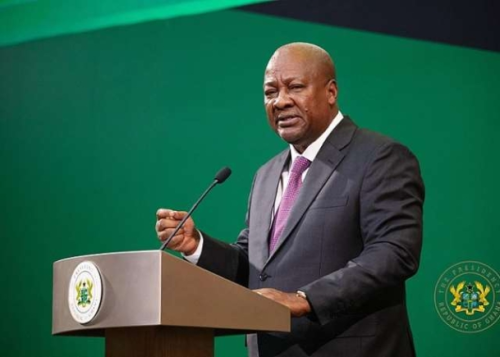
President John Dramani Mahama, at the opening of the World Health Expo Leaders Africa Summit in Accra, Tuesday, December 9, 2025, urged private sector stakeholders to collaborate with African governments through co-investment in the continent’s health industrialization. The President emphasized that Africa is ready to move beyond dependence and towards partnerships defined by innovation and common values.
Speaking at a gathering of more than 350 global and African health leaders at the Kempinski Hotel Gold Coast City, Mr Mahama articulated his vision for a new partnership paradigm that prioritizes co-investment rather than aid-based relationships. The two-day summit, themed Driving Africa’s Health Revolution through Investment, Innovation, Impact and Infrastructure, brought together heads of state, health ministers, investors and policymakers.
The president called on vaccine manufacturers to partner with African governments to establish vaccine production hubs across the continent. He urged pharmaceutical companies to expand into manufacturing biologics, generics and essential medicines on the continent, highlighting the opportunities created by the African Continental Free Trade Area’s unified market of 1.3 billion people.
Mahama appealed to diagnostic innovators, biotech companies and medical device manufacturers to encourage them to set up assembly plants alongside R&D centers and manufacturing facilities in Africa. These investments will improve access to healthcare in Africa while building local manufacturing capacity and creating job opportunities.
The President noted lessons learned from the COVID-19 pandemic, where Africa was often the last to receive aid during global health crises. He acknowledged that the pandemic has exposed fundamental weaknesses in the continent’s health systems, including weak supply chains, limited manufacturing capacity and inadequate investment in primary health care.
In his keynote address, Mr Mahama said Africa cannot afford to be a bystander in shaping global health systems. He stressed the need for the African continent to actively participate in decisions about its health security, scientific leadership and health economics as the world experiences major changes affecting health systems and global cooperation.
The President highlighted the growing innovation ecosystem across Africa and cited Africa’s young innovators in biotechnology, vaccine research, digital health and medical manufacturing. He expressed confidence in their imagination and ingenuity to shape the future of healthcare in Africa and build what he called a new health order.
Mr. Mahama pointed to the role of the African Medicines Agency in strengthening regulatory coordination across the continent and creating conditions for expanding the manufacturing and distribution of medicines. The agency’s work complements the African Continental Free Trade Area’s efforts to create an integrated market for health products and services.
Ghana’s contribution to the continent’s health transformation through the Mahama Cares Trust Fund featured prominently in the President’s remarks. He pledged that Ghana would actively participate in developing sustainable health financing mechanisms that protect families from financial ruin due to health costs.
The President acknowledged the continuing challenges facing Africa’s health systems, including unequal access, weak supply chains, and limited manufacturing capacity. He emphasized that no continent is safe until all continents are safe, underscoring the interconnectedness of global health security.
Minister of Health Kwabena Minta Akandoh told delegates that hosting the summit reflected Ghana’s commitment to driving health transformation on the African continent. The Minister stressed that the platform provides an important opportunity to align policies, innovations and investments to ensure that all Africans have access to quality healthcare.
The summit will include sessions on mobilizing investment and strengthening health infrastructure, and exploring policy reforms and financing mechanisms to drive long-term transformation. Day two will focus on innovation, health equity and security, highlighting the role of technology, youth-led innovation and preventive health in shaping Africa’s future.
Ministerial delegations from Guinea-Bissau, Senegal, Somalia and Nigeria joined Ghana’s leadership at the summit. The gathering will be Africa’s most influential gathering of ministers, policymakers, global health executives and industry decision-makers focused on accelerating healthcare transformation.
Soren Singer, vice president of Informa Markets Healthcare, which organizes the event, said the summit is a unique platform for aligning policy, investment and innovation. She emphasized that bringing together visionaries, governments and investors will lay the foundations for Africa’s health revolution, which will have an impact for generations.
Private sector executives from pharmaceutical companies, medical technology companies and healthcare investors participated in discussions on establishing manufacturing facilities and distribution networks across Africa. Participants considered public-private partnership mechanisms that balance commercial viability and public health goals.
Development finance leaders and multilateral partners considered financing structures that could mobilize the funds needed for large-scale health infrastructure investments. Discussions discussed risk mitigation strategies that make health projects in Africa attractive to institutional investors while remaining affordable to the public.
Representatives from Mount Sinai International also attended the summit to discuss health infrastructure development and service delivery on the continent. The organization’s participation reflects growing international recognition of Africa’s potential as a hub for medical innovation and investment.
This summit builds on the success of the first one in Kigali, Rwanda, and aims to move from dialogue to measurable action. Organizers stress that the work in Accra will guide national priorities, build regional partnerships and support the systems that citizens rely on every day.
Technology and digital health innovations received significant attention, with participants considering how artificial intelligence, telemedicine, and electronic health records can improve service delivery. Youth-led innovations in mobile health applications and diagnostic tools have demonstrated Africa’s growing capacity for technological solutions.
Discussions focused on the need to strengthen supply chains that connect manufacturers and healthcare facilities over long distances and difficult infrastructure environments. Participants considered how regional collaboration can create economies of scale that make regional production commercially possible.
The summit provided an opportunity for countries to present their national healthcare visions and strategies to global healthcare investors and policy makers. Ministers used this platform to showcase investment opportunities while engaging potential partners in discussions on specific implementation frameworks.
Representatives from the African Centers for Disease Control and Prevention participated in sessions on disease surveillance, outbreak response, and cross-border health cooperation. This organization’s involvement highlights the importance of regional coordination in building resilient health systems.
