


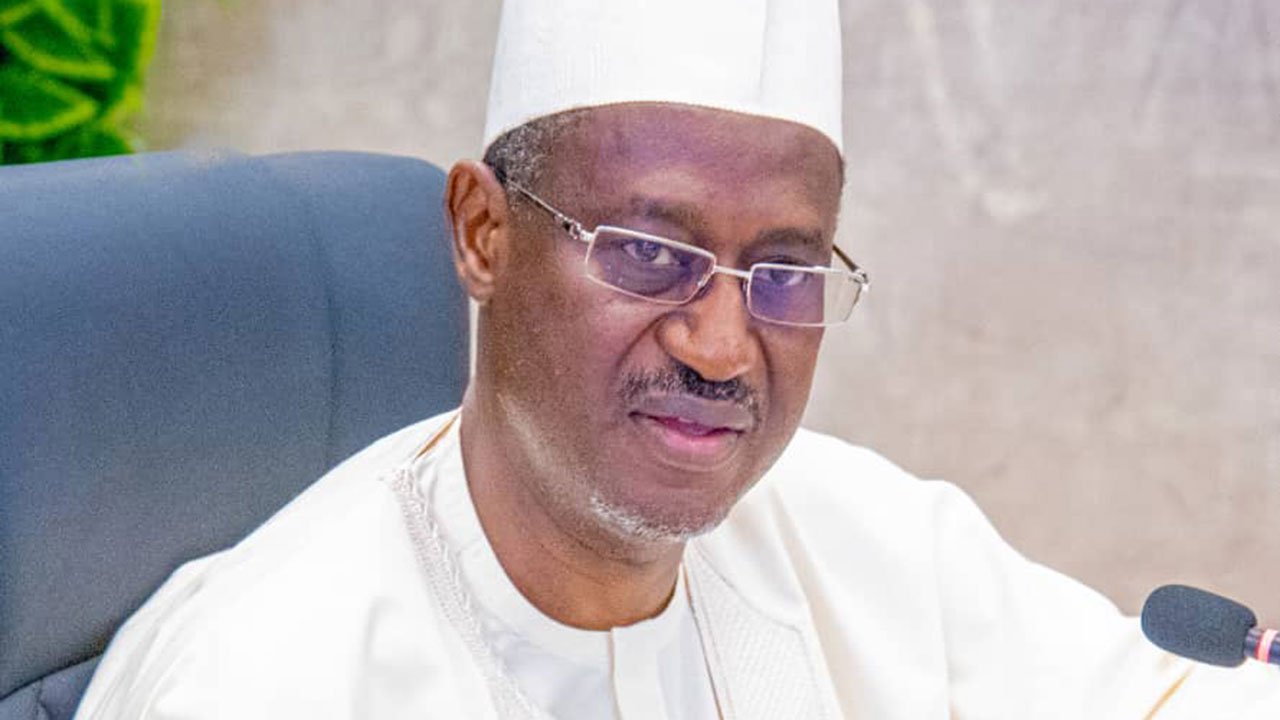
Africa faces a housing deficit of more than 50 million homes, with an estimated housing finance gap of $1.4 trillion, said Housing and Urban Development Minister Ahmed Musa Dangiwa.
Dangiwa, who disclosed this at the 7th Africa Housing Awards held in Abuja, said the housing crisis remained one of Africa’s most pressing development challenges.
At the event, some 52 individuals, organizations and government agencies were recognized across three categories, including the Governor of Kano State, Alhaji Aba Yusuf, the Minister of Housing and Urban Development, Alhaji Ahmed Dangiwa, and other African leaders.
Governor Kano was named “Housing and Infrastructure-Friendly Governor of the Year” for his policies that support mass housing supply and urban renewal initiatives, while Dangiwa has emerged as Africa’s most transformative Minister of Housing and Urban Development in 2025, with reforms targeting affordability, locally sourced materials, and private sector participation.
The minister warned that the continent’s housing shortage could rise to around 130 million homes by 2030 if solutions are not accelerated.
He said Nigeria’s housing shortage is conservatively estimated at more than 17 million units, but noted that the federal government is responding with scale and institutions.
He said: “Some 54 million Africans currently live in urban slums, and the continent faces a housing deficit of at least 50 million units, with a housing finance gap estimated at more than $1.4 trillion.”
“Therefore, if you do not accept solutions or do not accelerate solutions, Africa’s housing shortage is projected to increase to approximately 130 million units by 2030.
He noted that housing can no longer be treated as a peripheral sector, stressing that housing lies at the intersection of economic growth, social stability, urban resilience and human dignity.
Mr Dangiwa commended the organizers of the Africa International Housing Show for maintaining advocacy and accountability in the sector, saying the annual event was more than just a conference.
Turning to Nigeria, the Minister said the Federal Government, under President Bola Ahmed Tinubu’s New Hope Agenda, had adopted a transition from fragmented housing projects to structured national programs focused on measurable delivery.
Mr Dangiwa revealed that in the past two years, the ministry had started construction of over 10,000 houses in 14 states and the Federal Capital Territory (FCT).
He added that through the Urban Renewal and Slum Upgrading Program, the government has provided critical infrastructure to more than 150 communities across the country.
However, the minister stressed that no single government or country could tackle the housing issue alone and called for a continental approach.
In her speech, the Chairperson of the Nigeria Union of Journalists (NUJ), FCT Council, Grace Ike, called for greater collaboration between journalists and stakeholders in the housing sector to improve access to adequate housing for media professionals.
Ike commended the organizer of the African Housing Awards and CEO of Housing TV, Barrister Festus Adebayo, for his consistent advocacy and support for journalism, saying the platform has amplified the public debate on affordable housing.
She appealed to the Minister of Housing to fulfill his promise to establish a journalist village in the FCT and to realize the project by 2026 with the support of the Federal Mortgage Bank of Nigeria.
“That promise ignited a dream across our newsroom. Now we are making an impassioned plea not to abandon us. Our dream is for your promise to come true in 2026. With the help of the mortgage bank, this village can rise up and give journalists a stable home where they can focus on ethical reporting and peacebuilding,” she said.
Namibia’s Minister of Urban and Rural Development, James Sankwasa, who received the 2025 Minister of Housing Award, said Africa has reached a stage where its development efforts must be recognized and celebrated.
Festus Adebayo, the organizer of the award, said the housing and construction sector remains a key driver of growth, job creation and national development.
He said: “This led to the decision seven years ago to organize this African Housing Awards ceremony to recognize and thank the contributions of deserving individuals and organizations who have contributed to the development of this sector, which attracts participants from across Africa.”
He said the housing sector is evolving amid new technology, changing regulations, global economic pressures and environmental challenges that continue to impact the way we work.
He added: “Even if you are an award winner, we will not hesitate to expose any wrongdoing that has given this industry a bad name. We are working with the National Assembly, the Federal Capital Territory, the Federal Ministry of Housing, the Lagos State Government and other regulatory bodies to ensure that appropriate regulations are put in place, such as we have in Dubai.”
