


Emmanuel Ade in Abuja
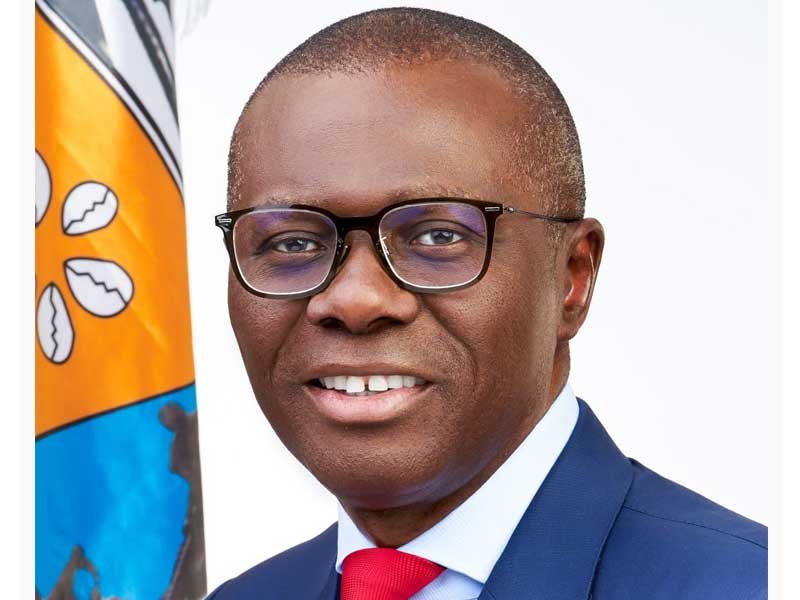
Governor Babajide Sanwo-Olu of Lagos State was awarded the 2025 TIME Africa Special Award in recognition of his administration’s large-scale infrastructure development, transportation reform, and economic modernization in Africa’s largest city.
Time Africa said the award recognizes Lagos’ progress under Sanwo-Olu in addressing long-standing urban challenges through sustained investment in transport, roads, health, education, digital infrastructure and governance reforms, and said the state is a reference point for Africa’s megacity management.
Time Africa said in a statement that managing Lagos, which is home to more than 24 million people, requires structural and long-term solutions rather than piecemeal interventions.
The group said the Sanwo-Olu administration had pursued such an approach through the THEMES+ development agenda, which integrates transport, health, education, economic growth, security and governance.
Time magazine said, “What Lagos has achieved over the past six years is not just an incremental improvement, but a structural and generational one, and increasingly offers a continent-wide roadmap for how Africa’s megacities can move from being overburdened to future-ready.”
A major highlight of the ceremony was the inauguration and operation of the Lagos Rail mass transit system, including the Blue Line. The ministry said the electric railway has moved millions of passengers since it opened, providing an alternative to road transport and easing congestion on major highways. Time Africa described the project as one of the most important urban transport achievements in West Africa in recent decades.
Beyond railroads, the organization cited the scale of road construction and repair under the current administration. The report highlighted that since 2019, Lagos has completed 172 roads, with another 61 roads and five bridges to be completed in 2025.
According to the group, major projects included link bridges, access roads in fast-growing areas such as Lekki, Ikorodu and Epe, and the ongoing construction of the Lagos-Badagry Expressway, a major regional trade route.
Time Africa highlighted that these projects were not concentrated in high-income areas, but were implemented across multiple municipalities, including historically underserved areas.
The award also focused on investments in public health and social infrastructure. He said that under Sanwo-Olu, Lagos expanded maternal and child care services, upgraded emergency and trauma centers, and invested in medical equipment and specialist training. Environmental health reforms and climate resilience programs are also said to be important for improving health outcomes in densely populated cities.
In education and technology, the state has begun building and renovating classrooms, training teachers and deploying digital learning tools, while Lagos has attracted more than $1.2 billion in digital infrastructure investment, including data centers and broadband expansion, strengthening its position as Africa’s leading technology hub, Time said.
Time Africa added: “The Sanwo-Olu government is positioning Lagos as a laboratory of African urban potential. A place where large-scale public projects are undertaken, where ambition and execution meet, and where the future of Africa’s megacities is imagined in real time.”
On the economic front, Time Africa said Lagos continues to drive a significant share of Nigeria’s output while pursuing diversification. New industrial and logistics hubs will be developed in Ikorodu, Badagry, Lekki and Epe, while the state will support creative industries such as cinema, tourism and entertainment, he said.
Reforms aimed at improving ease of doing business and reducing administrative bottlenecks were also recognized by TIME Africa.
The organization also cited governance reforms, including the digitization of public services and a budgeting framework focused on shared prosperity, youth empowerment and community development.
According to TIME Africa, Lagos offers practical lessons for other African cities facing rapid urbanization, particularly in integrated transport planning, equitable infrastructure allocation, and long-term policy continuity.
While acknowledging that challenges remain, including population growth, infrastructure maintenance and environmental risks, Time Africa said the progress recorded under Sanwo-Olu has put Lagos on a clearer path towards global competitiveness.
“Lagos’ transformation is far from complete, but its trajectory is undeniable. As African countries look ahead to an era of unprecedented urbanization, Lagos is a model and an inspiration, a city that proves that vision, strategy and sustained investment can reshape the future of millions of people.”
Time Africa said the special recognition was in recognition of the governor’s leadership in developing impactful infrastructure and guiding Lagos towards a more inclusive and resilient urban future.
