


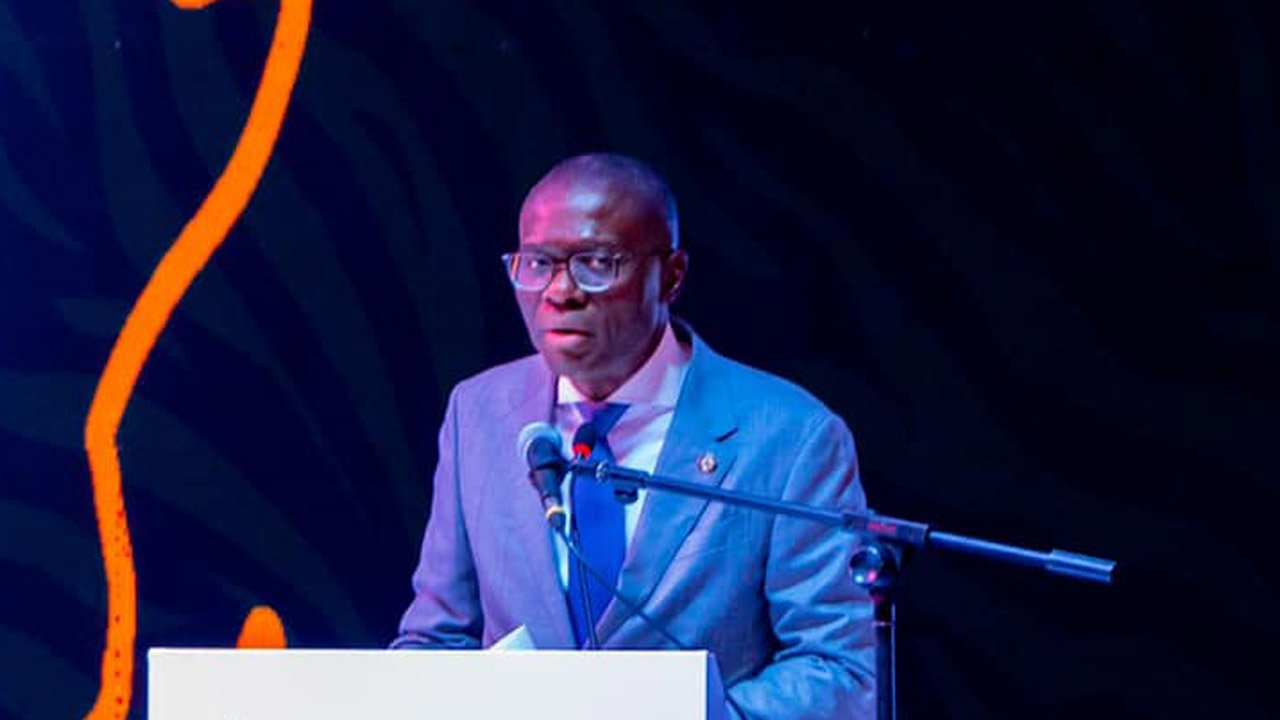
(File) Governor Sanwo-Olu. Photo/facebook/jidesanwooluofficial
In a move towards economic, social and environmental sustainability, the Lagos authorities have initiated moves to formulate a Comprehensive Urban Development Policy (LSUDP) to guide development in the state.
The proposed 30-year policy will cover the period from 2022 to 2052. The Guardian learned that the initiative is not only in line with the Sustainable Development Goals (SDGs), the African Cities Agenda and the National Urban Development Policy, but also ensures development resilience in Lagos across all strata by providing a sound legal framework and sound institutions in the physical environment.
Urban transformation in cities requires multi-layered governance and accountability to city residents, and increased attention to investment in productive jobs, transport, housing and other services.
The New Urban Agenda sets a global standard for urban development that integrates all aspects of sustainable development to promote equity, well-being and prosperity. This agenda is particularly important for Africa, the world’s fastest urbanizing region, where SDG 11 aims to make cities and human settlements inclusive, safe and sustainable.
Although there are established regional policies that cut across land uses, the plan, if implemented, will codify all policies into one document to improve the socio-economic well-being of the people.
Speaking to the Guardian about the development, a senior official at the ministry, Mukaira Sanusi, explained that the move is part of efforts to address the dynamic nature of the Lagos urban center, which is rapidly growing with an ever-increasing population due to the daily influx of people from other states and neighboring West African countries.
According to him, policy developments are inevitable due to increased economic activity and demands on infrastructure, housing and transportation deficiencies. He added that this will improve the tourism sector and maintain a balance between customs/traditional and modern sectors in housing and planning.
“There are national and international standards from United Nations Habitat, National Urban Policy and other state standard policies. For example, land use policy, environmental policy and labor policy related to urban planning. However, most of these policies fail to address the current realities of Lagos and need to be reviewed. Moreover, there is a need to codify policies specifically on the management of urban space and have what can be called an urban policy that governs the entire urban space, addressing the present and the future.”
“The new policy vision is to build sound legal foundations, capable institutions and financial instruments to design and build a Lagos that is sustainable, resilient, participatory and inclusive,” he said.
Sanusi said the policy would address a full range of spatial and sectoral issues, including infrastructure, including recreation, protection of historic buildings, orderly land use, climate resilience and mitigation, functional and effective urban agriculture, integrated waste management, low-cost and affordable housing, urban regeneration, safety and location of facilities, and design.
He further said that the government’s expectations for this initiative include sustainable and harmonious development, good guidance on spatial and sectoral allocation of resources, good guidance on land use planning, and clearly defined inter-institutional relationships related to urban planning and stakeholder management.
Stakeholders expected to contribute to policy development include the general public, construction sector professionals, local and international non-governmental organizations, community development associations (CDAs), and the media.
As a result, he disclosed that the government has invited interested stakeholders to submit a memorandum of understanding towards the development of a robust and representative policy document. He said the memorandum needs to be addressed and submitted to the ministry in both soft and hard copies.
