


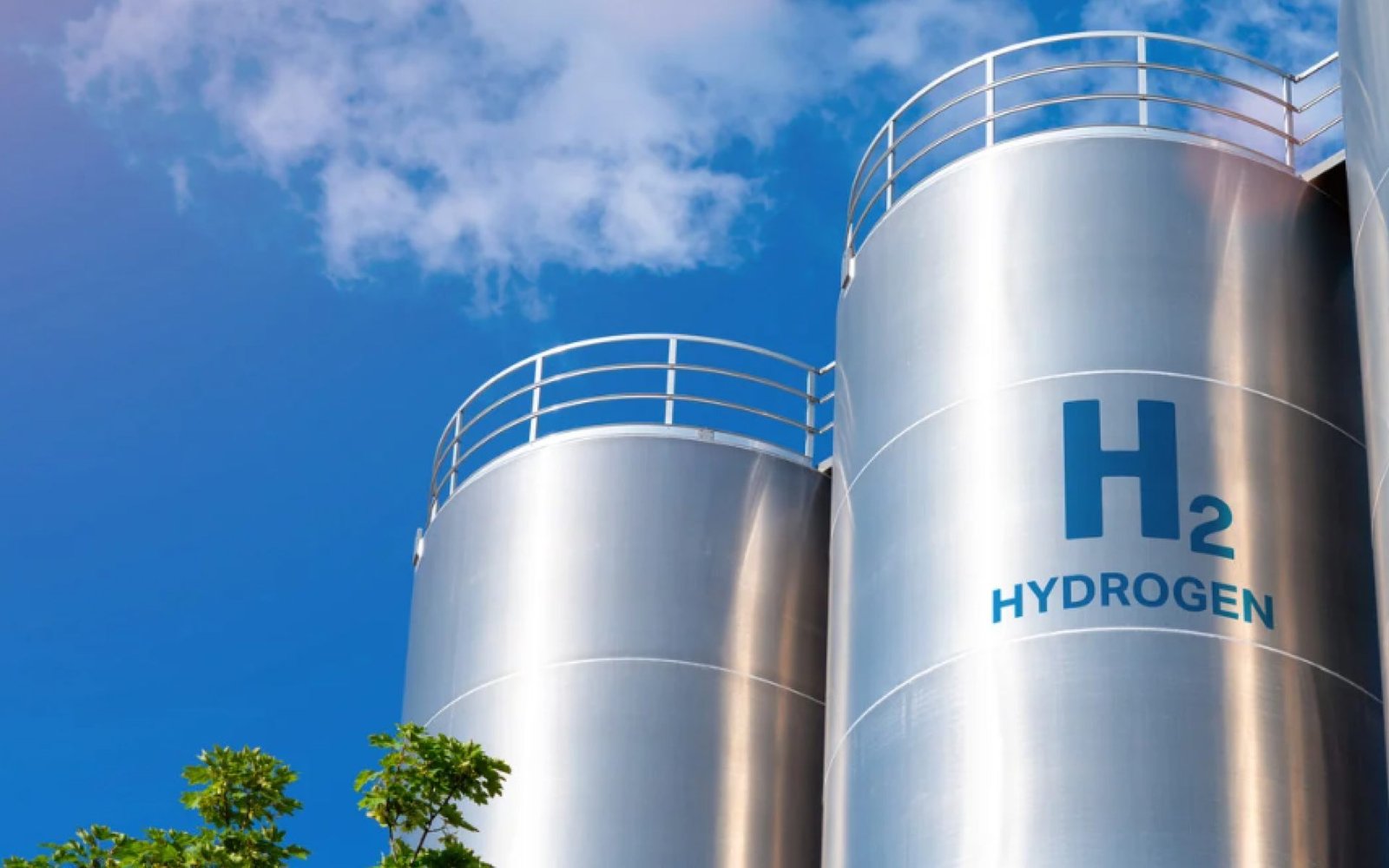
Africa is accelerating its commitment to a green hydrogen economy, leveraging its abundant solar and wind resources to drive large-scale production for industrial use and export. Several projects are progressing from planning to commercial deployment, with South Africa, Namibia and Mauritania leading the way. Analysts estimate that the continent could produce up to 50 million tonnes of low-carbon hydrogen per year by 2035 to meet growing demand in transport, industry and global energy markets.
South Africa: Green ammonia expansion
South Africa has several major initiatives underway. The Kouga Green Ammonia project near Nelson Mandela Bay, led by Hive Hydrogen South Africa, plans to deploy 1.2GW of electrolyzers powered by 3.5GW of renewable energy from solar and wind. With support of $20 million from the SA-H2 Fund, financial completion is targeted for the second half of 2026, and commercial operations are expected to begin around 2029, with approximately 1 million tons of green ammonia exported annually. The project integrates the already completed 1,430MW Crossroads solar power cluster.
Meanwhile, the Prieska power plant project in the Northern Cape, supported by Germany’s KfW and South Africa’s IDC, aims to produce 80,000 tonnes of green ammonia per year by 2027, expanding to 500,000 tonnes by 2030. Both projects highlight South Africa’s focus on linking production with domestic and international markets, but infrastructure, regulatory frameworks and financing remain key challenges.
Namibia: Hydrogen growth with a focus on exports
Namibia has established itself as a cost-competitive green hydrogen exporter. Hyphen Hydrogen Energy secured a $10 million loan from the African Development Bank in December 2025 to advance its Lüderitz-based green ammonia project as part of a broader $10 billion development. The initial production target is 300,000 tons per year, with plans to expand in the second half of the 2020s. Cross-border cooperation with South Africa is being discussed, including the possibility of an ammonia pipeline to industrial users.
However, the project faces market risks. In September 2025, German power company RWE withdrew from a non-binding offtake memorandum, underscoring the importance of secure long-term contracts for export-oriented ventures.
Mauritania: legal framework and megaprojects
Mauritania laid early foundations for green hydrogen, creating a dedicated legal framework and investment incentives. The country aims to produce 12.5 million tons of hydrogen by 2035. Key initiatives include the NAYRAH industrial Power-to-X project with Mehring Energy, which will produce 140,000 tonnes of hydrogen and 400,000 tonnes of green ammonia per year with 1GW of electrolysis by 2029.
The country also hosts some of sub-Saharan Africa’s largest green hydrogen projects, including CWP Global’s 30 GW project AMAN, TotalEnergies and Chariot’s 10 GW Project Nour, and GreenGo Energy’s 60 GW Megaton Moon. All are in the early engineering, feasibility and permitting stages and will require significant infrastructure, water and capital before commercial operations.
outlook
Although there are hurdles to large-scale implementation, from power grid and water infrastructure to financing and regulatory coordination, Africa’s green hydrogen plans are gaining concrete momentum. South Africa, Namibia and Mauritania are emerging as early leaders on the continent, setting the stage for Africa to become a global supplier of low-carbon hydrogen.
