


President Trump leads new U.S.-Nigeria counterterrorism alliance
An editorial by Andre Pienaar on legal partnerships, protection of civilians, and dismantling the proceeds of narco-terrorism.
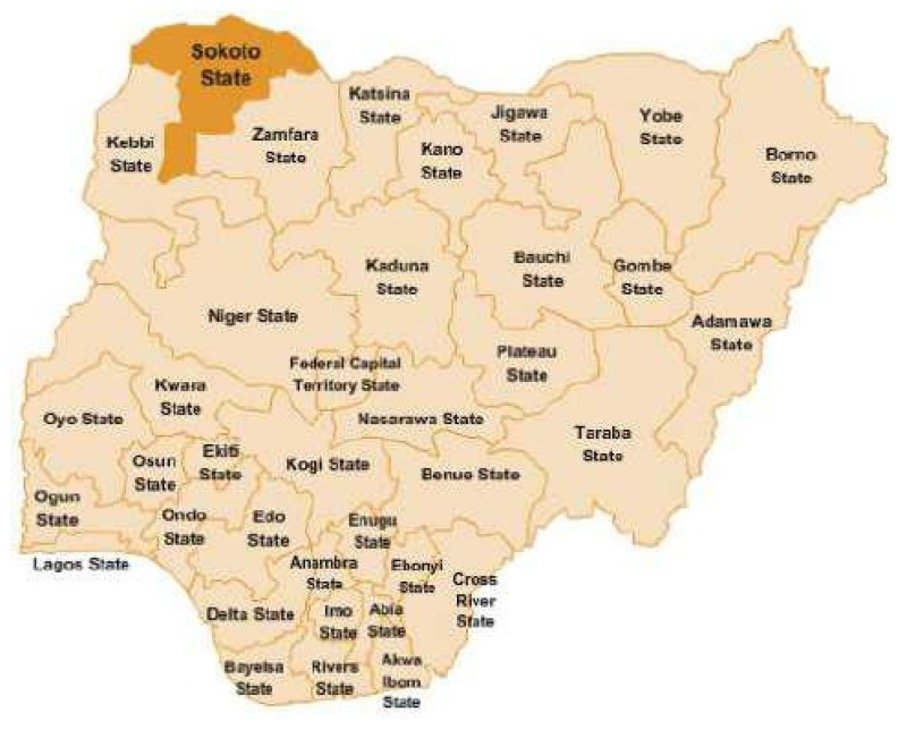
map
Map 1. Nigeria and Sokoto State (North West Area of Operations).
Map 2. Sahel belt (regional operating environment) across Africa.

Source: Munion, “Map of the Sahel”, Wikimedia Commons, CC BY-SA 3.0.
On December 25, 2025, U.S. Africa Command announced an initial assessment that U.S. forces, at the direction of the President of the United States and in coordination with Nigerian authorities, attacked an ISIS camp in Sokoto State, resulting in the deaths of multiple ISIS operatives. Counterterrorism efforts are most effective when they are based on cooperation with allies and the sharing of information, as in this case.
With the relocation of ISIS bases from the Middle East to Africa, the withdrawal of French troops from West Africa, and the withdrawal of British troops from Mali, and the subsequent failure of Russia’s Wagner Group security model, the new counterterrorism alliance between the United States and Nigeria deserves support from the African Union and the international community. It is not just a bilateral security relationship, but also a regional stability partnership. Nigeria is at the center of West Africa’s security equation and a key partner in countering the growing threat of ISIS in the region. A more resilient Nigeria will facilitate insecurity, displacement, human trafficking, cross-border movement of extremists, and make neighboring countries safer.
Under President Trump’s leadership, the United States plays a critical role in stability and security across the continent, from negotiating an end to the flare-up of war in the Democratic Republic of the Congo (DRC) to stability operations in the Horn of Africa.
The United States’ Responsibility to Protect (R2P) approach begins with the simple moral and strategic argument that governments have a duty to protect civilians from large-scale violence and dispossession, and that responsible partners should help states meet that duty when called upon and when it is lawful and correct to do so. Nigeria is leading the fight against terrorism within its own territory. The U.S. Department of the Army provides a dynamic range of intelligence support, precision options, and technical assistance aimed at providing critical time- and life-saving capabilities and disrupting cross-border financing and logistics.
Islamist terrorism has become inseparable from the global drug trade. In West Africa and the Sahel, factions aligned with ISIS often do not need to profit from the drug trade. They often operate like predatory tax authorities, making money by controlling the terrain and extracting payments from criminal commerce already in motion through tolls for uncontrolled space on roads, extortion of “protection fees” in markets, and collections at unofficial crossings.
This convergence of terrorism and organized crime is not a theoretical risk. The Financial Action Task Force (FATF) has warned that terrorist groups can finance themselves through criminal activities such as drug trafficking and related smuggling, with activities like route management and taxation potentially becoming major sources of income. Checkpoints, passage “tolls,” and forced collections in markets can generate repeatable revenues that fund conscription, bribes, and weapons purchases.
At the same time, the United Nations Office on Drugs and Crime highlighted the growing role of the Sahel region as a global human trafficking corridor, particularly due to the rapid increase in seizures of cocaine and cannabis resin and the corrosive impact on governance. As human trafficking grows, so does corruption. When corruption increases, people lose trust in the state. And once legitimacy is undermined, extremists find the easiest recruitment pitch.
For Washington and Abuja, this means that counterterrorism efforts should be designed to disrupt the revenue models that support extremist violence. The goal is not only to remove operatives from the battlefield, but also to make it difficult for terrorist networks to pay fighters, buy weapons, move supplies, and rebuild after setbacks.
Three practical priorities can help you turn that concept into action.
First, we will strengthen the pipeline from intelligence to sabotage against illegal logistics. If extremists benefit from taxing transportation, they target network routes, storage locations, transportation intermediaries, intermediaries, and cash couriers. An integrated fusion cell that combines Nigerian ground truth with U.S. analytical capabilities can identify high-value nodes and support Nigerian-led operations to seize goods, dismantle waypoints, and remove violent gatekeepers from key corridors.
Second, we will expand our counterterrorism financial tools with the same urgency we use to target the battlefield. FATF has highlighted how terrorists exploit cash-based economies and informal value transfer mechanisms. Nigeria and the United States could deepen cooperation on financial intelligence, investigative assistance, and sanctions against intermediaries who knowingly move money on behalf of violent extremists. When financiers and fixers face real consequences, the tempo of terrorist networks’ activities slows down.
Third, keep the protection of civilians and national unity at the center of our mission. Nigeria’s security challenges are complex and affect communities of different faiths and backgrounds. The most dangerous gift to extremists is the narrative of inevitable sectarian conflict. A successful counterterrorism partnership would prioritize terrorist actors who are the actual targets of killing civilians, robbing communities, and undermining national security and stability.
This is also why transparency and accountability are important. Accuracy is not only a military priority; It is a requirement of legitimacy. Credible assessments of civilian harm, shared post-action learning, and clear public communication can help prevent disinformation from turning legitimate operations into enemy propaganda.
The U.S.-Nigeria alliance has an opportunity to model a modern approach to counterterrorism that respects sovereignty, takes precise steps to minimize harm, and attacks the financial lifelines that allow extremist groups to survive. If this partnership extends from strikes to institutions and camps to financing, it can strengthen West Africa’s resilience against the next wave of violent extremism.
That is what a Responsibility to Protect approach should look like in practice: protecting lives today and dismantling the criminal economy that endangers lives tomorrow.
