


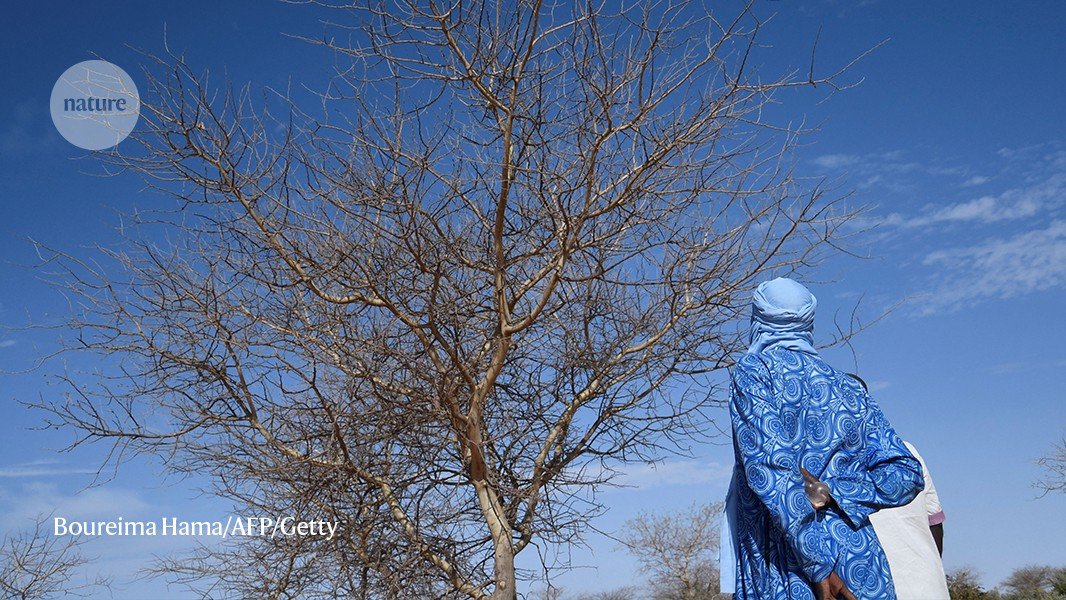
Farmers at the Great Wall of Niger. Researchers found that the project did not necessarily benefit the most vulnerable people.Credit: Boureima Ham/AFP/Getty
It’s been 15 years since the African Union gave its blessing to the Great Wall of Africa, one of the world’s most ambitious ecological restoration plans. The project aims to combat desertification across Africa, spanning approximately 8,000 kilometers from Senegal to Djibouti. Its ambitions are staggering: by 2030 it aims to restore 100 million hectares of degraded land, capture 250 million tonnes of carbon and create 10 million jobs in the process. However, the struggle continues.
An assessment two years ago by independent experts commissioned by the United Nations said between 4% and 20% of the recovery target had been achieved (go.nature.com/39zqgkr). This figure remains unchanged, according to the latest edition of the United Nations Convention to Combat Desertification’s (UNCCD) Global Land Outlook (go.nature.com/3kdjtw5), published last week. Equally concerning is the fact that funding for the project continues to be delayed. African governments and international aid agencies will need to come up with about $30 billion to reach the 100 million hectare target. So far, $19 billion has been raised.
The pandemic, and now the cost of living crisis, has placed demands on all governments, which means countries may be expected to reduce their green wall commitments. But the project continues to be weighed down by other difficulties, including the complex systems used to fund and manage it and how its success is measured. These problems can and must be solved. Otherwise, it will be difficult to achieve your goals.
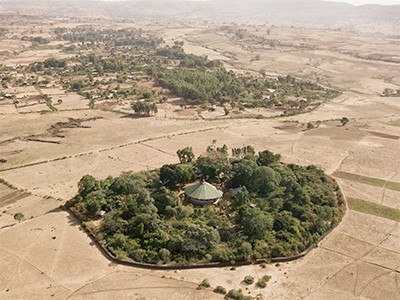
Biodiversity thrives in Ethiopia’s church forests
One potential solution, improved metrics, comes from an analysis published last year by Matthew Turner and colleagues at the University of Wisconsin-Madison (MD Turner et al. Land Use Policy 111, 105750; 2021). Researchers investigated the limitations of the Great Wall Project indicators by assessing the impact of World Bank funding from 2006 to 2020. As research shows, the definition of success depends on which metrics are used.
In Niger, for example, green wall projects can be considered successful, judging by the area of eroded soil restored and the number of trees planted. However, the authors report that these gains did not necessarily benefit the most vulnerable. In some places, women were excluded from employment on green wall projects, and in some cases local governments were considering privatizing restoration land that was supposed to belong to everyone in the community.
The United Nations’ latest land degradation report highlights widespread issues with indicators. It is estimated that almost half of the land pledged for restoration around the world will be planted primarily with fast-growing trees and plants. This will provide only some of the ecosystem services provided by forests that are allowed to regenerate naturally, including significantly reduced carbon stocks, groundwater recharge, and wildlife habitat.
Great Wall projects also require more predictable financing and more transparent governance. The project was designed by African leaders for the benefit of the continent’s people, based on warnings from scientists about the dangers of desertification and land degradation. As is often the case with international science-based development projects, the original idea was not brought to Africa by international donors. But it still relies on donations and much of it, which creates other problems, including coordination challenges.
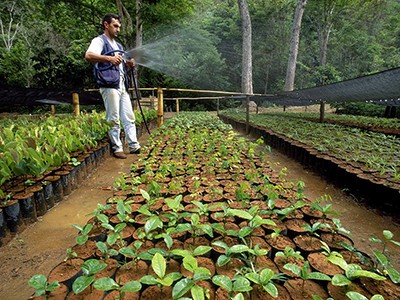
How to plant a trillion trees
The project is being run by an African Union-based organization called the Pan-African Great Wall Authority, based in Nouakchott, Mauritania. However, some donors, such as the European Union and the World Bank, do not channel most of their Great Wall funding through this agency. Instead, they often deal directly with individual governments. This gives you more control over how your funds are spent. It is unfair to expect the Pan-African Agency to coordinate the large number of donors that have one-to-one deals with each country. Bypassing the Pan-African Organization also poses a transparency problem, as it makes it difficult for the African Union to know exactly who is funding what.
In January 2021, at the International Biodiversity Summit hosted by France, French President Emmanuel Macron announced an additional $14 billion in funding for the Great Wall of China over five years. He also said a new entity called the Great Green Wall Accelerator, based in Bonn, Germany, would be responsible for coordinating funding commitments and tracking progress against the goal. Although this is well-intentioned, the accelerator will need to coordinate its operations with the Pan-African Agency. It is not yet clear how this happens.
A potentially more transformative solution was proposed two years ago by a group of experts appointed by the United Nations. They recommended establishing a single trust fund to which all donors could contribute and where funding priorities could be determined together. Unfortunately, this has not happened yet, and observers say it is unlikely in the current climate.
This month, the international community will gather in Abidjan, Ivory Coast, for the 15th Conference of the Parties to the UNCCD. All Green Wall funders and participating countries will meet there. If a single trust fund is off the table, we should work together to find a better way to coordinate Green Wall project activities. It is also essential to study Turner et al.’s findings. In addition to focusing on existing indicators, the Great Wall requires evaluation criteria that better take into account the needs of all people in participating countries, especially the most vulnerable.
