


It was at this time that Robert Mugabe’s government confiscated Zimbabwe’s land in a very aggressive manner. But Mugabe was a dictator and the process was very different from what’s happening in South Africa now, right?
absolutely. South Africa is a constitutional democracy. Each case of expropriation is subject to judicial review and is bound not only by the Act but also by the constraints of the African Constitution itself. While the constitution provides for land reform, it does not provide for arbitrary deprivation of property. An entire section of the Constitution is dedicated to property. And what the right has done internationally is create panic and use this discourse as a cudgel to undermine policies aimed at historical reparations and reduce them to just another example of DEI using American terminology.
My understanding of the three decades of post-apartheid South Africa in which the African National Congress has run the country is, broadly speaking, that the ANC, which had ties to communist organizations both domestically and internationally, did not engage in any extremist policies in terms of overthrowing South African capitalism or going after those behind apartheid. Basically, there has been a moderate pro-capitalist government. And people like you write criticisms of the ANC along these lines and about the government’s corruption scandals. To see this country and this land reform bill as actually belonging to radical black people who want to overthrow the status quo is just a complete misreading of the past 30 years.
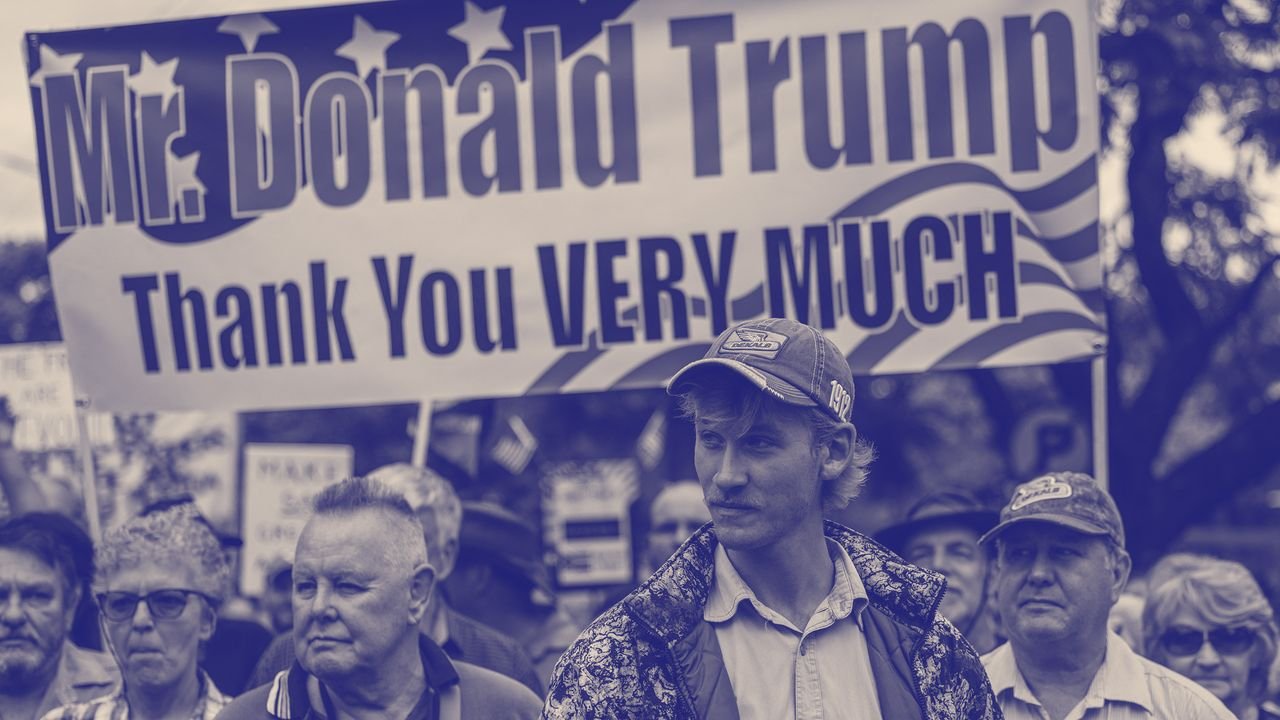
That’s true, and I think that was the great irony of this rally over the weekend. It was convened by this far-right influencer named Willem Petzer. While they were handing over a memorandum to the US embassy in Pretoria, he gave a 13-minute speech in which he attempted to historicize the memorandum and previous claims, providing rationale for why these affected groups interpret South Africa’s history the way they do. Mr Petzer, standing behind the podium, said the ANC was not Marxist and that its black economic empowerment and affirmative action policies had not benefited the majority of black South Africans. It has cultivated only the black elite.
As I watch this, I wonder if some people could interpret Petzer as being on the cusp of a Damascene awakening, understanding that the ANC’s post-apartheid class project is precisely about cultivating this group of black capitalists, and that its economic policies are incredibly neoliberal and have only exacerbated inequality. They have raised a small number of black South Africans to the top of their wealth, while the majority remain poor and systematically denied participation in the economy. However, he did not come to such a conclusion. His complaint is not a universalist objection to the fact that the ANC’s redistributive policies do not target the groups that should be their beneficiaries. This exemplifies the fact that these people are not against social hierarchy per se. Their grievance is the fact that the nature of social classes has changed and it is no longer white South Africans who are in a position of economic and cultural hegemony.
They claim that white South Africans are denied economic opportunities, but cannot cite concrete physical evidence of this. They always have to capitalize on the fact that the ANC’s affirmative action policies have not really penetrated the majority of black South Africans, and that is exactly the case. But they came to the conclusion that this simply meant that white South Africans were somehow excluded from the economy. The poverty rate for black South Africans is 64 percent. The white poverty rate is 1 percent.
You said that the ANC created a new black elite at the expense of the old white elite. But even if that were the case, white South Africans still own over 50 percent of the land in this country, right?
Yeah. The most recent land audit conducted in 2017 found that white South Africans own nearly three-quarters of South Africa’s freehold farmland. So land ownership in South Africa remains incredibly white. When you look at the wealth inequality numbers, racism remains evident. And the patterns of intergenerational economic privilege that were a product of apartheid remain. And there is a refusal on the part of these groups to tolerate it. The simple reason is that they want to make South Africa great again. If they say so, we should believe them. And what that means is restoring racial hierarchy.
You have previously mentioned white South Africans and divided them into Afrikaners and non-Afrikaners. Could you tell us more about that department?
This is a very long, complicated and controversial history, but the bottom line is that South Africa’s white population is descended from either Dutch-speaking or English-speaking settlers. And there has always been a very clear divide between these two groups. Colonialism in South Africa was a revolving door of either British domination and domination or Dutch/Africana domination and domination. During the Boer Wars of the late 19th and early 20th centuries, during which the Afrikaners suffered defeats against the British, culminating in the Union of South Africa in 1910, such closeness between Afrikaners and the British was witnessed. But I think Afrikaners have historically felt like they were subservient and subservient to the respectable British elites in this country. Apartheid, as a social and economic policy, was essentially intended to uplift the African people. In the early 20th century, poverty among Afrikaners was widespread, and there was much concern about the possibility of Afrikaners regressing to the status and economic status of so-called indigenous Bantu peoples.
Apartheid was therefore effectively a policy of affirmative action for Afrikaners. The Afrikaners then arrived in a strange and foreign land, faced resistance from the indigenous people, faced off against the outside occupiers, the British, and developed a myth as a persecuted group who were able to overcome a series of trials and tribulations to establish themselves.
These tensions continue today. As a people, Afrikaners have a stronger sense of cultural identity and ethnic attachment to the land. Their civil society organization – whose main organization is Africa Forum, a lobbying group they call Preservation of Africana Culture and Identity – sees land ownership as key. British descendants, on the other hand, are viewed much more classically as cosmopolitans.
In post-apartheid South Africa, the party representing both groups is the classically liberal centre-right Democratic Alliance. They oppose affirmative action policies because they believe they are championing the disappearance of centers of meritocracy. But increasingly, Afrikaans-speaking whites are moving further to the right, toward another party called Vryheisfront Plus, or Freedom Front Plus.
