


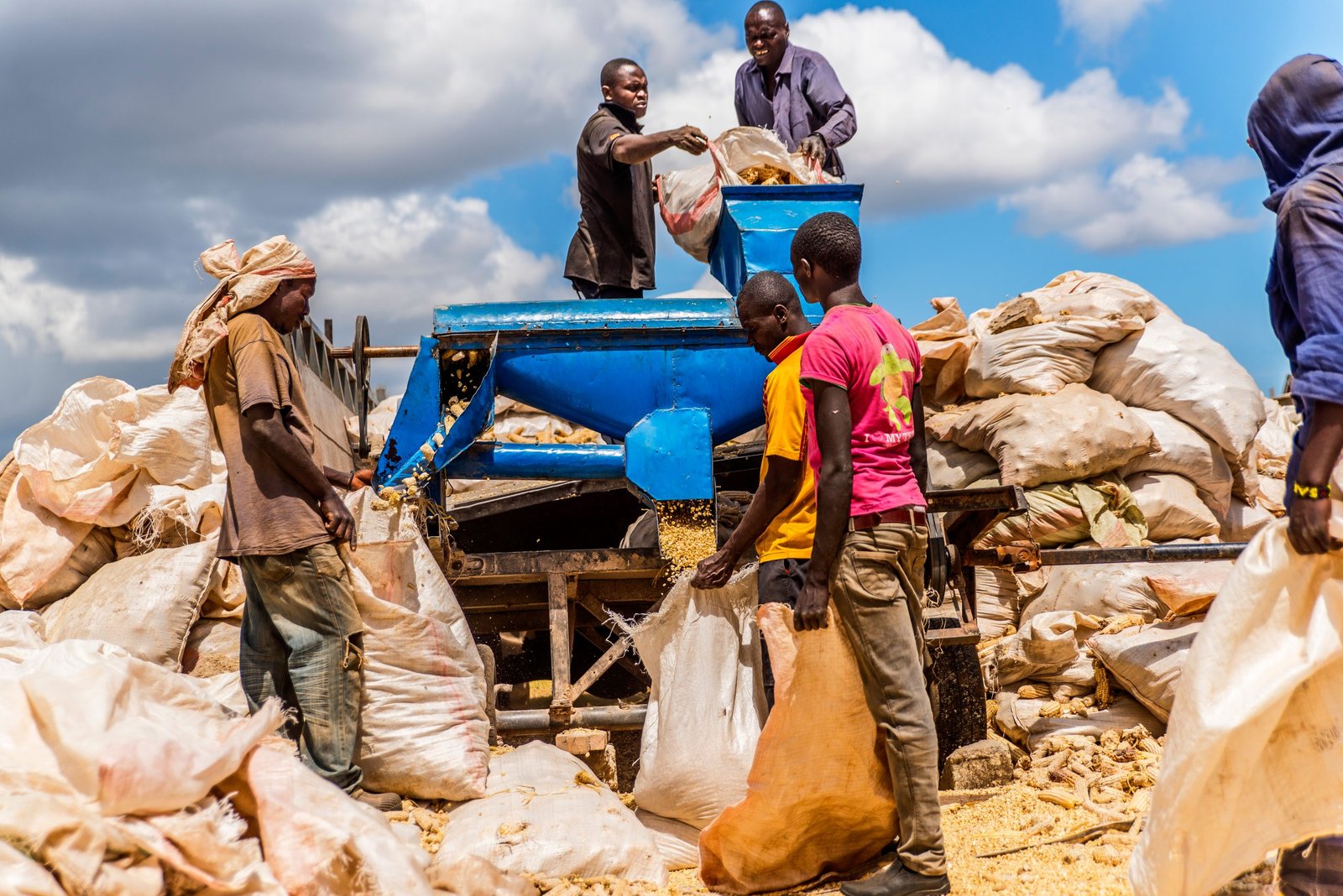
Africa exports $35 billion worth of agricultural products to the rest of the world, but only about 8 billion pounds are exported within the region. This could change with the AfCFTA, which would allow the private sector to play a much larger and more beneficial role in food production and distribution. Neil Ford investigates.
Much has been written about food relief programs and multilateral aid to address short-term food shortages, and rightly so. The human cost of failing to take emergency measures could be significant.
But long-term solutions such as reducing trade barriers, improving access to agricultural inputs, and developing new transport infrastructure all have the common goal of creating a stronger and more agile private sector.
Olam Group Managing Director and CEO for Africa and the Middle East, Venkataramani Srivasan (Suri), told The New African that while the continent had outperformed expectations in managing the coronavirus crisis, few countries fared well in terms of food security due to poor infrastructure.
However, he said that despite the lockdown measures, most companies have maintained factory and cultivation operations, and most of the disruption is at the logistics and distribution level.
However, Suri said the pandemic “has given us all an opportunity to build back better and also create a deeper appreciation of the importance of environmental standards.”
Pressure was already mounting on large companies to enact improved environmental and labor standards for suppliers across the food supply chain. Corporate social responsibility strategies need to be at the heart of business operations and permeate all activities, rather than being walled off in local development budgets.
Mr. Suri said that achieving true environmental improvements is difficult, but possible “if all stakeholders – public, private and local communities – work together.”
An integrated and responsive private sector requires a wide range of players, from small farmers to small and medium-sized enterprises to large corporations, to build strong supply chains. The United Nations Food and Agriculture Organization (FAO) estimates that up to 80% of sub-Saharan Africa’s food supply comes from small farms. Currently, most markets serve a fairly narrow market. That is, either nearby consumers or limited export markets beyond Africa. Trade with other parts of the continent needs to be opened up so that they can target a wider range of markets.
intra-african trade
The role of the private sector in exporting food and agricultural products beyond Africa is particularly well developed, with the continent exporting between $35 billion and $40 billion of food products annually. The South African citrus, East African coffee and tea, and West African cocoa and pineapple sectors are all well developed, and smallholders, large farms, marketing boards and logistics operators all play important roles in the export of agricultural products to and from Europe. Asian consumers.
However, cross-border food trade within the continent is worth only $8 billion annually. As discussed on page 21, a lack of infrastructure limits intra-African trade, while the limited scale of intra-African agricultural trade makes public and private investors reluctant to develop the necessary rail, road, storage, irrigation and marketing infrastructure. The African Continental Free Trade Area (AfCFTA) could be the key to breaking this negative cycle. Just as the breakdown of tariff and non-tariff barriers has facilitated food trade within the European Union, the same process could facilitate trade between African countries.
Governments need to ensure that free trade areas become a reality, as farmers across the continent embrace entrepreneurship when given the opportunity.
Countless articles have been written about the AfCFTA, which takes effect in January, but it would be a mistake to view its creation as an event. Rather, it would require a lengthy process of negotiations between government officials as the mandate would first be reduced and then, if possible, eliminated entirely.
The benefits of a more integrated food supply chain are huge for food security, says Suri. Droughts, floods, and pest infestations in some parts of the continent are usually accompanied by ideal growing conditions elsewhere.
Greater emphasis on intra-regional trade could give more consumers access to a wider range of agricultural products from more suppliers, smoothing out food supply issues and stabilizing prices.
Some investors are very enthusiastic about AfCFTA’s potential, including South African water infrastructure company Cato Civils, which now plans to expand its operations across the continent.
Chairman Simbi Phiri said: “AfCFTA gives us the opportunity to do business without borders. We will be able to go and compete in Zimbabwe, Zambia and other countries. It will also give us the opportunity to compete with multinationals from India and China in other African countries. This agreement eases some of the restrictions imposed by the legacy of our colonial past.”
Read more about food security in Africa
Food security in Africa: the threat of the “Three Cs”
Integrating nutrition into Africa’s food systems
Little success in fighting malnutrition in Africa
