


Although often overlooked, hot-dip galvanized wire plays a critical role in supporting Africa’s expanding construction, infrastructure and manufacturing sectors.
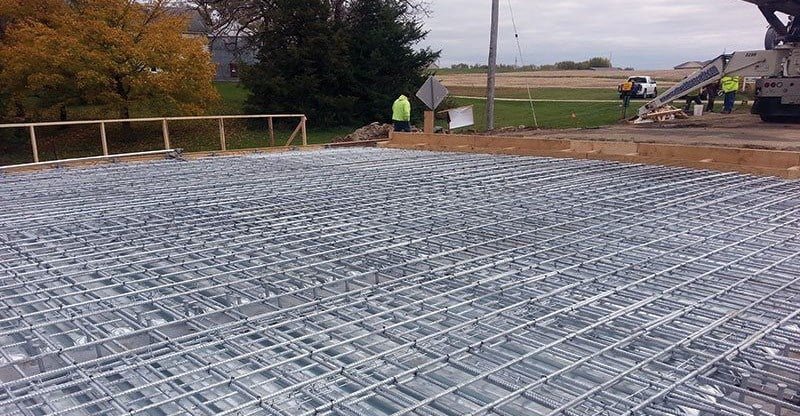
Source: Provided. Install galvanized rebar before pouring concrete.
As countries invest in roads, energy, housing and industrial development, durability has become non-negotiable. Across a continent defined by extreme conditions, from corrosive coastal atmospheres to harsh inland climates, galvanized steel provides the long-term corrosion resistance needed to protect assets, extend service life and reduce maintenance costs, making galvanized electrical wire the unsung enabler of Africa’s infrastructure ambitions.
Simon Norton, Director, International Zinc Association (IZA) Africa, said: “Hot-dip galvanized wire is a simple but important material, a silent shield that protects our infrastructure. The longevity and resilience it provides is essential to building sustainable and durable systems that can withstand Africa’s diverse and harsh environmental conditions.”

Hot-dip galvanized steel wire is manufactured from wire that is drawn, heated, cleaned, and finally coated with zinc by immersion in a molten bath. The thickness of the zinc layer is generally 30 to 290 g per square meter and is selected depending on the environment in which the product will operate.
The galvanizing process ensures a constant zinc weight per square meter, a strong bond between the iron and zinc alloy, and a bright, uniform surface. This provides excellent long-term corrosion resistance and durability, ensuring the wire performs reliably even in demanding outdoor and industrial environments.
Designed for durability
Hot-dip galvanized wire has a wide range of applications. It is used in fences, gabion mesh, barbed wire, cable sheathing, wire rope, packaging materials, as well as in construction, civil engineering, and power infrastructure.
Because hot-dip galvanizing has a thicker zinc coating, it provides much better corrosion protection than electrogalvanizing. This makes it indispensable in fields that require materials that can withstand harsh conditions, such as chemical processing, oil refining, offshore exploration, metal structures, and shipbuilding.
The manufacturing process begins with pickling and annealing to remove oxides, oil, and other impurities from the surface of the steel bar. The wire is then drawn to the desired diameter before being immersed in a molten zinc bath. After galvanizing, it is rolled into coils and prepared for further use in industrial and construction applications. The result is a material that is robust, cost-effective, low-maintenance, and provides consistent performance year after year.
Balancing long life and value
Norton adds that the beauty of zinc lies in its simplicity: “Once applied, it provides years or even decades of protection with minimal maintenance. Galvanized steel wire provides a level of safety and durability that uncoated steel wire and other coatings cannot match.”
This combination of performance and affordability allows galvanized electrical wire to continue to play an important role in supporting Africa’s development. In harsh or humid conditions, galvanized wire can last 20 to 25 years, while in milder environments it can last more than half a century.
As infrastructure investment continues to grow across Africa, the demand for reliable and durable materials will only increase. Galvanized steel wire ensures that bridges, power lines, enclosures, and other critical structures remain strong and functional for decades.
“Zinc plating embodies sustainability and value. Galvanization helps build sustainable infrastructure, protecting not only the steel beneath it but also the future above it,” concludes Norton.
