Close Menu
Xsum NewsXsum News

    Stay Updated.

    Get the latest Africa-focused business & infrastructure news and more directly to your inbox.

    What's Hot

    African Development Bank approves $58 million solar mini-grid project to expand clean energy access in Eritrea

    The renminbi is winning over Africa, but can it rival the dollar?

    Is it wise to judge people by their “intelligence”?

    Facebook X (Twitter) Instagram
    Trending
    • African Development Bank approves $58 million solar mini-grid project to expand clean energy access in Eritrea
    • The renminbi is winning over Africa, but can it rival the dollar?
    • Is it wise to judge people by their “intelligence”?
    • Things to look out for at construction sites this year
    • South Africa develops R2 billion bond to restore critical catchment area
    • De-risking infrastructure projects across African markets through innovative sustainable document trade solutions
    • African Development Bank Group (AfDB) launches pan-African aviation finance platform to turn growth into sustainable profits
    • Ecobank holds 3rd +234 Art Fair to promote creative enterprises and start-ups
    X (Twitter) Instagram YouTube LinkedIn TikTok
    Xsum NewsXsum News
    • African Development Bank
    • Africa Finance Corporation
    • All Africa – Construction & Infrastructure
    • Africa Intelligence
    • Construct Africa
    • More
      • Mining Review Africa
      • Energy Capital Power
      • Sustainability & Climate-Resilient Infrastructure
      • Private-Sector Infrastructure Players
      • Urban Development & Housing
    Xsum NewsXsum News
    You are at:Home»African Development Bank»AfCFTA chief urges Africa to build its own market as a slice of global trade – ENA
    African Development Bank

    AfCFTA chief urges Africa to build its own market as a slice of global trade – ENA

    Xsum NewsBy Xsum NewsJanuary 24, 2026No Comments4 Mins Read2 Views
    Facebook Twitter Pinterest Telegram LinkedIn Tumblr Email Reddit
    Share
    Facebook Twitter LinkedIn Pinterest WhatsApp Email

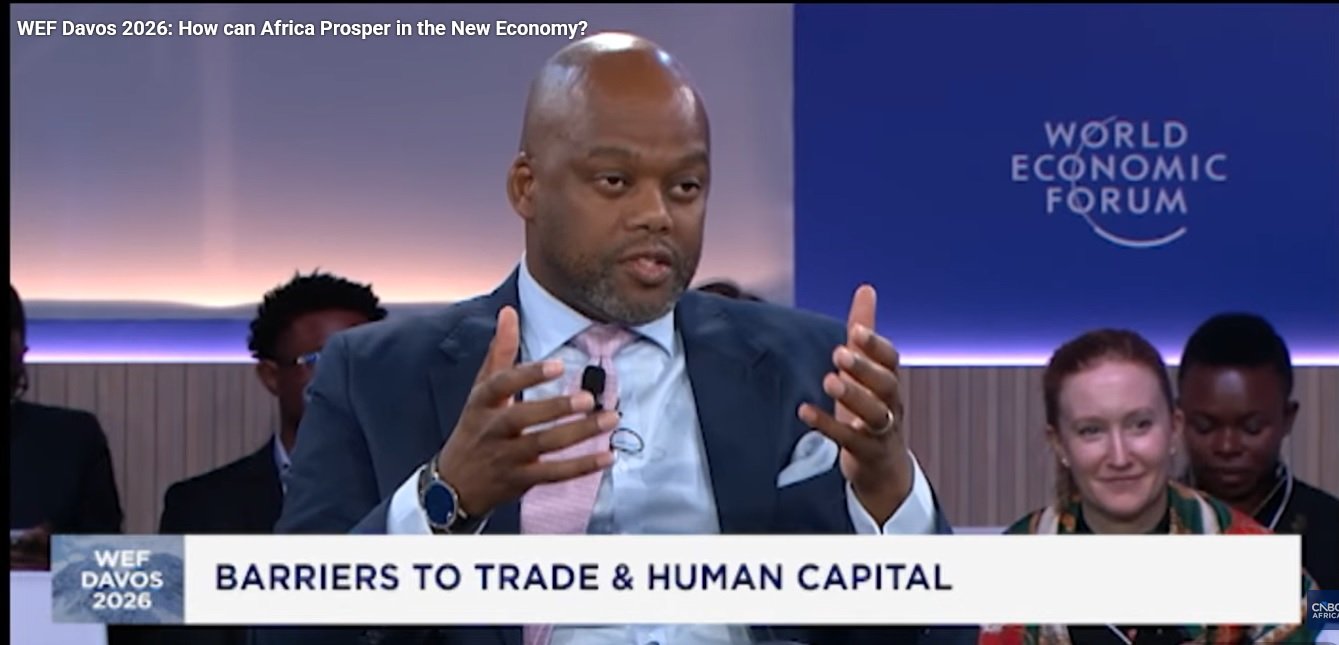
    Addis Ababa, January 24, 2026 (ENA) – Global trade disruptions and supply chain disruptions leave Africa with no choice but to deepen economic integration and build its own domestic markets, said AfCFTA Secretary-General Wamkele Mene.

    Speaking at the AfCFTA Friends of the AfCFTA breakfast on the edge of the World Economic Forum (WEF), Mene stressed the need to accelerate economic integration, free up domestic capital and negotiate more strategically with global partners.

    He said decades of market fragmentation have constrained Africa’s economic potential, despite its size and resources.

    He said Africa operates with 42 currencies, has limited industrial development and contributes less than 3 percent to world trade.

    According to the African Development Bank (AfDB), infrastructure financing needs are estimated at around $150 billion annually, while transport, logistics and trade finance costs remain high.

    Even outside blocs such as ECOWAS and the East African Community, cross-border movement of people remains difficult, he noted.

    “This is not sustainable,” Mene said, noting that Africa has a population of 1.4 billion and a combined GDP of $3.4 trillion in consumer and business spending.

    He said African leaders responded by establishing the AfCFTA, which has now been ratified by 50 countries, demonstrating strong political determination to reduce barriers to trade and investment within Africa. Intra-African investment currently stands at just 4%.

    Mene said the negotiations mandated by African heads of state are complete and the continent is now moving from negotiation to implementation, with a focus on reducing infrastructure, logistics and financing costs, especially for young people and small and medium-sized enterprises.

    The push for the AfCFTA comes at a time of what Mene described as an “unprecedented attack” on the multilateral trading system, marked by shrinking global markets and disrupted supply chains.


    “This is a compelling moment for Africa to say, with global markets drying up and supply chains disrupted… let’s build our own domestic markets,” he said, adding that integration could take more than a decade, but Africa has no alternative.

    By the end of this century, Africa is expected to have the world’s youngest and largest workforce, making market integration critical to job creation and economic inclusion, Mene said.

    Regarding capital flows, Mene pointed out that while the AfCFTA facilitates trade in goods and services, it does not directly regulate the movement of capital.

    Governments that ratify the agreement are obligated to facilitate capital flows, but domestic regulations, exchange controls, and central bank approvals continue to restrict cross-border investment.

    He said further engagement with Africa’s central banks was needed to align trade ambitions with financial regulation.

    Mene also pointed out that illiquid domestic capital held by African pension funds, sovereign wealth funds and similar institutions is estimated at $800 billion.

    In this regard, he argued that the decline in foreign development assistance requires African governments to work more closely with the private sector to mobilize these resources.

    He said multilateral development banks and development finance institutions have tools such as guarantees and political risk insurance that can help attract private capital and finance industrial development in Africa.

    On critical minerals, Mene said the African Union had developed a continental strategy, but implementation remained weak as governments continued to negotiate unilaterally with external partners.

    He said Africa’s diverse mineral resources require a tailored investment approach, but there must be common principles to guide negotiations with third parties.

    “We are not there yet,” Mene said, adding that he hopes the current global environment will accelerate coordinated implementation.

    Mene also expressed concern about Africa’s approach to trade negotiations with major partners, noting that the African Union, unlike the European Union, does not have the legal authority to negotiate trade agreements as a single bloc.

    He noted that African countries being drawn into bilateral negotiations with the United States is weakening the continent’s bargaining power.

    “That is not in Africa’s interest,” Mene said. “We must negotiate collectively…but as it stands, we still do not have the legal authority to do so.”

    AfCFTA Africa build chief ENA Global Market slice trade urges
    Share. Facebook Twitter Pinterest LinkedIn Reddit WhatsApp Telegram Email
    Previous ArticleCape Verde ramps up wind power and battery storage, pushing nearly a third of electricity supply to renewables
    Next Article One of South Africa’s most important companies goes from zero to hero – Daily Investor
    Xsum News
    • Website

    Related Posts

    African Development Bank approves $58 million solar mini-grid project to expand clean energy access in Eritrea

    March 6, 2026

    The renminbi is winning over Africa, but can it rival the dollar?

    March 6, 2026

    South Africa develops R2 billion bond to restore critical catchment area

    March 6, 2026
    Leave A Reply Cancel Reply

    Top Posts

    African Development Bank Group and Nedbank Group sign multi-billion rand funding partnership to transform housing access and boost African trade

    December 19, 202529 Views

    A United Continent on the Move: Ambassador Kouyateh’s Call for an African Logistics Renaissance

    November 20, 202529 Views

    Eni secures multi-million dollar loan for African FLNG project

    January 26, 202622 Views

    African Development Fund and WHO collaborate to save Sudan’s health system

    November 17, 202521 Views
    Don't Miss
    African Development Bank March 6, 2026

    African Development Bank approves $58 million solar mini-grid project to expand clean energy access in Eritrea

    The African Development Bank has approved a major grant to support Eritrea’s expansion of solar…

    The renminbi is winning over Africa, but can it rival the dollar?

    Is it wise to judge people by their “intelligence”?

    Things to look out for at construction sites this year

    Stay In Touch
    • Twitter
    • Instagram
    • YouTube
    • LinkedIn
    • TikTok

    Stay Updated.

    Get the latest Africa-focused business & infrastructure news and more directly to your inbox.

    About Us
    About Us

    Xsum News is Africa’s digital window into the future of business. We tell stories of innovation, enterprise, and investment that are shaping the continent’s economic rise. African Business, Added Up.

    X (Twitter) Instagram YouTube LinkedIn TikTok
    Our Picks

    African Development Bank approves $58 million solar mini-grid project to expand clean energy access in Eritrea

    The renminbi is winning over Africa, but can it rival the dollar?

    Is it wise to judge people by their “intelligence”?

    Most Popular

    African Development Bank praises Algeria’s development model, aims to replicate its success across the continent

    Considering the redefinition of African capital by UBA and Arauba

    G20 Energy Investment Forum brings together Africa’s top finance, insurance and technology leaders

    © 2026 Xsum News. All Rights Reserved.
    • 🌍 About Xsum News
    • 📬 Contact us
    • Privacy Policy
    • Terms & Conditions
    • Disclaimer

    Type above and press Enter to search. Press Esc to cancel.