


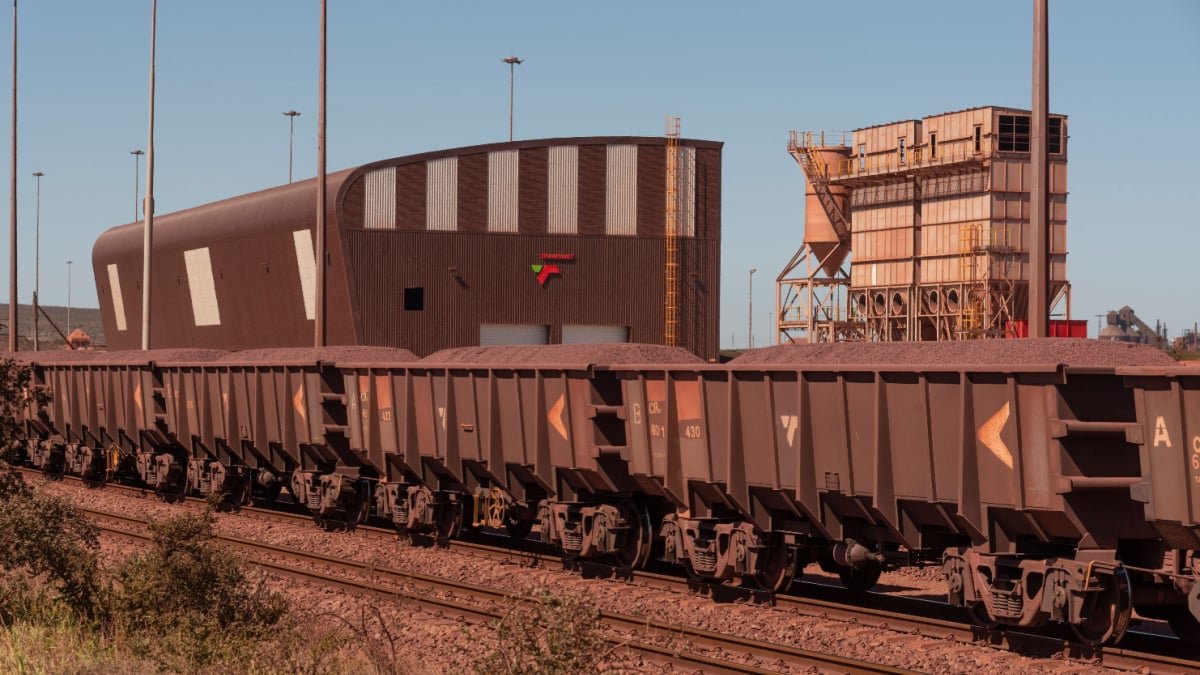
Transnet’s management continues to improve, halting its decline and gradually increasing rail traffic in the second half of 2025.
This has increased the efficiency of the power company at the port. Although most of South Africa’s busiest ports still rank among the world’s least efficient, they are also among the most improved in the World Bank’s 2025 rankings.
Transnet’s improved financial performance also represents significant progress in the government’s reform agenda of opening up the logistics sector to private companies.
These companies will operate major container terminals and several rail lines, bringing in significant investments that Transnet’s weak balance sheet prohibits.
To sustain this improvement, Investec’s chief economist Annabel Bishop explained that Transnet’s investment in new equipment and infrastructure will need to be sustained by utilities and private companies.
Bishop explained that South African state-owned enterprises tend to expand and contract quarterly, and fixed investments oscillate between growth and decline.
The latest data shows that despite aging infrastructure and poor performance, capital investment from public companies fell 4% in 2025 compared to the previous year.
In this sector, Transnet is one of the standout performers in recent years, with a limited fixed investment budget paying off for the company.
Mr Bishop said Transnet was experiencing continued improvement in its operations, with rail transport performance increasing by 4.4% in the six months to 30 September 2025.
He explained that the domestic cargo crisis has been a major constraint to GDP growth in recent years, restricting exports and increasing business costs.
“Transnet’s sales performance has been on an upward trend since fiscal year 2024,” the state-owned company said.
“The company leverages private sector participation to improve efficiency and fund capital investment requirements.”
Transnet’s balance sheet is extremely weak, limiting its ability to invest in infrastructure and equipment. It relies on around R200 billion in government guarantees to continue operating.
Nevertheless, the company has made the most of its limited investment capacity to acquire critical port equipment and improve locomotive availability.
This significantly improved the performance of the power company’s port and rail units. This can be seen in the graph below, courtesy of Bishop.
Obstacles to reform
Despite the operational improvements made by Transnet, significant additional investment will be required to return South Africa’s logistics sector to the best levels of 2017/18.
Transnet does not have the balance sheet to support such large investments, so the government is pushing ahead with reforms to increase private sector participation in the sector.
This increased participation has been accompanied by increased investment, with private companies holding R1.8 trillion worth of cash in banks.
However, while Transnet and the Government have made progress on these reforms, significant hurdles remain to be overcome.
The Center for Risk Analysis (CRA) has warned of caution over the restructuring of Transnet as the state-owned company is expected to retain a monopoly on the sector.
The utility said it remains committed to maintaining control over policies, laws and regulations in this area.
Private companies will therefore be able to invest in and compete with Transnet, but this will be done under the control of the utility companies rather than the free market.
Towards the end of 2025, private railway operator Traxtion has announced a R3.4 billion investment in South Africa’s logistics sector.
The investment will see R1.8 billion spent on locomotives and R1.6 billion on wagons, with expenditure likely to increase from R5.8 billion over time.
The CRA said this investment is very positive for the industry, allowing Transnet to transport more freight, reducing operational and financial stress and opening the door to investment for other private operators.
However, this investment shows that while Traxtion is investing and seeking to operate as a competitor to Transnet, the state-owned company continues to be the custodian of infrastructure in policy and law.
In practice, this means that Transnet, and by extension the state, will remain the entity making the final decisions about capital allocation and who receives which rail slots.
This perpetuates the potential for inefficiency, coupled with the potential for political patronage and corruption.
The private sector is increasingly in a position to provide a lifeline to Transnet. Importantly, however, the country’s rail and trade policy framework remains state-centric and is expected to constrain growth and job creation in the long term, the CRA said.
