


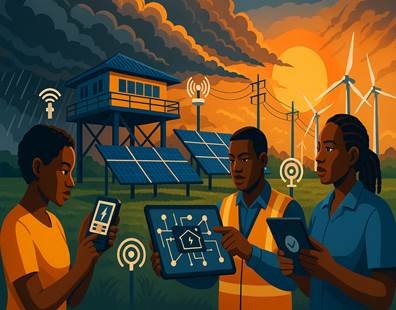
Across the African continent, climate change is no longer a distant future prediction, but a present and growing threat. Rising temperatures, erratic rainfall, prolonged droughts, and devastating floods are reshaping the environment, weakening agriculture, displacing populations, and, crucially, exposing the vulnerabilities of energy infrastructure. These challenges are becoming increasingly prominent in Ghana. Hydroelectric power generation, the backbone of Japan’s power grid, has become less reliable due to falling water levels, and abnormal weather has caused damage to transmission lines, substations, and distribution networks.
This article examines the urgent need to build climate-resilient electricity infrastructure in Ghana and Africa. We advocate the integration of intelligent energy systems, advanced predictive tools, and adaptive grid technologies to ensure energy supplies are stable, secure, and sustainable in the face of climate change.
Climate change threats to energy infrastructure
Ghana’s energy sector is highly sensitive to climate. As hydropower is an important part of the energy mix, changes in rainfall and water availability at dams such as Akosombo can significantly reduce power generation capacity. In recent years, Ghana has experienced power shortages that are directly related to insufficient inflows to hydropower reservoirs. However, especially in rural areas where grid infrastructure is already weak, strong winds and torrential rains frequently damage transmission towers, disrupt power distribution, and lengthen recovery times.
This climate-induced vulnerability is not unique to Ghana. Across Africa, rising temperatures are reducing the efficiency of power generation systems while increasing peak demand for electricity for cooling. Floods damage infrastructure, and wildfires and heatwaves increase stress on power grids. In many countries, these impacts are leading to higher maintenance costs, lower energy reliability, and increased consumer dissatisfaction.
Resilience to climate change
It is time to make climate resilience a non-negotiable priority in energy planning and infrastructure development. Traditionally, most electricity infrastructure in Africa was designed with a stable climate in mind. Currently, this assumption is no longer valid. Designing for resilience means preparing for variability, unpredictability, and extreme conditions.
A resilient system is one that can anticipate, absorb, adapt to, and quickly recover from climate-related shocks. This includes not only more powerful physical infrastructure, but also smarter systems that detect failures earlier, automatically reconfigure networks, and use predictive analytics to predict failures. For example, resilient substations may be located on higher ground to avoid flooding, equipped with sensors to monitor temperature and humidity, and connected to intelligent control systems that alter the flow of power in an emergency.
The role of intelligent systems and smart grid technology
Intelligent energy systems provide the backbone for climate adaptation in the power sector. Smart grids use sensors, real-time data, automation, and advanced analytics to monitor and control the flow of power across a network. These systems enable proactive responses to weather threats and grid failures, reducing downtime and preventing cascading failures.
In Ghana, smart grid technology can help manage load fluctuations due to temperature spikes, diversify the energy mix by integrating distributed renewable energy, and isolate microgrids during extreme weather events. AI-based predictive models predict equipment stress due to heat and storm effects and facilitate preventive maintenance before disaster occurs.
Additionally, intelligent demand response systems can help manage peak loads during hot seasons by adjusting consumption patterns, and advanced fault detection systems can isolate damaged parts of the power grid to prevent widespread power outages.
Adapting power generation and distribution systems to climate realities
Renewable energy holds great promise as infrastructure that can withstand climate change, such as solar power and wind power, which are abundant in Ghana and throughout Africa. However, integrating these resources into the grid must be done intelligently. Solar and wind power generation is variable and requires the use of smart inverters, energy storage systems, and grid balancing algorithms to ensure stability.
At the distribution level, rural electrification projects will need to be redesigned to withstand harsher climates. In flood-prone areas, wooden columns should be replaced with steel or concrete. Lines must be insulated and raised to withstand storm surges and avoid contact with rising vegetation. Components should be modular and easily replaceable if damaged.
Microgrids offer a powerful solution, especially in off-grid communities. By localizing energy generation and distribution, microgrids reduce exposure to central grid disruptions and can be equipped with smart controllers to manage power flow, battery usage, and renewable energy integration even under extreme conditions.
Building engineering human resources responsive to climate change
The path to climate resilience requires not only new technologies, but also new ways of thinking. Electrical and electronics engineers need to be trained not only in traditional design, but also in climate modeling, resilient systems planning, data analysis, and sustainability principles. Universities, polytechnics and technical training institutes will need to revise their curricula to incorporate climate risk assessments, disaster mitigation strategies and intelligent energy management.
Additionally, we need to give young professionals hands-on experience in smart grid projects, renewable energy installations, and real-world problem solving. A climate-resilient future starts with a well-prepared engineering workforce that can lead Africa’s energy transformation from the front lines.
Policy and governance for resilient infrastructure
Governments must take the lead in mainstreaming climate resilience into national energy strategies. In Ghana, the Energy Commission and the Public Utilities Regulatory Commission (PURC) can issue design standards that require power companies and developers to meet climate risk standards. National planning frameworks must integrate climate impact projections into energy infrastructure investments to ensure that all new substations, transmission lines and plants are designed with the future climate in mind.
Furthermore, national disaster preparedness plans should explicitly include the power sector. Early warning systems, contingency plans for power restoration, and emergency energy shelters using solar microgrids can save lives and maintain critical services during extreme weather events.
Donor agencies and development banks also need to prioritize climate-resilient energy infrastructure in their financing. Projects that integrate smart technology and adaptive planning should be given preferential financing and technical support.
conclusion
Climate change is reshaping our environment, and it is time to reshape our energy systems accordingly. Ghana and Africa must address this situation by building climate resilience into the very foundations of our energy infrastructure. Through intelligent systems, renewable energy integration, smart grid technology, and advanced engineering, we can build a power sector that is not only reliable but also able to meet the challenges of the 21st century. The future won’t wait, so let’s act boldly.
