Close Menu
Xsum NewsXsum News

    Stay Updated.

    Get the latest Africa-focused business & infrastructure news and more directly to your inbox.

    What's Hot

    Congressional Fintech Bill Hearings, West Africa Trade Summit… Business Events Tracked This Week

    2026 | TUT leads groundbreaking international music and artificial intelligence project

    Visa-free travel push accelerates as Africa pushes for deeper economic integration

    Facebook X (Twitter) Instagram
    Trending
    • Congressional Fintech Bill Hearings, West Africa Trade Summit… Business Events Tracked This Week
    • 2026 | TUT leads groundbreaking international music and artificial intelligence project
    • Visa-free travel push accelerates as Africa pushes for deeper economic integration
    • FG, African Finance Corporation sign $1.3 billion alumina refining deal to fuel mining revolution – Nigeria Independent Newspaper
    • “I think it’s extremely foolish to insult your own intelligence by seriously criticizing it.”: How Toto created his timeless masterpiece “Africa.”
    • Lafarge Africa’s annual profit soars to record high on increased sales volumes | Feed rationalization
    • Africa called for advancing infrastructure solutions that integrate climate resilience
    • AfDB considers investment in Togo’s cattle and poultry value chain
    X (Twitter) Instagram YouTube LinkedIn TikTok
    Xsum NewsXsum News
    • African Development Bank
    • Africa Finance Corporation
    • All Africa – Construction & Infrastructure
    • Africa Intelligence
    • Construct Africa
    • More
      • Mining Review Africa
      • Energy Capital Power
      • Sustainability & Climate-Resilient Infrastructure
      • Private-Sector Infrastructure Players
      • Urban Development & Housing
    Xsum NewsXsum News
    You are at:Home»Africa Finance Corporation»Africa bets on integration corridors
    Africa Finance Corporation

    Africa bets on integration corridors

    Xsum NewsBy Xsum NewsJanuary 24, 2026No Comments4 Mins Read2 Views
    Facebook Twitter Pinterest Telegram LinkedIn Tumblr Email Reddit
    Share
    Facebook Twitter LinkedIn Pinterest WhatsApp Email

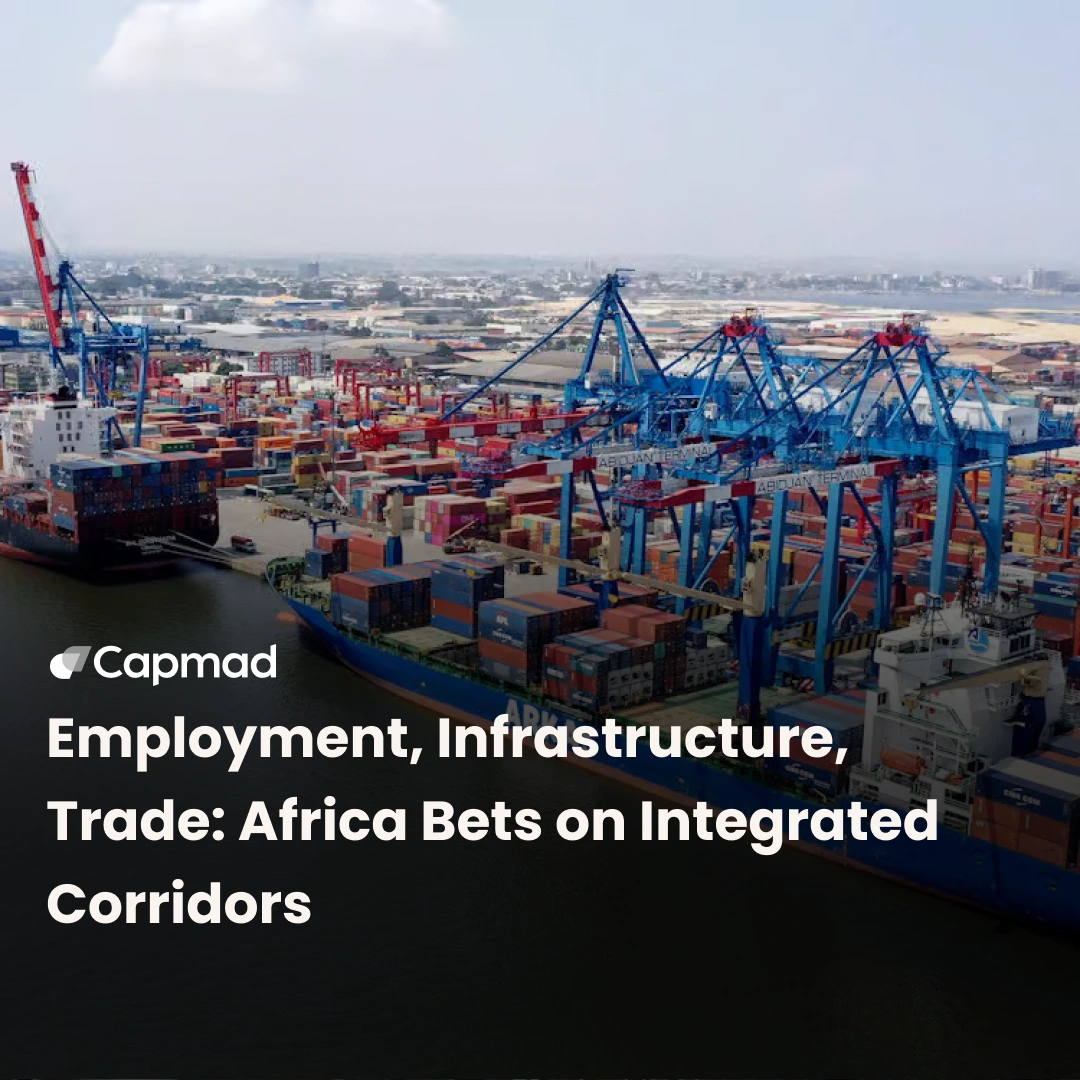
    Africa is increasing investment in integrated corridors, arteries that no longer simply connect ports and mines but aim to build true economic, industrial and logistics ecosystems along roads, rail and ports. From the Abidjan-Lagos Expressway to the Lobito Corridor, these projects are becoming important instruments for boosting intra-African trade, creating jobs and giving concrete substance to the AfCFTA.

    Corridors: More than just roads

    The integrated corridor is designed as a “development artery,” with infrastructure serving as the backbone of economic zones, services, and jobs. The aim is no longer just to transport raw materials to ports, but to facilitate the emergence of processing hubs, logistics services and industrial activities along these routes.

    Measuring more than 1,000 km, the Abidjan-Lagos highway connects five major cities in West Africa and aims to streamline an already densely populated and commercial corridor. These projects are part of the African Union’s Agenda 2063 and AfCFTA, which aim to increase intra-African trade significantly beyond the current 15-16%.

    Lobito Corridor: A model for an integrated approach

    A frequently cited example is the Lobito Corridor, which aims to link the mining regions of Zambia and the Democratic Republic of the Congo with the Atlantic coast of Angola via a modernized rail line. However, the project goes further and includes the creation of a special economic zone, agricultural development, and expansion of mobile network coverage and social services along the route.

    The African Finance Corporation, the US Department of the Treasury (DFC), the African Development Bank (AfDB) and the European Union have designated the corridor as a priority for the European Global Gateway Initiative and pledged to mobilize more than $1 billion. The “Lobito Corridor Impact Development” platform has been launched to systematize investments and attract private capital, expertise and industrial projects.

    Ambitious, complex and expensive project

    Integrated corridors are much more complex than traditional highways or railways because they combine transportation, industry, public services, health care, and education. It requires substantive financial arrangements, coordination among multiple donors, and close alignment with national and regional policies.

    European officials say these corridors incorporate schools, health centers and digital networks, increasing the cost and complexity of projects as well as their social impact. The African Development Bank (AfDB) has already mobilized nearly $50 billion in infrastructure investment over the past decade, giving more than 120 million people better access to transportation, demonstrating the transformative role of this funding.

    Harmony of rules to make the hallway effective

    The corridor is not just concrete and rail. Without regulatory harmonization, flows will remain blocked by borders, controls and bureaucracy. Experts emphasize the need to simplify customs procedures, unify certain standards and improve governance so that the corridor’s potential can be truly realized.

    In Central Africa, corridors such as Libreville-Kribi/Douala-N’Djamena and Douala/Kribi-Bangi-Kampala continue to be hampered by some of the world’s highest logistics costs due to a lack of integrated governance. Implementation of the AfCFTA will rely heavily on these simplification efforts, and the corridor will become an “accelerator” for regional integration.

    Jobs, industrialization and integration: what Africa expects

    Integrated corridors have the potential to transform transport routes into spaces of value addition and local employment. Linking ports, secondary cities, agricultural basins and mining areas can facilitate the emergence of regional value chains in agribusiness, mining, textiles, logistics and services.

    Studies suggest that, depending on the project, thousands of direct and indirect jobs could be saved, logistics costs could be reduced by up to 20-25%, and trade flows on certain routes could be doubled. Accompanied by training, research hubs, green technology parks and support mechanisms for local SMEs, the corridor can become a laboratory for joint development and innovation, rather than just an export route.

    Africa bets corridors Integration
    Share. Facebook Twitter Pinterest LinkedIn Reddit WhatsApp Telegram Email
    Previous ArticleFully Funded Short Course Alert: The Economics of Artificial Intelligence (AI) in Africa 2026
    Next Article UG School of Nursing recognizes project support from AfDB and SIF
    Xsum News
    • Website

    Related Posts

    Congressional Fintech Bill Hearings, West Africa Trade Summit… Business Events Tracked This Week

    March 2, 2026

    Visa-free travel push accelerates as Africa pushes for deeper economic integration

    March 2, 2026

    FG, African Finance Corporation sign $1.3 billion alumina refining deal to fuel mining revolution – Nigeria Independent Newspaper

    March 1, 2026
    Leave A Reply Cancel Reply

    Top Posts

    African Development Bank Group and Nedbank Group sign multi-billion rand funding partnership to transform housing access and boost African trade

    December 19, 202529 Views

    A United Continent on the Move: Ambassador Kouyateh’s Call for an African Logistics Renaissance

    November 20, 202529 Views

    Eni secures multi-million dollar loan for African FLNG project

    January 26, 202622 Views

    African Development Fund and WHO collaborate to save Sudan’s health system

    November 17, 202521 Views
    Don't Miss
    Africa Finance Corporation March 2, 2026

    Congressional Fintech Bill Hearings, West Africa Trade Summit… Business Events Tracked This Week

    This week, we’re highlighting the top business stories and events to watch from March 2nd…

    2026 | TUT leads groundbreaking international music and artificial intelligence project

    Visa-free travel push accelerates as Africa pushes for deeper economic integration

    FG, African Finance Corporation sign $1.3 billion alumina refining deal to fuel mining revolution – Nigeria Independent Newspaper

    Stay In Touch
    • Twitter
    • Instagram
    • YouTube
    • LinkedIn
    • TikTok

    Stay Updated.

    Get the latest Africa-focused business & infrastructure news and more directly to your inbox.

    About Us
    About Us

    Xsum News is Africa’s digital window into the future of business. We tell stories of innovation, enterprise, and investment that are shaping the continent’s economic rise. African Business, Added Up.

    X (Twitter) Instagram YouTube LinkedIn TikTok
    Our Picks

    Congressional Fintech Bill Hearings, West Africa Trade Summit… Business Events Tracked This Week

    2026 | TUT leads groundbreaking international music and artificial intelligence project

    Visa-free travel push accelerates as Africa pushes for deeper economic integration

    Most Popular

    African Development Bank praises Algeria’s development model, aims to replicate its success across the continent

    Considering the redefinition of African capital by UBA and Arauba

    G20 Energy Investment Forum brings together Africa’s top finance, insurance and technology leaders

    © 2026 Xsum News. All Rights Reserved.
    • 🌍 About Xsum News
    • 📬 Contact us
    • Privacy Policy
    • Terms & Conditions
    • Disclaimer

    Type above and press Enter to search. Press Esc to cancel.