


“I love Russia, its language and culture,” 20-year-old Aminata told DW. She hopes to leave her native Sierra Leone in the next few weeks to pursue an apprenticeship in Russia, some 7,000 kilometers away.
Her travel expenses will be covered by the Alabuga Start program, named after the industrial region in southwestern Russia where program participants are provided with dormitories.
Alabuga Start offers high-paying career possibilities to female applicants from poor countries.
Dreams shattered in Russia
For most of them, that dream was dashed shortly after arriving in the Alabuga Special Economic Zone (SEZ), a large industrial zone in Russia’s Tatarstan region.
A report released in May by the Global Initiative Against Transnational Organized Crime found that many newcomers were assembling cheap drones in poor conditions.
DW contacted several program participants, most of whom did not want to go on record about their experiences for fear of retaliation.
Chinala, a young Nigerian woman who participated in the Arabaga project but left Russia in frustration, agreed to an interview via social media messaging service.
“They turned us into hard workers with low wages,” she wrote in a chat with DW.
Chinara, whose name has been changed to protect her identity, wrote: “I felt good at first because when I applied, I was offered fields such as logistics, service, catering and crane operator.”
She explained that at first it seemed like a rare opportunity for African girls to gain a foothold in these professions. “But once we got here, they changed everything and made excuses.”
Some were assigned to drone assembly plants, others supervised drone production, and the rest worked as cleaners.
The young women were exposed to “very dangerous and life-threatening chemicals,” Chinara claimed, adding: “It’s a very dangerous place, so even the Russians themselves don’t work there for long.”
The center of Russia’s war economy
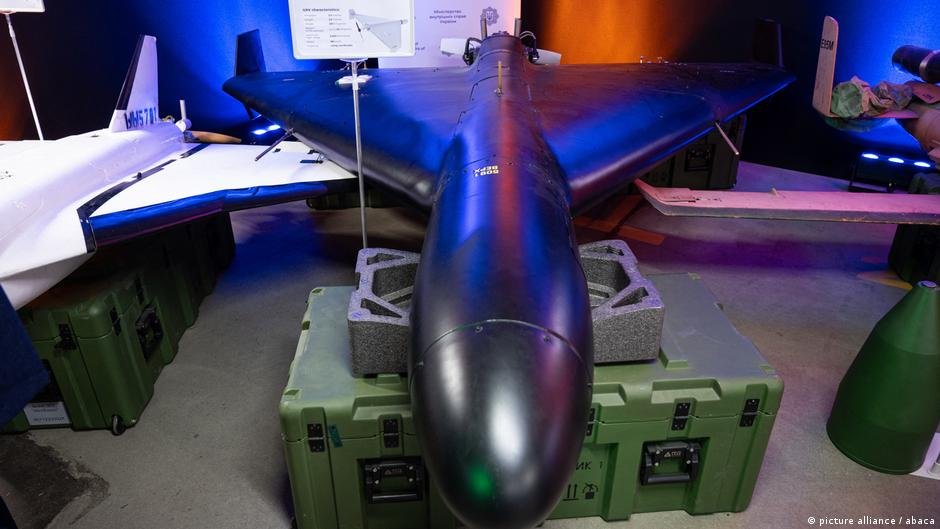
Arabga SEZ is the main production site for the Gueran 2 drone, which is based on the Iranian-made Shahed 136 and plays a key role in attacks on Ukraine.
SEZ was established in 2006 to attract companies and investments to Tatarstan.
Satellite images show that after Russia invaded Ukraine in 2022, the facility was rapidly expanded, with some converted into military production by adding new buildings and renovating.
Labor shortages have been repeatedly reported in war-torn Russia. At the same time, migrant workers from the Global South appear to be attracting the attention of recruiters.
According to figures from the Russian government’s official database, the Single Sectoral Information and Statistics System (SIISS), more than 111,000 African workers arrived in Russia in 2024. This is a 50% increase compared to 2022, the first year of the war.
Cameroonians recorded the strongest growth, with other participants coming from Nigeria, Burkina Faso, Togo, the Central African Republic and Gambia.
Almost all of these countries appear in GI studies related to Alabuga Start. Initially, African women between the ages of 18 and 22 were recruited, according to the study.
The program was subsequently expanded to other developing countries in Asia and Latin America, as well as to several republics of the former Soviet Union.
The study authors analyzed the data and conducted approximately 60 interviews between December 2024 and March 2025.
Co-author Julia Stanyard told DW that girls as young as 16 were also employed to produce the drones at the Alabuga Polytech training facility at the production site.
“Working conditions are exploitative, with young women saying they work long hours and are supervised by Alabuga management. They work with chemicals that pose risks to their health,” Stanyard said.
“Our daughter speaks about forced labor”
“This program appears to be a type of exploitation,” Stanyard told DW. “They are not told what they will produce when they are recruited. Many young girls are trapped in Alabuga and it seems impossible for them to leave the country.”
In Zimbabwe, parents are worried about their children who applied online and left for Russia on flights paid for by Alabuga.
The girl’s mother, who lives in rural northern Zimbabwe, has complained about her daughter’s suffering.
“She wanted to further her technical education. Now she told us about forced labor. She is barely allowed to use a mobile phone and is under surveillance. She has not received the $1,500 (1,300 euros) she was promised,” she told DW. “Now I can’t even get her back.”
The father of another girl who left Zimbabwe for the Alabuga SEZ told DW it was a nightmare as what was supposed to be a reliable training program turned into a “death trap”.
A mother in Zimbabwe’s capital Harare also told DW about her 20-year-old daughter in Alabuga, who was also scheduled to undergo technical training.
“But she is doing something completely different. We can hardly talk to her. Her passport has been seized so that she cannot escape,” the woman told DW.
Interpol investigates in Botswana
In neighboring Botswana, the training program has attracted the attention of law enforcement authorities, and Interpol has launched an investigation into whether Alabuga Start is involved in human trafficking.
Stanyard pointed out that some countries, such as Kenya, Uganda and Tanzania, are becoming more aware of the risks of the project and have begun investigating it, arguing that “Alabuga’s façade is starting to crumble a bit.”
The Alabuga Start program did not respond to DW’s request for comment.
Garikai Mafirakureva and Aleksei Strelnikov from Zimbabwe contributed reporting to this article, edited from German.
