Close Menu
Xsum NewsXsum News

    Stay Updated.

    Get the latest Africa-focused business & infrastructure news and more directly to your inbox.

    What's Hot

    Glade transforms fragrance into fashion with Make Africa Bloom event

    Centum RE leads the future of East African cities

    Experts highlight growing health concerns in Africa’s urban areas

    Facebook X (Twitter) Instagram
    Trending
    • Glade transforms fragrance into fashion with Make Africa Bloom event
    • Centum RE leads the future of East African cities
    • Experts highlight growing health concerns in Africa’s urban areas
    • How adaptive reuse can solve urban development challenges
    • How South African cities are rebuilding affordable housing
    • Sustainable infrastructure to fight climate change
    • China’s key minerals strategy in Africa – Africa Center
    • Egypt, African Financial Cooperation collaborates with Infinity Power to accelerate green transformation – Economy – Business
    X (Twitter) Instagram YouTube LinkedIn TikTok
    Xsum NewsXsum News
    • African Development Bank
    • Africa Finance Corporation
    • All Africa – Construction & Infrastructure
    • Africa Intelligence
    • Construct Africa
    • More
      • Mining Review Africa
      • Energy Capital Power
      • Sustainability & Climate-Resilient Infrastructure
      • Private-Sector Infrastructure Players
      • Urban Development & Housing
    Xsum NewsXsum News
    You are at:Home»All Africa – Construction & Infrastructure»Nigeria becomes top Belt and Road beneficiary with China-backed $24.6 billion GRIP mega project
    All Africa – Construction & Infrastructure

    Nigeria becomes top Belt and Road beneficiary with China-backed $24.6 billion GRIP mega project

    Xsum NewsBy Xsum NewsJanuary 19, 2026No Comments4 Mins Read2 Views
    Facebook Twitter Pinterest Telegram LinkedIn Tumblr Email Reddit
    Share
    Facebook Twitter LinkedIn Pinterest WhatsApp Email

    Nigeria has emerged as the largest single beneficiary of China’s Belt and Road Initiative (BRI) in 2025 following an estimated $24.6 billion construction commitment linked to the Ogidiben Gas Revolutionary Industrial Park (GRIP) in Delta State, making it one of the largest Chinese-backed infrastructure deals in Africa this year.

    Nigeria has become the biggest beneficiary of China’s Belt and Road Initiative, which pledges $24.6 billion in 2025. GRIP aims to harness Nigeria’s vast natural gas reserves into high-value products and contribute to industrialization and economic development. The initiative highlights China’s shift towards major energy-related infrastructure projects in Africa, in line with its strategic and commercial objectives. Initial progress faces challenges due to security concerns in the Niger Delta region, which has delayed development and affected investor confidence.

    GRIP is a flagship gas-based industrialization project aimed at converting Nigeria’s vast natural gas reserves into higher value products such as petrochemicals, fertilizers, methanol and refined fuels.

    The industrial park is expected to anchor multiple downstream industries, supported by new gas processing plants, pipelines, power infrastructure and export facilities, many of which are being provided by Chinese engineering and construction companies under the Belt and Road framework.

    The deal highlights a broader trend in Beijing’s Belt and Road strategy, which is increasingly focused on a small number of high-value projects related to energy and industrial infrastructure, said Christoph Nedpil Wang, an expert on China energy and finance at Griffith University.

    Nedopil noted that Nigeria’s GRIP-related contracts alone accounted for approximately $20 billion of China’s African construction activities in 2025, making the country the continent’s largest Belt and Road recipient and a strategic hub for China’s long-term energy engagement.

    The size of the deal puts Nigeria at the center of China’s recalibrated Africa strategy, with China shifting away from small-scale, decentralized projects toward less capital-intensive investments tied to energy security and long-term industrial value.

    With Africa’s largest gas reserves and large domestic market, Nigeria offers Beijing both commercial viability and strategic depth in West Africa.

    Terrorism challenge hampers early development

    Despite GRIP’s strong fundamentals, serious security challenges stalled early development.
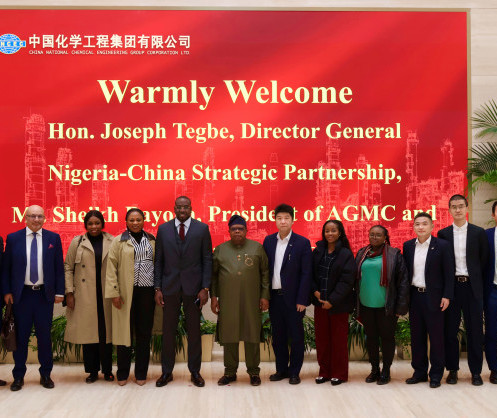
    For Nigeria, GRIP is a key pillar of Nigeria's long-term plan to reduce dependence on crude oil exports and curb gas flaring.
    For Nigeria, GRIP is a key pillar of Nigeria’s long-term plan to reduce dependence on crude oil exports and curb gas flaring.

    Long-standing tensions between Ijaw and Itskiri communities resurfaced in 2018, leading to violent confrontations and the emergence of armed groups around the project site.

    During former President Goodluck Jonathan’s administration, allegations of intimidation and requests for nearly $30 million in funds reportedly forced authorities to delay the landmark project and severely damaged investor confidence.

    Saudi-linked investors who had expressed interest in the project reportedly pulled out, citing security and concerns about the influence of non-state actors.

    As a result, Ogidigben has been inactive for years, serving as a cautionary example of how insecurity in the Niger Delta can derail major energy investments, despite its importance to the national economy.

    Why GRIP is important for Nigeria and China

    For Nigeria, GRIP is a key pillar in Nigeria’s long-term plan to reduce dependence on crude oil exports, curb gas flaring and build a competitive gas-led manufacturing base. Once operational, the project is expected to create thousands of jobs, stimulate industrial growth in the Niger Delta and increase export earnings.

    For China, supporting GRIP would strengthen its access to major gas-producing economies, as well as strengthen its economic footprint in a region where competition from the West and the Gulf is increasing. It also reflects the Chinese government’s growing preference for projects with clear revenue potential over government-funded public works projects.

    However, the scale of China’s involvement is likely to reignite debates over debt sustainability, transparency and local content.

    Nigerian authorities face pressure to ensure that GRIP investments deliver long-term economic value, technology transfer and inclusive growth, rather than increasing fiscal burden.

    If successfully implemented, GRIP has the potential to redefine Nigeria’s industrial landscape and become one of the most important Belt and Road projects on the African continent.

    read more

    belt beneficiary billion Chinabacked GRIP Mega Nigeria project road top
    Share. Facebook Twitter Pinterest LinkedIn Reddit WhatsApp Telegram Email
    Previous ArticleTanzania’s mining sector to drive record investment inflows in 2025
    Next Article This northern Nigerian engineer uses AI to convert personal lyrics into AI-generated songs
    Xsum News
    • Website

    Related Posts

    Dangote Cement vows to make Africa self-sufficient in cement production – Nigeria Independent Newspaper

    April 29, 2026

    AIIB expands investment in Africa with first sub-Saharan infrastructure project

    March 30, 2026

    Africa: 1.3 billion Africans expected to live in urban areas

    March 26, 2026
    Leave A Reply Cancel Reply

    Top Posts

    African Development Bank Group and Nedbank Group sign multi-billion rand funding partnership to transform housing access and boost African trade

    December 19, 202529 Views

    A United Continent on the Move: Ambassador Kouyateh’s Call for an African Logistics Renaissance

    November 20, 202529 Views

    African Development Fund and WHO collaborate to save Sudan’s health system

    November 17, 202523 Views

    Eni secures multi-million dollar loan for African FLNG project

    January 26, 202622 Views
    Don't Miss
    Construct Africa June 3, 2026

    Glade transforms fragrance into fashion with Make Africa Bloom event

    Glade’s ‘Make Africa Bloom’ event, held at Langham’s Lifestyle Estate, was a fragrant celebration. The…

    Centum RE leads the future of East African cities

    Experts highlight growing health concerns in Africa’s urban areas

    How adaptive reuse can solve urban development challenges

    Stay In Touch
    • Twitter
    • Instagram
    • YouTube
    • LinkedIn
    • TikTok

    Stay Updated.

    Get the latest Africa-focused business & infrastructure news and more directly to your inbox.

    About Us
    About Us

    Xsum News is Africa’s digital window into the future of business. We tell stories of innovation, enterprise, and investment that are shaping the continent’s economic rise. African Business, Added Up.

    X (Twitter) Instagram YouTube LinkedIn TikTok
    Our Picks

    Glade transforms fragrance into fashion with Make Africa Bloom event

    Centum RE leads the future of East African cities

    Experts highlight growing health concerns in Africa’s urban areas

    Most Popular

    African Development Bank praises Algeria’s development model, aims to replicate its success across the continent

    South Africa investigates mystery of plane arriving from Gaza carrying over 150 Palestinians

    ADB and Kabale University announce Sh1 billion incubation center

    © 2026 Xsum News. All Rights Reserved.
    • 🌍 About Xsum News
    • 📬 Contact us
    • Privacy Policy
    • Terms & Conditions
    • Disclaimer

    Type above and press Enter to search. Press Esc to cancel.