


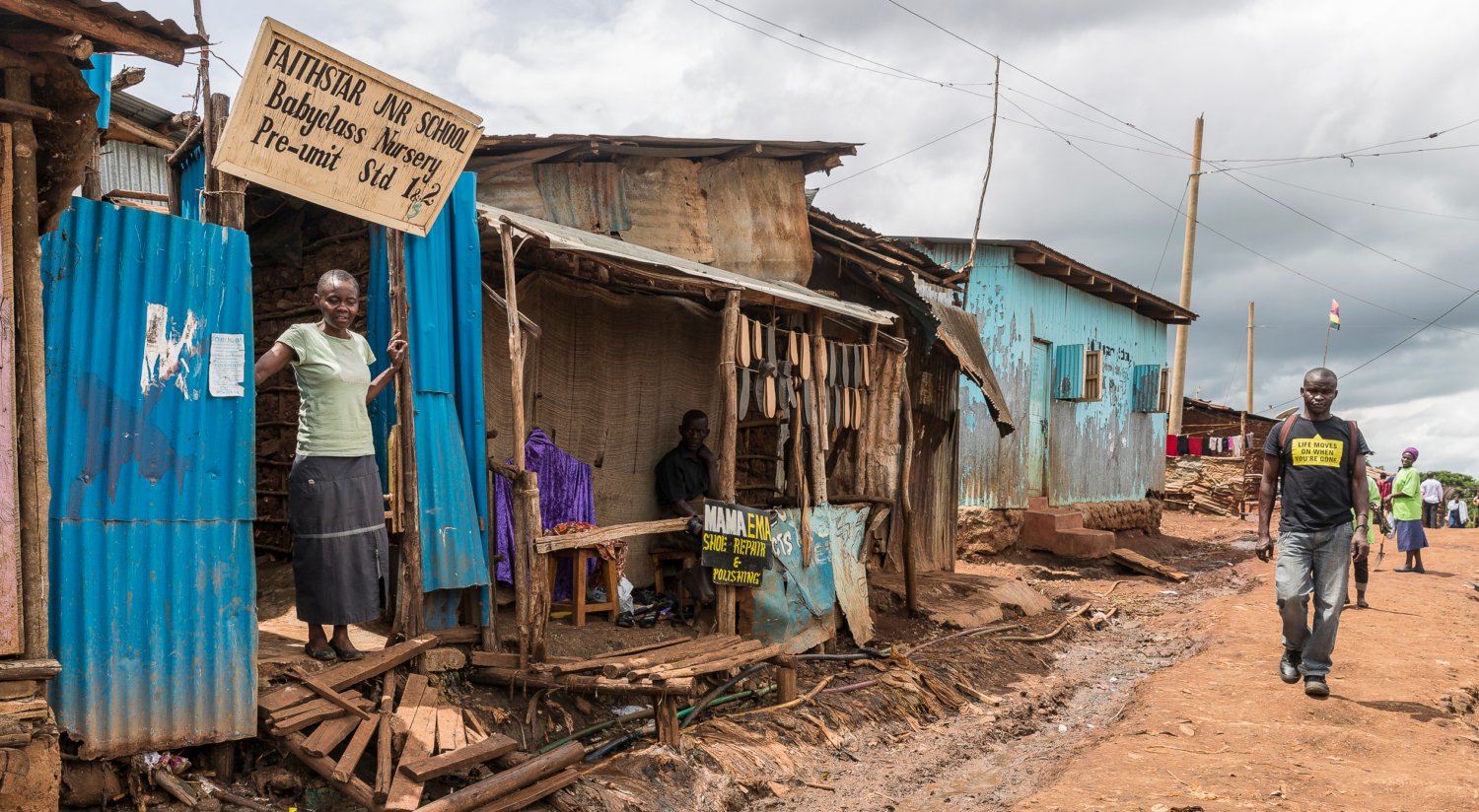
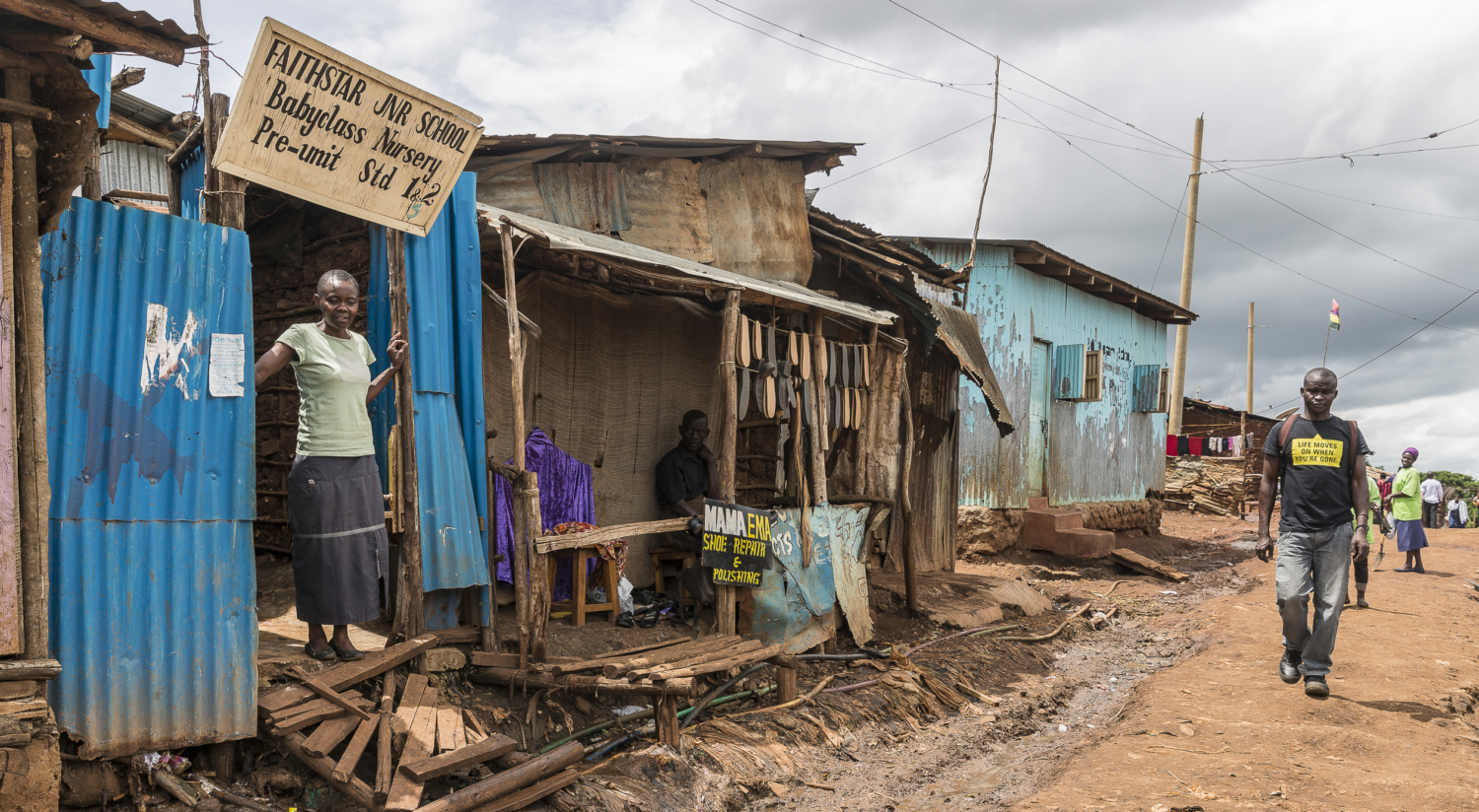
 Sub-Saharan Africa is facing a housing crisis. Approximately 1 billion people live in slums around the world, 200 million of whom live in slums in sub-Saharan Africa. This figure equates to “61.7% of the region’s urban population”, making sub-Saharan Africa the region with the highest urban poverty in the world.
Slums and urban poverty in sub-Saharan Africa
Singumbe Mueva, assistant professor of African studies at the University of Denver, spoke to The Bogen Project about development interventions and slums in sub-Saharan Africa. Mueva’s expertise in these areas stems not only from his academic research but also from his work with the United Nations High Commissioner for Refugees and Development Programmes.
According to Mueva, slums in sub-Saharan Africa began when African countries gained independence from colonial rule from the 1960s to the 1980s. Colonists always reserved major cities for themselves, so Africans everywhere migrated from rural to urban areas after independence. But it meant that early governments had to accommodate growing urban populations. They couldn’t do that because the rate of urbanization skyrocketed.
Housing rapidly declined as Africans migrated to cities, and they began to settle on common land, eventually creating the vast slums that exist to this day. Even today, sub-Saharan Africa’s urban population is growing at a rate of 4% each year. The United Nations predicts that “between 2018 and 2035, the world’s 10 fastest growing cities will all be in Africa.” In addition, Africa has a backlog of 51 million homes. Mueva said the region’s housing supply is “about nine years behind current demand.”
Slum improvement program
The World Bank is funding slum upgrading programs to combat growing urban poverty in sub-Saharan Africa. These programs assigned property rights and provided access to services in hopes of giving slum dwellers their own land. However, as Mueva explained, these programs were primarily a “self-help” model. The World Bank only gave poor people property rights, but not the means to build their own homes.
“About 97% to 99% of people in sub-Saharan Africa do not have access to formal financing to build or buy a home,” leading people to build their own informal housing or remain in slums. Formal and sustainable housing accounts for only 10% of all urban housing in Africa. Handing out free rights and ownership looks good on paper, but this “slum upgrading” is not improving the slums.
Ongoing problems in slums
Housing conditions in sub-Saharan Africa improved by 11% between 2000 and 2015, but this improvement was “twice as likely to occur among the wealthiest households” and “80% likely to improve among more educated households.” The reality is that 80-90% of Africans work in the informal sector, and the majority of people living in sub-Saharan Africa’s cities live in slums. Therefore, this housing improvement was not carried out in the slums, where many people could not escape.
George Compound, a slum in Lusaka, Zambia, is a good example of a poorly implemented upgrading program. Although it is a large slum area with a population of 400,000 people, there is no adequate water supply. Water pumped from temporary wells is contaminated by nearby above-ground toilets.
In Mueva’s opinion, solving Africa’s housing crisis requires government involvement. Although he is not against privatization, he believes the neoliberal model is not working to improve the slums of sub-Saharan Africa.
Can the government solve the housing crisis?
However, even if African governments want to get involved in housing construction, they cannot. This is due to the World Bank’s International Economic Regulations on Aid and Upgrading Programs. “The system is set up so that the World Bank advocates for less government involvement following the structural adjustment programs implemented in the 80s and 90s,” Mueva said.
In order to receive aid through the World Bank’s structural adjustment programs, governments often have to contract out construction to the private sector. However, with so many Africans and slum dwellers in the informal sector, the private sector is unable to make any real profit from low-income housing. People living in poverty are unable to obtain mortgages because they lack access to credit and insurance. This leaves the private sector unable to serve poor Africans.
Mueva firmly believes that if the government (with the help of local communities and the private sector) builds housing, “everywhere there is a win.” The construction sector can benefit from large-scale projects and infrastructure creates jobs. People living in slums can focus on earning an income instead of worrying about basic housing needs.
Mr Mueva presented Kenya as an example of combining state, private and community partnerships to combat urban poverty. Currently, the country has its own slum improvement program in which the government builds housing and guarantees mortgages.
Organizations supporting people in slums in sub-Saharan Africa
External organizations and NGOs are actively working to address housing poverty in sub-Saharan Africa’s slums. Habitat for Humanity completed a six-year program in 2018 called “Building Assets, Unlocking Access.” The program ran in Uganda and Kenya, providing technical assistance and “developing housing microfinance products and services.” Habitat for Humanity’s approach has gradually enabled Africans to build their own homes, take out small loans, and set up small payments.
More than 42,000 individuals accessed microfinance loans through the program, impacting a total of more than 210,000 people. Additionally, 32.9% of loan recipients built an entire home for themselves and their families.
The project report also found that recipients upgraded their homes by improving roofs, walls, sanitary and electrical equipment. Additionally, the program caused a trickle-down effect on health. As homes became healthier, fewer people reported common symptoms such as “sore throat, shortness of breath, itchy eyes, stuffy nose, vomiting, and rashes.” The group that improved the most was children under 6 years of age.
We hope that all African cities suffering from urban poverty can create national housing projects or find new and creative ways to alleviate the housing crisis. Overall, the solution to sub-Saharan Africa’s slums is housing. According to Mueva, “It’s simple.”
– Grace Ganz
Photo: Flickr
