


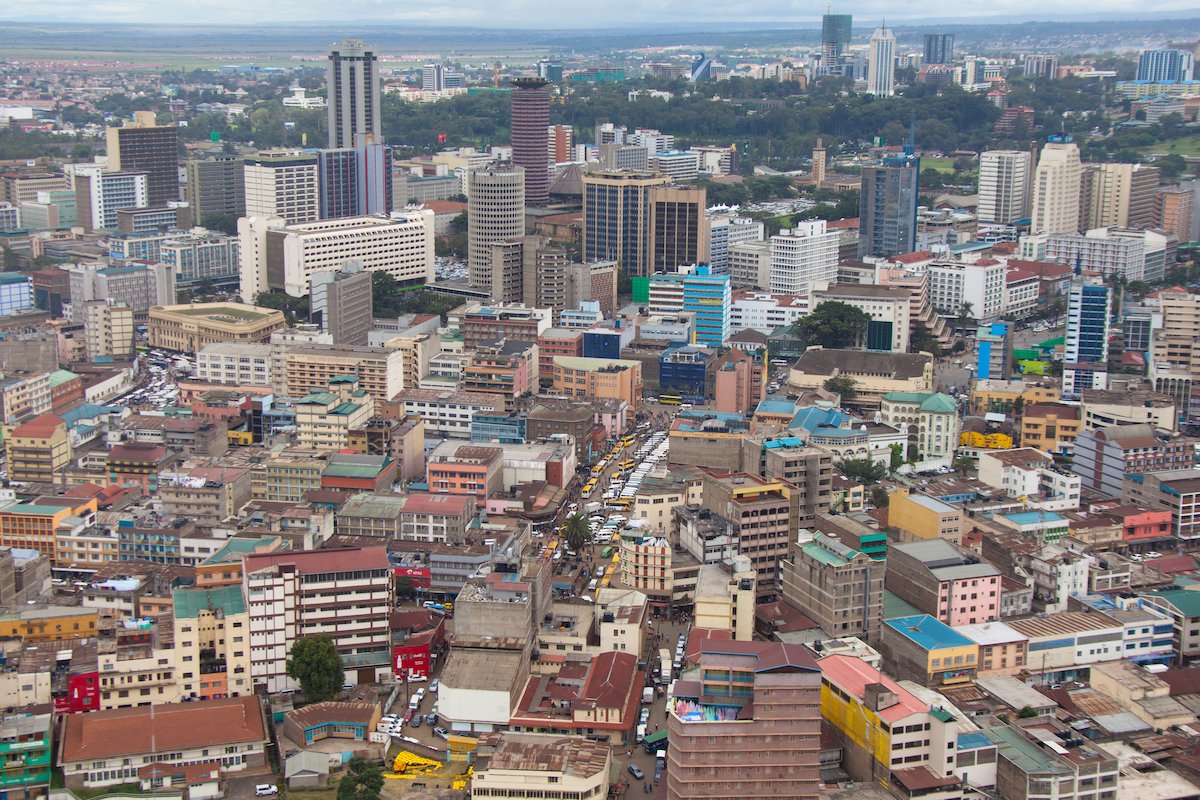
Housing is an important element for achieving social and economic development. Adequate, safe and affordable housing is therefore at the core of Goal 11 of the 2030 Agenda for Sustainable Development (i.e. achieving sustainable cities and communities). Furthermore, housing-related activities and investments are a major economic driver and make important contributions to economic activity and job creation.
The role of housing and the built environment in meeting the challenges of climate change
At the same time, it is widely recognized that climate change will affect Africa’s socio-economic development trajectory and threaten the achievement of the region’s 2030 Sustainable Development Goals and the African Union’s Agenda 2063 goals.
But a little-known fact is that we cannot solve climate change without providing climate-resilient homes and tackling building emissions, as buildings account for 19 percent of global greenhouse gas (GHG) emissions. According to the Intergovernmental Panel on Climate Change (IPCC) special report, all new buildings must be net-zero carbon by 2030 and existing buildings must be net-zero carbon by 2050.
Buildings account for 19 percent of the world’s greenhouse gas (GHG) emissions, so we can’t solve climate change without providing climate-resilient homes and tackling building emissions.
What is climate resilient housing?
A resilient home is one that can resist, recover and adapt to the negative effects of climate change and natural disasters. It is the ability of human settlements to cope with shocks (environmental, economic, social) and to respond to these shocks in the long term. Therefore, resilient housing must be planned, designed, constructed, operated and maintained to reduce vulnerability to these identified threats.
Recent developments in tackling climate change in the construction industry in some African countries
Fortunately, progress is being made by city managers and other stakeholders in addressing the challenges of climate change in Africa’s housing industry.
Kenya considers climate change to be a cross-cutting theme, mainstreamed in the medium-term County Integrated Development Plan (CIDP), which has influenced the country’s development blueprint, Vision 2030. Under these plans, the government requires all affordable housing projects to meet Global Green Certification requirements. Elsewhere, Nigeria recently promulgated the Climate Change Act 2021, West Africa’s first standalone climate change law. This law summarizes key elements of the country’s climate change policy, most of which were adopted in 2021. This includes a revised National Climate Change Policy. National Climate Change Program. 2050 long-term low emissions vision. and the first Nationally Determined Contribution (NDC).
It is also worth noting that there have been notable examples of resilient housing efforts in Africa over the past few years. One example is Mozambique’s climate-resilient housing initiative implemented through the Coastal Urban Adaptation Project (CCAP).
Mozambique is severely affected by climate change, with an estimated 60% of the country’s 28 million people living in low-lying coastal areas, where rising sea levels and frequent severe storms are causing flooding, erosion and landslides, threatening communities, housing and economic activity.
The CCAP program aimed to support municipalities and communities in Pemba and Quelimane cities to develop affordable and resilient building solutions and technologies.
Key design, construction elements, and techniques employed in this effort include the selection of low-vulnerability sites to reduce the potential impact of hazards (i.e., avoiding areas prone to flooding and high winds). Raised foundations (i.e., elevated platforms above the maximum level of flooding). Reinforced walls (i.e. structures made of durable materials such as coconut or bamboo wood) and secure roofs with rainwater harvesting capacity (i.e. roof designs with appropriate slopes to withstand strong winds and facilitate rain collection systems).
Another example of resilient housing technology is Malawi. There, Durabrick is increasingly being used as a more sustainable alternative to traditional fired clay bricks for home construction. Compacted soil stabilization blocks are made from a combination of locally sourced materials consisting of earth, sand, cement and water. Durabric has proven to be an affordable alternative for providing durable housing, resulting in impact in terms of reducing deforestation and carbon emissions, in addition to building local capacity for the industry.
Future course of action and conclusion
While some African countries have made some progress in developing laws, tools, and policies to strengthen climate-resilient housing and urban development, these efforts rely on global templates and standards, which can be difficult and expensive to replicate at scale in African contexts.
Additionally, advocacy and awareness among stakeholders about climate change laws and standards is needed. Public and private institutions need to be actively engaged to understand how these standards and laws affect their activities and their respective obligations.
Most importantly, housing supply and built environment stakeholders should take advantage of recently introduced climate change policies and incentives to introduce innovations that can reduce the impacts of climate change in the industry.
In conclusion, with Africa experiencing unprecedented rates of urbanization and increasing climate-related incidences, it is appropriate for stakeholders to redouble their efforts to make housing safe and resilient to climate change-related impacts. This will help protect lives and livelihoods from disasters and build sustainable communities.
