


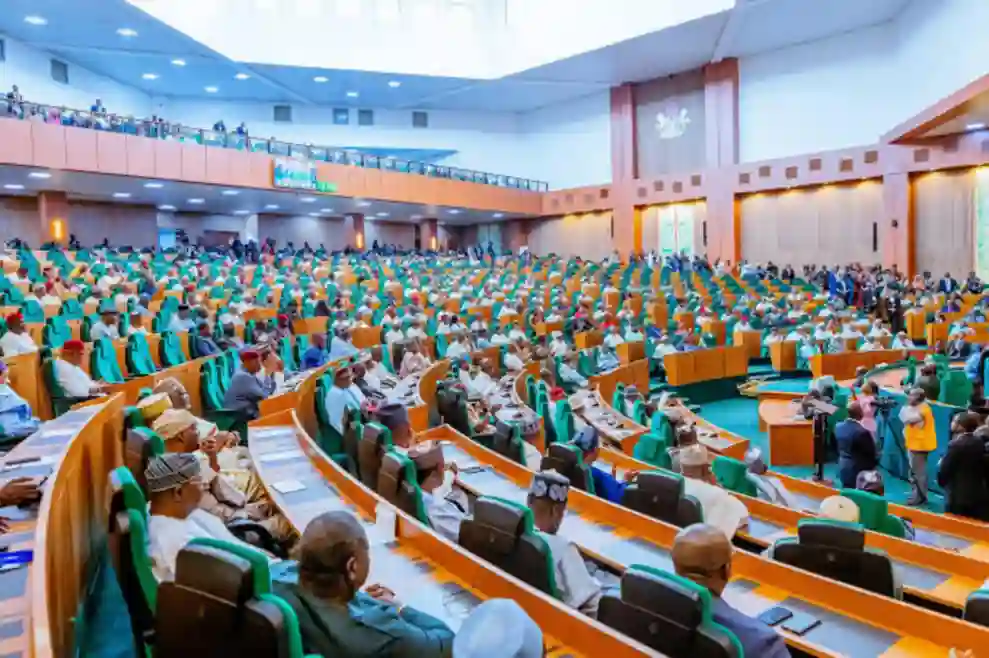
The House of Commons on Thursday unveiled plans to investigate the arrears of N174.251 billion in intervention funds received from development partners to support the national agricultural growth plan “AgroPocket” and food security emergency support loans for implementing agencies.
The resolution followed the adoption of a motion on issues of urgent public importance. Bello Kaojie claimed that failure to implement agricultural intervention funds already disbursed has left Nigeria deprived of access to about $200 million from the African Development Bank under the performance-based financing arrangement.
According to the motion, the House resolved to investigate the circumstances under which N55,295,810,075 was not released from the Consolidated Revenue Fund of the Federation to the Federal Ministry of Agriculture and Food Security through the National Agricultural Growth Plan Agriculture Pocket Project. This amount was part of the funds accessed from the African Development Bank to support the National Agricultural Growth Plan Agriculture Pocket Project.
The House also expressed serious concern over the non-disbursement of N118,955,186,000 to the Federal Ministry of Agriculture and Food Security for the National Agricultural Growth Plan Agriculture Pocket Project. The amount, obtained from the Japan International Cooperation Agency, was intended to support 550,000 smallholder farmers with subsidies for critical agricultural inputs in the rice, maize, soybean and cassava value chains under the 2025 rainy season agriculture and 2025/2026 dry season agriculture.
Please lead the discussion, Your Excellency. Kaoje recalled that President Bola Ahmed Tinubu declared a state of emergency on food security on Thursday, July 13, 2023, shortly after taking office, to address the growing food shortage and boost local agricultural production across the country.
“The House recognizes that in addition to funding provided by the Nigerian government, a number of agricultural interventions have taken place through the efforts of several development partners aimed at promoting agricultural production,” he said.
He explained that during February 2023, Nigeria negotiated and signed a 25-year loan agreement with the African Development Bank to support the National Agricultural Growth Plan Agriculture Pocket Project in an amount not exceeding $134 million. He said the first tranche of $99.665 million was released into the federal government’s consolidated account after deducting a 0.025 percent front-end fee.
“The House is also informed that the Federal Treasury released the total amount of $134 million disbursed from the African Development Bank to N55,986,301,549.95 and N40,486,800,000 to the National Agricultural Growth Plan of the Federal Ministry of Agriculture and Food Security of Nigeria and the Agricultural Pocket Project Account of the Central Bank of Nigeria, leaving a balance of N55,295,810,075. is unpaid and unspent,” he said.
He said the plan was for the National Agricultural Growth Plan AgroPocket Project to comply with its obligations to agro-marketers who supplied agricultural inputs to 280,000 registered wheat farmers in the first phase of the 2024/2025 dry season program, while distributing inputs to 150,000 rice farmers in the second phase.
My lord. Mr. Kaojie further informed the House that during April 2024, Nigeria negotiated with the Japan International Cooperation Agency and on or about April 24, 2024, signed a loan agreement for food security emergency support financing in an amount not exceeding 15 million yen.
He said the House was informed that on or about March 25, 2025, the Japan International Cooperation Agency disbursed a total of 12 billion yen (equivalent to $78,778,800, equivalent to 118,955,186,000 naira) to the Consolidated Revenue Fund of the federation in the first tranche, less an advance fee of 0.025%.
He said: “The Federal Ministry of Agriculture and Food Security, through the National Agricultural Growth Plan and the AgroPocket Project, will implement support to 550,000 smallholder farmers with subsidies for key agricultural inputs in the rice, maize, soybean and cassava value chains under the 2025 rainy season and 2025/2026 dry season agriculture.”
He expressed concern that the respective funds for agricultural input funds have deadlines for the 2024/2025 dry season agriculture, which has already passed, the 2025 rainy season, which has also passed, and the 2025/2026 dry season agriculture, which is currently underway.
“This ugly situation has left many farmers without access to critical agricultural inputs, resulting in reduced crop yields in 2025 as affected farmers are unable to go to farm during the season without being supplied with critical inputs,” he added.
He further said that the House was concerned that funds were being accessed by development partners for specific purposes, but were being unfairly withheld by the Federal Treasury from implementing ministries beyond their availability.
He said: “The House is concerned that failure to release these funds to be used to expand agricultural production means there will be a significant negative impact on the 2026 farming season.”
My lord. Kaojie also warned that the disbursement of up to approximately $200 million of funds to Nigeria by the African Development Bank under the results-based financing agreement was on hold but could not be released as the interventions related to the funds already disbursed were not implemented.
He said: “The House believes there is an urgent need to investigate the circumstances that led to the non-release of intervention funds from the Consolidated Revenue Fund of the Federation to the National Agricultural Growth Plan of the Federal Ministry of Agriculture and Food Security and the Agricultural Pocket Project Account at the Central Bank of Nigeria.”
He noted that this study will enable the implementation of the remaining part under the African Development Bank facility and the start of targeted activities under the Japan International Cooperation Agency financing project from the upcoming 2025/2026 Dry/Wet Season Program.
Following the debate, the House ordered the Agricultural Production and Services Committee to investigate the circumstances surrounding the failure to provide intervention funds and report back within two weeks.
