


The African Energy Bank aims to invest $15 billion in oil and gas projects in Africa by 2030.
The bank is scheduled to launch in June 2026, and its headquarters will be handed over to APPO and Afreximbank this week.
The African Energy Bank (AEB), an emerging financial institution led by the African Petroleum Producers Organization (APPO) and the African Export-Import Bank (Afreximbank), plans to raise approximately $15 billion by 2030 to finance oil and gas projects across Africa. Scheduled to officially launch in Abuja, Nigeria by June 2026, the agency is gearing up to mobilize a wave of energy finance across Africa.
Enabling financing for domestic projects
AEB was initially established with capital of $5 billion. Its core mission is to mobilize domestic and regional capital, reduce Africa’s dependence on external financing, and accelerate energy investment in domestic projects. Currently, more than 150 major projects including the Ajokuta-Kaduna-Kano (AKK) pipeline and various refineries remain stalled across the continent, mainly due to financial constraints. AEB seeks to address this challenge by providing African-led funding for strategic projects.
At the 2026 Libya Energy and Economy Summit, APPO Director-General Farid Ghazali explained, “The AEB is designed to stimulate private capital and ensure that projects are commercially bankable. The AEB acts as a catalyst for regional risk sharing and mitigation, providing sovereign support to reduce project development risks and facilitate intergovernmental agreements.”
Beyond project finance, AEB plans to help national oil companies go public. Ghazali said: “Our 18 NOCs in APPO often operate in isolation without a common stock exchange, which significantly limits regional synergies and our collective ability to attract large-scale capital.” By supporting these services, the organization aims to strengthen the financial capabilities of NOCs, support business growth and facilitate the development of energy projects in Africa.
The bank will also act as a magnet for private capital, injecting initial capital, providing guarantees and demonstrating strong African ownership and commitment. Through ESG-compliant financing and technical assistance, AEB strengthens the capabilities of end users and project developers to make innovative projects viable and attractive to investors.
Means towards pan-African governance
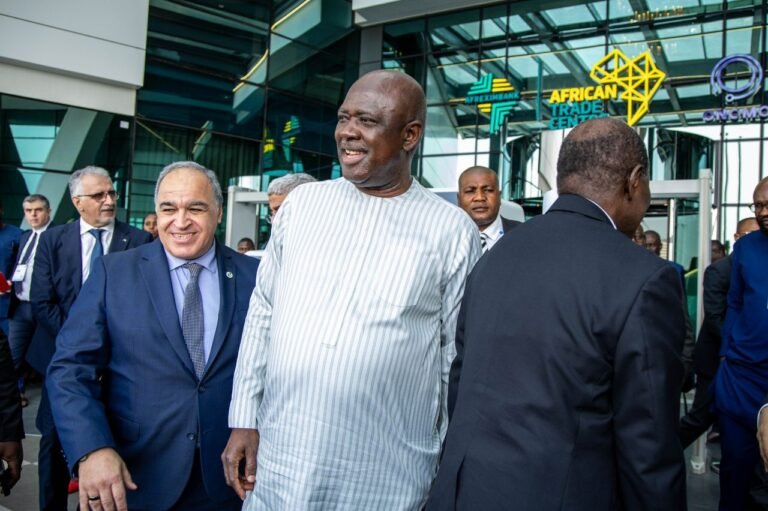
African countries and regional institutions have lined up behind the AEB, demonstrating support for a pan-African financial instrument aimed at enabling investment in the continent’s energy sector. On February 2, Nigeria officially handed over AEB headquarters to APPO and Afreximbank.
“By agreeing to be headquartered in this strategic institution, Nigeria reaffirms its leading role in building a more integrated, resilient and action-oriented African energy architecture,” Ghazali stressed. Nigeria’s leadership has encouraged other member states to honor their capital commitments, with Angola, Ghana and Senegal moving towards full payment, a sign of shared ownership and confidence.
This momentum reflects confidence in African-led solutions to address the financing gap in oil and gas development. In Phase 1, the AEB platform will mobilize $10 billion for projects primarily in Nigeria, Angola and Libya, with APPO certification and support from major international oil companies such as Shell and Eni. Phase 2, scheduled for 2027, will introduce linked regional gas trading hubs and promote 50% local content in energy projects. Phase 3 aims to grow the bank into a $212 billion financial platform supporting the gas transition and broader energy transition across Africa by 2030.
The development of a phase focused on intra-African projects is indicative of broader changes. African countries are increasingly willing to lead and manage their own energy financing plans, rather than relying solely on external partners. This opens the door to broader intercontinental cooperation. Beyond energy financing, AEB’s momentum shows how African-led institutions can support deeper integration across sectors, including cross-border infrastructure, regional value chains and expanding intra-African trade.
