


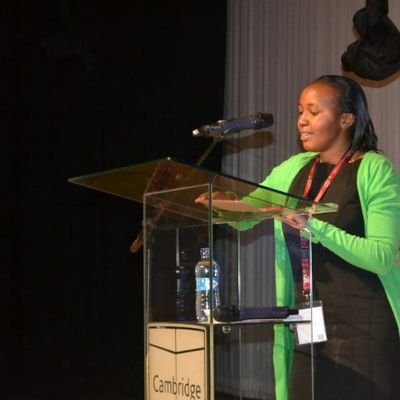
“African young scientists are working to make Africa disaster-resilient!”
Marianne Muriki
Last May, 15 young scientists from Tunisia, Morocco, South Africa, Central African Republic, Madagascar, Kenya, Tanzania, Cameroon, Congo, Uganda, Burundi, Ghana, Nigeria, Ivory Coast and South Sudan were selected by the African Union to be members of the African Youth Advisory Council in Nairobi. A 15-year voluntary, non-binding agreement recognizing that States have a primary role in reducing disaster risk. Marianne Muriuki, a 28-year-old young woman from Nyandarua County in Central Kenya, was among these 15 young scientists. She was recently interviewed by Era Environnement.
The environment of the times: How were these 15 young scientists for the African Youth Advisory Board selected?
Marianne Muriki: The Board of Directors is made up of 15 young people between the ages of 18 and 35. Although we all belong to different fields, all of our efforts are directed toward disaster prevention. We also represent a variety of sectors, including academia, the private sector, civil society, and government. It also represents all regions of Eastern, Western, Southern, Northern and Central Africa. Our company has 7 female directors! All of us are passionately involved in the implementation of the Sendai Framework for Disaster Risk Reduction (SFDRR 2015-2030) and more closely in line with the AU Plan of Action (PoA).
Environment of the times: How will this commission strengthen the capacity building of African youth in activities related to the prevention of natural disasters?
Marianne Muriqui: That’s a good question. African Youth Advisory Council – Disaster Risk Reduction will host a capacity building workshop.
The collaboration with the African Union Commission (AUC), Regional Economic Communities (RECs) and other relevant bodies is centered around the African Union’s Sendai Framework for Youth and Young Politicians, with four priorities for action: We will also leverage electronic and non-electronic platforms to share capacity-building information on disaster risk reduction. We have already engaged significant numbers of African youth in disaster risk reduction through social media platforms. The African Youth Advisory Board – Disaster Reduction (DRR) also facilitates intergenerational disaster risk reduction capacity building between youth practitioners and experienced disaster risk reduction practitioners at different levels of engagement. Finally, the Board will create avenues for DRR youth and youth organizations to interact and build cross-sectoral capacity with relevant areas such as climate change, urbanization, and sustainable development.
Circumstances of the times: What was the outcome of the Nairobi meeting?
Marianne Muriqui: We have set goals for the next six months based on four priorities for action. These are: understanding disaster risk, strengthening disaster risk governance to manage disaster risk, investing in disaster risk reduction for resilience, and fourth, strengthening disaster preparedness for effective response and “building back better” in recovery, recovery and rebuilding. You’ll soon see our commitment to these four priorities.
Circumstances: Around the same time, you had another meeting with 15 senior African scientists.
Do you talk to them and work with them?
Marianne Muriqui: The African Science and Technology Advisory Group (A-STAG) met immediately after our conference. Although we did not meet in person, plans are underway to increase consultations between the two agencies. We all have to work together.
Environment of the times: On May 13th, an international conference on natural disasters was held in Geneva.
Are you attending this conference organized by the World Meteorological Organization?
Marianne Muriqui: Personally, I didn’t. However, our fellow members Sandra (Ghana) and Alberto (South Africa) represented us at Global Platform 2019. The rest of us followed the proceedings closely and even participated remotely. At meetings of this type, decisions should be made that reach the grassroots. Kenya has a decentralized government system, with a central government and county governments. This model is an excellent means to enhance disaster risk management. Already, several county governments in the country have developed, formulated, and some have adopted disaster management policies.
Environment of the times: As a young woman, do you think scientists are well understood by people?
What is the population of your country? Do you have a strategy to bring science to the forefront in your country or in rural Africa?
Marianne Muriki: I am a young woman and consider myself a rural person from a marginalized area of Kenya. Over time, people have come to recognize the value of education in making meaningful decisions, but we still have a long way to go. Yes, I have a strategy and am working with already established disaster risk reduction groups and networks, such as PeriperU (University Collaboration Platform for Disaster Risk Reduction in Africa). We also hope to collaborate with the United Nations Office for Disaster Risk Reduction in Nairobi. They were extremely important in our orientation meeting. Also, I joined the field when I was only 18 years old and already have many skills regarding DRR. I will make use of it if possible. Young African scientists are working to make Africa more resilient to disasters.
Interview: Homi Ahmed Mikidash
June 6, 2019
