


As African leaders gather in Addis Ababa for the 39th African Union Summit, the narrative is decisively shifting from one that holds Africa back to one that moves it forward.
Under the 2026 Summit theme, “Ensuring sustainable water availability and safe sanitation systems to achieve the goals of Agenda 2063,” water is being redefined not only as a basic necessity but also as a strategic pillar for the future of African economies: a driver of prosperity, a cornerstone of public health, and a shield for climate resilience.
The African Union calls for bold leadership to unlock economic opportunity, protect community well-being and strengthen Africa’s long-term development by elevating water and sanitation to the highest political level.
But the challenges remain huge. More than 400 million Africans still lack access to safe drinking water, and the continent faces an estimated $70 billion annual funding gap in this sector.
The African Development Bank Group (AfDB) says more than ambition is needed at this time, and a new financial paradigm is needed to transform the AU-led Africa Water Vision 2063 from blueprint to reality.
NAFA: A new financial architecture for water sovereignty
At the heart of this change is the New African Financial Architecture (NAFA), championed by AfDB President Dr Sidi Ould Tarr as the cornerstone of Africa’s financial sovereignty and resource mobilization strategy.
NAFA is designed to transform the way Africa finances critical infrastructure, especially water, based on his four fundamentals.
This strategy focuses on:
1. Massive capital mobilization
NAFA aims to transform water into a high-value, bankable asset class, enabling Africa to close the $70 billion annual financing gap needed to meet its water and sanitation goals.
Rather than treating water infrastructure as a pure public cost, NAFA positions it as a long-term economic investment with measurable benefits.
2. Reform of Africa’s financial structure
AfDB is expanding its tools to enable investments such as:
Strengthening African water facilities, key to project preparation
Take advantage of our bank’s AAA credit rating
Introduction of green bonds and sustainable development bonds
Reducing the risk of private capital through blended finance
These mechanisms aim to attract private sector participation in areas that have long been considered government-only.
3. Harnessing Africa’s demographic dividend
Africa’s population is expected to reach 2.5 billion by 2050, and NAFA aims to turn the hidden economic burden of water scarcity, particularly “time poverty”, into productivity.
Access to reliable water systems frees women and young people from spending time fetching water, enabling them to pursue entrepreneurship, education and labor force participation.
4. Building resilient infrastructure by linking water, food, and energy
NAFA prioritizes infrastructure that delivers multiple development benefits at once, aligning with water, food, energy, and ecosystem linkages.
With one investment, you can simultaneously:
power industry
Expanding irrigation across much of Africa’s rain-fed farmland
Ensure safe drinking water
Strengthen ecological resilience
Innovative solution: multipurpose dam
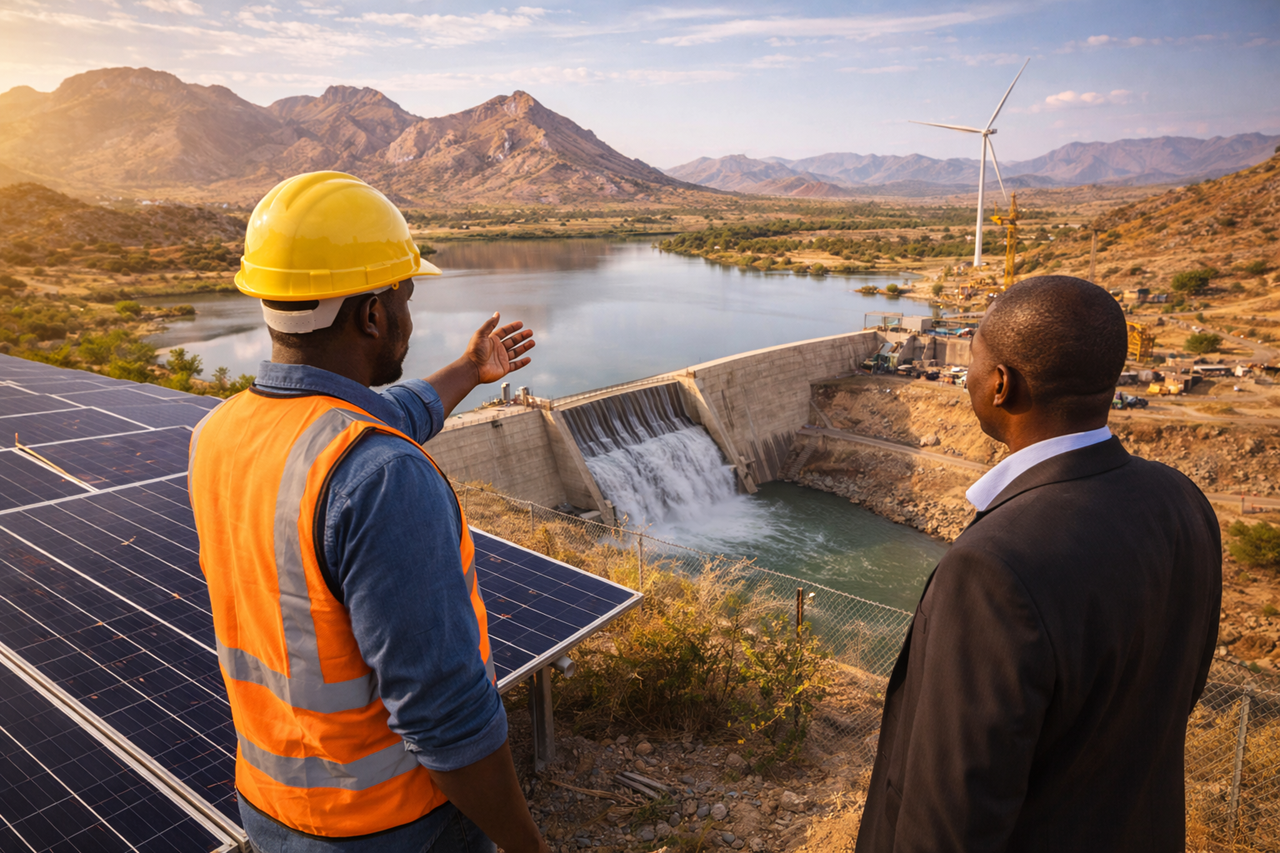
Through NAFA, the African Development Bank Group is positioning multipurpose dam projects as essential infrastructure to address Africa’s water crisis at scale.
These projects integrate water supply, irrigation, hydropower and climate resilience, making them economically viable and socially transformative.
“Multi-purpose dam projects enable the equitable sharing of water resources to meet diverse needs, integrate the linkages between water, food, energy and ecosystems, and create resilient systems where joint public and private participation can drive sustainable growth,” said Muchela Johannes Chirwa, Director of the Bank’s Water Development and Sanitation Department.
Multipurpose dams increase efficiency by pooling the use of infrastructure.
Water used for electricity can be reused as downstream irrigation water
Energy and irrigation revenues help cover maintenance costs
Domestic water charges are no longer the only source of revenue
Kenya’s Sweik Dam: Flagship transformation for 1.3 million people
One prime example is the AfDB-supported Sweik Dam project in Kenya.
Main facts of the project:
Located at the confluence of the Athi and Sweik rivers
height 80.5 meters
Capacity: 688 million m3
Total cost: ~$635 million
Scheduled completion: July 2027
Expected benefits:
Drinking water for 1.3 million people
20MW hydropower
Irrigation of 40,000 hectares of farmland
Job creation and drought resilience in semi-arid regions
Swake, the flagship of Kenya’s Vision 2030, demonstrates how water infrastructure can simultaneously deliver food security and industrial growth.
Rwanda’s Mbumba Program: Climate Resilience Through Water Storage
The AfDB-supported Mbumba Multipurpose Water Resources Development Program in Rwanda also exemplifies this approach.
Approved in October 2020 with funding of €121.5 million, the program includes:
39 meter high dam on the Mbumba River
Storage capacity: 55 million m3
Estimated completion: October 2026 (currently 36.6% complete)
Expected results:
50,000 cubic meters of drinking water daily
irrigated 10,000 hectares
1MW hydropower
Climate resilience through watershed protection and forest management
Supporting fisheries and livestock, benefiting approximately 800,000 people
Hydropower revenues contribute to long-term operation and maintenance sustainability.
Advantages of hydropower: low-cost renewable energy
According to the International Renewable Energy Agency (IRENA), electricity from new hydropower projects remains one of the lowest-cost renewable energy sources, highlighting the economic attractiveness of multipurpose dam infrastructure.
Burundi: A reliable energy-saving lifestyle
In Burundi, the AfDB-supported Rusumo Falls dam project was commissioned in 2024, bringing about a major change in power security across the country.
At Gitega Regional Hospital, improved electricity supply has directly enhanced healthcare delivery.
“One of our patients was a mother who gave birth to premature triplets…If we didn’t have a new incubator connected to electricity 24 hours a day, we would not have been able to properly care for these babies,” said Dr. Arnaud Ndulukugira, the hospital’s deputy director.
The project received:
Financing the future: Opening up Africa’s water sector for investment
Water development efforts are directly aligned with Fundamental 4 of President Ulud Tarr’s vision: building resilient, high-value infrastructure that creates opportunities for youth and women.
To mobilize private capital, AfDB is deploying innovative financing tools, including:
green and sustainable development bonds
mixed financial platform
Strategic partnership leveraging our AAA rating
As Africa’s water challenges worsen due to rapid population growth, ecological pressures and infrastructure deficiencies, the African Development Bank Group positions multipurpose dams and NAFA as the foundation for a more water secure, resilient and prosperous continent.
