


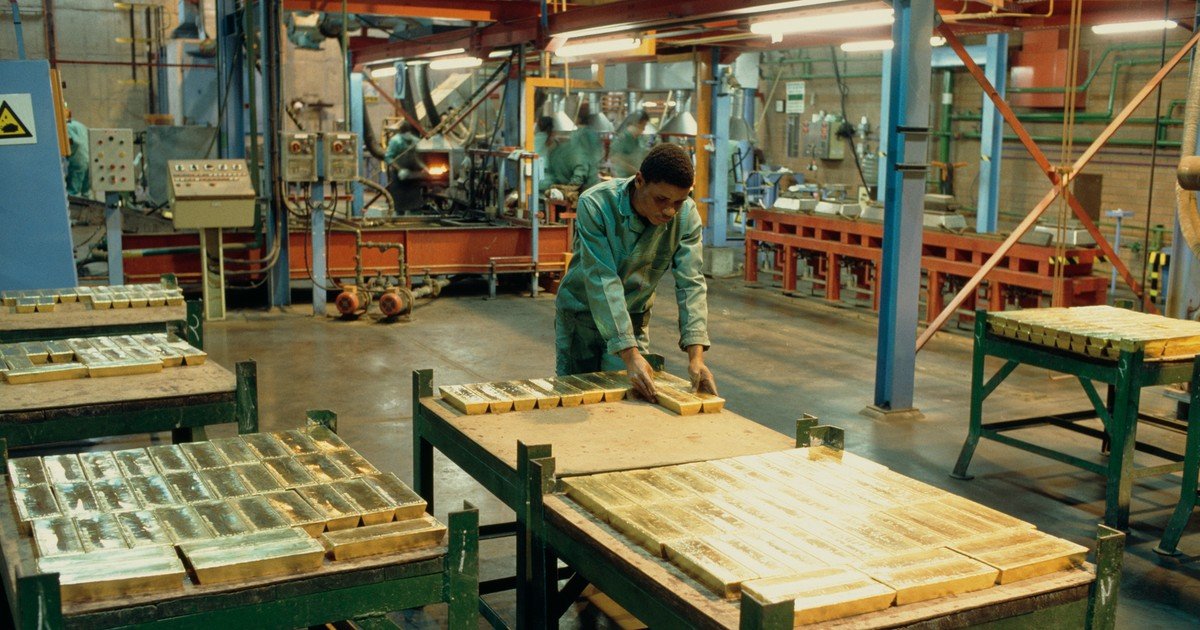
This is the central finding of a new report by the African Finance Corporation, which estimates that Africa has more than $5 trillion worth of gold at mine sites, including more than $1 trillion that remains untapped. The study argues that if properly managed, these reserves could strengthen external buffers, stabilize currencies, and accelerate industrial growth across resource-rich economies.
Gold prices have soared by about two-thirds over the past year, peaking at more than $5,000 an ounce, reinforcing gold’s role as a safe-haven asset amid geopolitical tensions and financial instability. Analysts at the Brookings Institution say renewed political uncertainty in Washington and broader global instability have further strengthened gold’s appeal.
This is a critical moment for African policymakers, who are faced with chronic foreign exchange shortages and unstable capital flows.
“Unlike most minerals, gold combines high liquidity, transparent pricing and rapid monetization, allowing countries to convert domestic production directly into reserves rather than relying on volatile external inflows,” the AFC report said.
Despite its vast reserves, gold currently accounts for just $70 billion of Africa’s foreign exchange reserves, or about 15% of its total foreign exchange holdings. The company argues that this gap represents a strategic opportunity. Rather than export raw produce and rely primarily on taxes and royalties, governments could use gold to deepen domestic value addition, support regional integration, and anchor industrial ecosystems.
Ghana’s GoldBod model and currency revival
Ghana provides a test case. In 2025, the West African country established the Gold Board, known as GoldBod, as the sole licensing authority to license traders in gold, diamonds and other valuable ores. The move formalized small-scale artisanal production, curbed smuggling, and improved fiscal oversight.
The results have been astonishing, with Ghana rebuilding its nearly depleted gold reserves in 2022 and now holding the largest official stockpile in sub-Saharan Africa. Foreign exchange reserves exceed $10 billion, and the cedi appreciated by 41 percent in 2025, the strongest performance of any world currency that year.
“These dynamics are becoming increasingly important as central banks relock gold reserves,” the AFC observed.
The growing role of money in global power politics

This change is global. Developed countries still hold the majority of official gold reserves, but recent purchases have come from emerging countries. Countries allied with China and Russia have accelerated their gold accumulation since the end of 2021, a trend that intensified after the G7 froze Russia’s foreign exchange reserves following the invasion of Ukraine. The Russian government responded by increasing its gold purchases, with China emerging as one of the biggest buyers in recent months.
Africa’s public gold holdings have also steadily increased, increasing from 605 tonnes in 2014 to more than 738 tonnes in 2025. In parallel, refining capacity has expanded, with more than 14 African countries establishing formal gold refineries.
“When traceable artisanal small-scale production and certified refining occurs, gold purchases strengthen monetary policy transmission, increase reserve reliability and preserve value on land,” the report states.
Beyond West Africa, East Africa is poised to play a greater role, with Tanzania’s Lake Victoria goldfields remaining at the heart of the region’s mining sector. The country is poised to strengthen its position through projects such as the Nyanzaga gold mine, which is scheduled to start production in 2027. Gold has been incorporated into Tanzania’s macroeconomic strategy following the Bank of Tanzania’s gold purchase program launched in 2023.
The broader perspective extends beyond bullion. Africa contains approximately 30 percent of the world’s known mineral reserves, including cobalt, platinum group elements, and bauxite. However, the AFC warns that the benefits of relying solely on taxes and royalties are often limited and unstable, especially where governance is weak.
For global investors and policymakers in Washington, London, Ottawa and Beijing, Africa’s gold story is no longer just about mining. It is about rebalancing foreign exchange reserves, resilience and economic strength at a time when confidence in traditional currencies is being tested.
