


The global space race is reshaping the nuclear fuel cycle and creating new opportunities for African producers. China’s February 12 handover of a satellite ground data receiving station to Namibia, located on the outskirts of Windhoek and capable of processing real-time remote sensing data, shows how Beijing is combining space infrastructure with resource diplomacy across the continent. As governments and private operators expand their satellite fleets, deep space missions, and defense-related aerospace platforms, the energy demands of their infrastructure are becoming a strategic variable.
New drivers for uranium demand
Beyond ground infrastructure, nuclear propulsion and onboard reactor systems are at the heart of next-generation spacecraft designs, with NASA, the U.S. Department of Defense, and China’s space agency all advancing programs that rely on them.
The fuel of choice for these advanced reactor concepts is High Analysis Low Enriched Uranium (HALEU), whose supply chain is almost entirely dependent on Russia. For governments that now treat dependence on it as a national security responsibility, finding alternative sources for uranium is a procurement question that Africa is uniquely positioned to answer.
China expands its expansion into African space
The facility, handed over to Namibia, will train 14 Namibian engineers and is already in the second phase of development, giving China a deeper foothold in one of the world’s most uranium-rich countries. Namibia is the world’s third largest uranium producer and counts Russia’s Rosatom as a strategic partner.
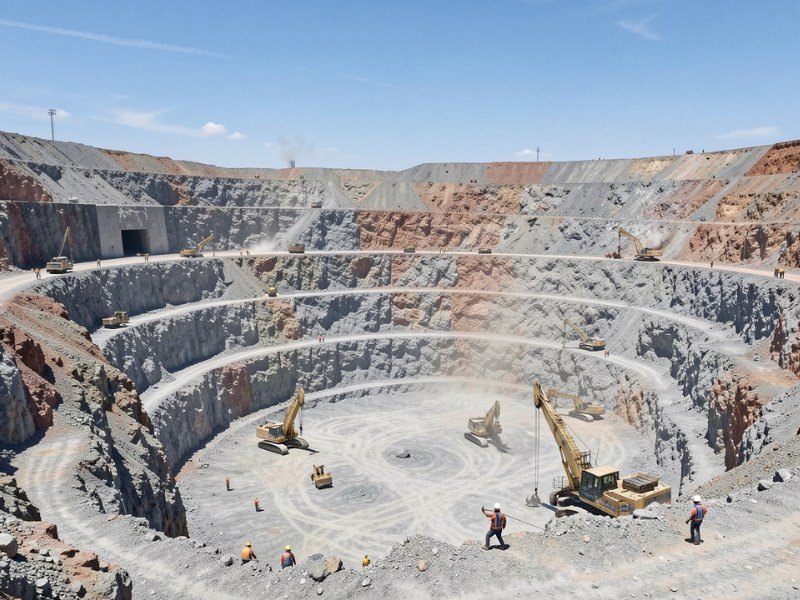
Rosatom’s Wings project, operated through its Namibian subsidiary Headspring Investments, targets large sandstone-type uranium deposits in the Omaheke region using in-situ leaching, Africa’s first low-footprint extraction method. The project is expected to produce 3,000 tonnes per year over a 25-year mine life. Drilling was halted in 2021 following regulatory violations, but Namibian Parliament’s Standing Committee on Natural Resources recommended in March 2025 that exploration continue, finding no evidence that the method had or could contaminate groundwater. The project still needs regulatory and community approval to move forward, but political momentum is building.
Investment momentum increases
Namibia’s uranium sector is entering a new production phase. The country set a record in 2025 with uranium oxide production exceeding 10,000 tonnes for the first time, as uranium prices soared to $101 per pound in January 2026 before settling in the $85-$90 range. Paladin Energy’s Langer-Heinrich mine is expected to produce 4 million to 4.4 million pounds in 2026 and be fully ramped up to nameplate capacity by the end of the year. Uranium accounted for 16.8% of Namibia’s total export earnings in 2024.
Bannerman Energy’s Etango mine and Deep Yellow’s Tumas project, which will require a combined investment of approximately $756 million, are both on track to production, with Tumas targeting first production by the third quarter of 2027. Orano is separately evaluating the reopening of the Trekopye deposit, one of Namibia’s largest.
Value chain questions
Strategic opportunities for African producers lie further upstream in the fuel cycle, beyond extraction. South Africa’s IRP 2025 targets 5.2GW of new nuclear capacity and identifies SMR technology and localizable nuclear fuel cycle components as priorities. Egypt’s El Dabaa power plant, a $30 billion project backed by $25 billion in Russian state loans, is scheduled to have 4.8GW of nuclear power capacity online by 2030, and nuclear power programs are underway in Ghana, Uganda, Nigeria and Kenya.
How much value is captured on the continent will depend on whether African producers move beyond yellowcake exports to long-term offtake agreements linked to downstream processing, fuel cycle partnerships and advanced reactor development.
