


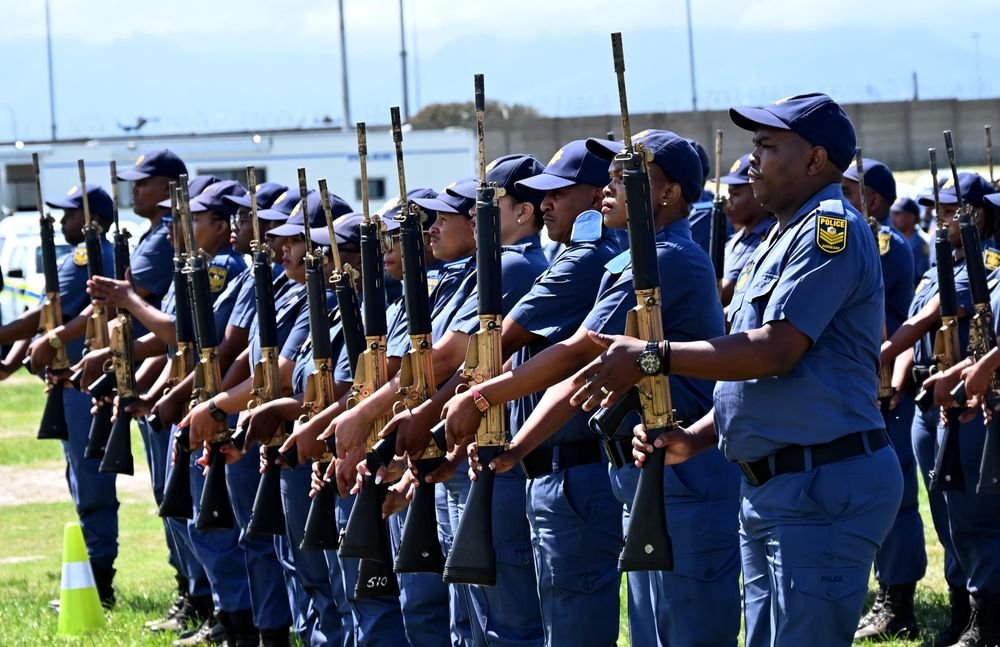
The deployment of the South African National Defense Force (SANDF) to Gauteng, Western Cape and Eastern Cape is said to be an admission that criminal intelligence and police services have been destroyed and collapsed.
Experts said the deployment of the National Defense Force is likely to provide only tactical relief rather than a strategic and sustainable solution to the problem, adding that this is not a substitute for the necessary long-term review of the SAPS, which must focus on intelligence-led operations, investigative operations and dismantling criminal networks.
President Cyril Ramaphosa announced the deployment of the SANDF to Gauteng and the Western Cape during his 2026 State of the Union Address (SONA) on 12 February.
Acting Police Minister Firoz Kacharia later confirmed that the deployment would also include the Eastern Cape.
He said this was a targeted response to the most pressing threats to South Africa’s democracy, including organized crime, gang violence and illegal mining.
This is not the first time the SANDF has been deployed to combat crime. In October 2017, following a significant spike in crime and gang-related violence on the Cape Flats, then Police Minister Fikile Mbalula requested SANDF support for SAPS to fight gangs in the Western Cape and Gauteng. The deployment was specifically targeted at “crime-prone” areas such as Elsies River and other areas of the Cape Flats, where police were struggling to contain military-style gang groups.
Security expert Willem Els said the government could not act preemptively without criminal intelligence, adding that the country should learn from its previous deployment in the Western Cape. There, murder rates increased after eight months of withdrawal, indicating that the desired effect had not occurred at all.
Els added that the implementation of the same old model shows the prevalence of criminal intelligence and police forces overall, and that gangs and organized crime are taking over the criminal justice system.
“Without crime intelligence, we cannot act pre-emptively, so most police work becomes reactive in nature,” he said, adding that SAPS needs to re-establish reliable crime intelligence and policing systems.
Spokesperson for the Minister of Police, Kamo Mogosi, said the department issued a statement on February 12 recommending collaboration with various stakeholders to discuss ongoing measures and their effectiveness to curb gang violence in the Western Cape.
“The ministry further recommended that the stabilization plan be revised to focus on strengthening the deployment of specialized units in addition to existing anti-gang units in areas most affected by gang-related violence,” she said, adding that the revised plan also aims to improve operational capacity and strengthen intelligence-led policing in hotspots across the province.
Mr Mogotsi added that the crime intelligence forms part of a multidisciplinary team assembled to combat gang violence.
South Africa’s fight against crime is seriously hampered by a dysfunctional criminal intelligence unit within the SAPS.
Intelligence-led policing is failing due to internal corruption, political interference, and a lack of actionable intelligence to stop organized crime and murder.
March 2025 The Police Portfolio Committee convened on 5 March 2025 to address growing concerns about instability, corruption and operational failures within the SAPS Criminal Intelligence Unit. The hearing, attended by suspended Police Minister Senzo Mchunu, National Director-General Fanny Masemola and senior SAPS officials, revealed internal leaks, leadership disarray and mismanagement of resources that have plagued the department for years.
SAPS officials assured the committee that intelligence operations were working effectively, but MPs expressed serious concerns about continued instability in leadership, politically motivated misuse of information, and failures to prevent violent crime and riots. The hearing highlighted the urgent need for stronger oversight, accountability and structural reforms to restore confidence in the country’s criminal intelligence capabilities.
Testimony before the Madranga Committee and Parliamentary Select Committee also detailed how criminal organizations and drug cartels, often with the help of senior officials, successfully infiltrated the SAPS. The testimony also revealed how criminal intelligence agencies are rife with corruption, internal leaks, and incidents of officers selling classified information.
Andy Mashire, another security expert, believes SANDF was introduced with the collapse of SAPS and says it cannot be branded as a solution.
Following Mr Ramaphosa’s announcement, Anin Kriegler, a senior research fellow at the Institute for Security Studies (ISS), and Lisette Lancaster, the institute’s head of justice and violence prevention, said making communities safer depends on strengthening routine policing and incorporating evidence-based approaches, rather than crisis management and repeated deployments of troops.
manyane.manyane@inl.co.za
