


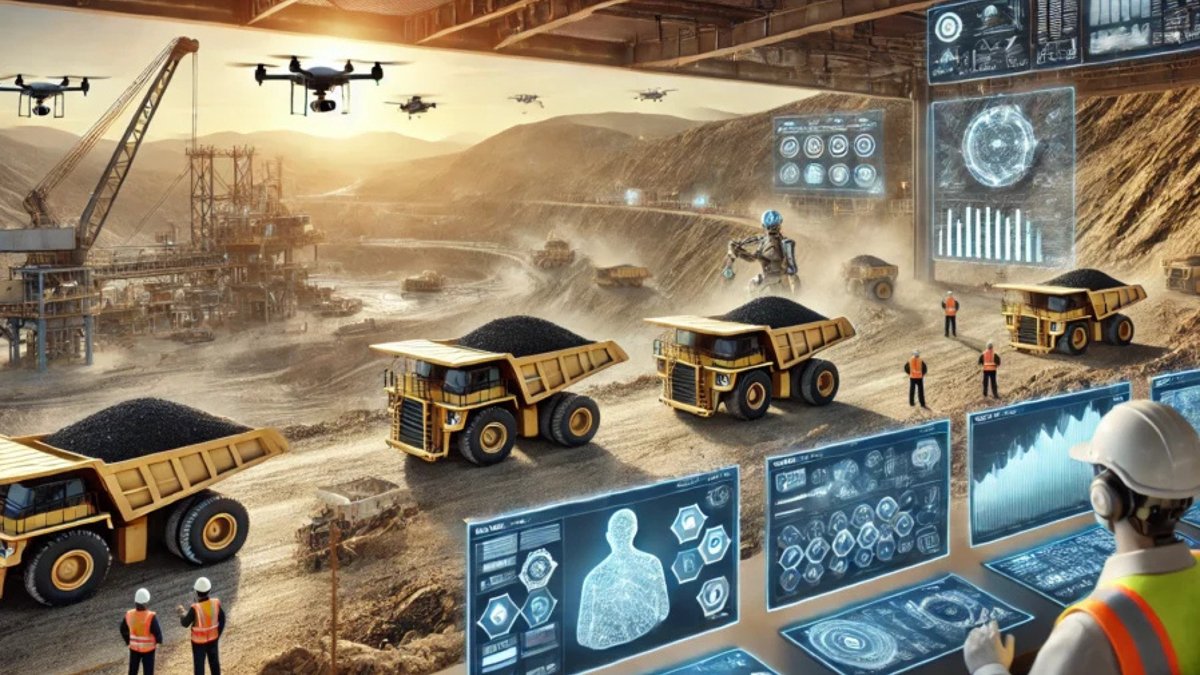
Artificial intelligence adoption accelerates in African mines
Artificial intelligence (AI) is rapidly reshaping Africa’s mining sector, with companies increasingly deploying advanced data analytics, automation, and digital modeling tools to improve productivity, safety, and exploration success.
Mining companies across the continent are turning to AI-powered systems to analyze vast geological datasets, identify new deposits, and optimize production processes. This technology helps businesses free up new resources while reducing operational costs and environmental impact.
One of the most important applications of AI is mineral exploration, where machine learning algorithms can process geological and geophysical data much faster than traditional methods. By analyzing large amounts of historical exploration data, AI systems can identify patterns indicative of previously overlooked mineral deposits, increasing discovery rates and allowing companies to focus their exploration efforts more effectively.
The use of AI also accelerates exploration schedules. Advanced geospatial technologies such as satellite imagery, drone surveys, and AI-powered geological modeling are enabling miners to identify promising targets faster and more accurately. In some cases, these digital tools have significantly shortened investigation timelines, allowing companies to move from discovery to development more quickly.
Operational efficiency is another key driver of AI adoption. Mining companies are increasingly leveraging AI to optimize equipment performance, monitor production metrics, and predict maintenance requirements. Predictive maintenance systems can detect potential equipment failures before they occur, allowing operators to schedule repairs and minimize costly downtime.
These improvements are already delivering tangible benefits. Early adopters report significant reductions in operating costs while extending the life of critical mining equipment and infrastructure. AI-driven systems can significantly improve the profitability of large-scale operations by improving reliability and reducing unplanned shutdowns.
In South Africa, AI is starting to play a role in the modernization of mining operations as companies deploy digital technologies to improve performance and safety. Tracking production data in real-time with AI-driven monitoring tools allows operators to make faster, more informed decisions about plant performance and resource management.
Leading mining companies are also integrating digital technology into their core operations. Data-driven modeling tools are being used to more accurately map orebodies, optimize blasting strategies, and improve equipment scheduling across mining sites. These features allow for more precise extraction of resources while reducing waste and energy consumption.
AI is not only increasing productivity, but also improving the overall safety of mining operations. Autonomous vehicles, automated excavation systems, and remote monitoring technologies are increasingly being deployed to reduce human exposure to hazardous environments. By moving employees away from high-risk areas, companies can improve safety while maintaining operational efficiency.
Going forward, digital transformation is expected to accelerate across sectors as mining companies compete for critical minerals needed for the global energy transition. Technologies such as digital twins, augmented reality and advanced data analytics will play an increasingly important role in mine planning and operations.
But industry leaders warn that widespread adoption of AI will also require new skills and workforce development. As automation increases, many roles will shift from manual labor to data analysis, system monitoring, and remote operations management.
As mineral-rich African countries seek to maximize the value of their resources, AI is increasingly seen as a strategic tool to increase efficiency, improve safety, and enable the continent to remain competitive in the global mining industry.
